
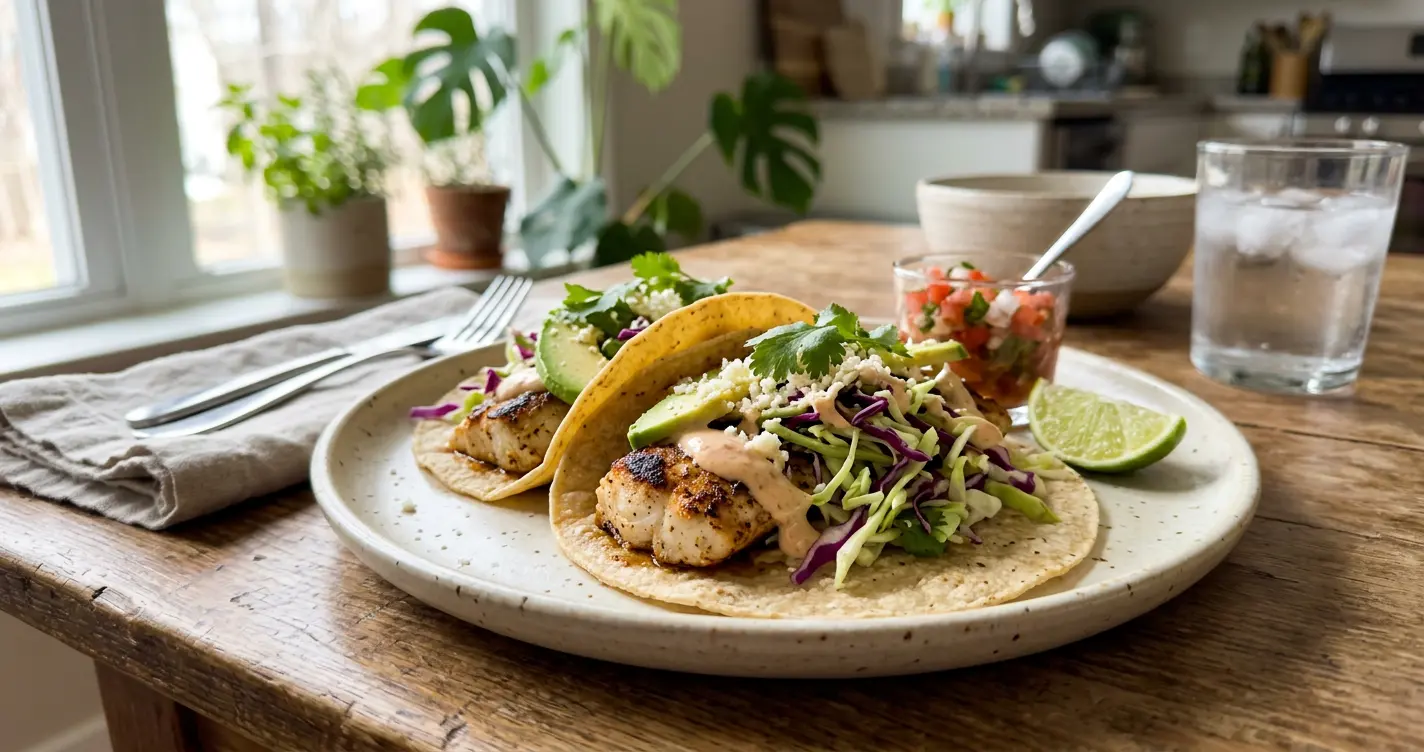
How to Make Mahi Mahi Tacos Easy 7-Step Perfect Recipe
Want a weeknight dinner that feels light, fresh, and just a little tropical? Mahi Mahi Tacos deliver exactly that. The fish cooks fast, stays flaky and tender, and holds seasoning beautifully. When you pair it with crisp toppings and a tangy sauce, the whole meal feels bright and satisfying without being heavy.
I’ve tested this recipe several times with different spice blends, cooking methods, and topping combinations, and the basics always hold true. The fish needs good seasoning but not too much. The toppings should stay fresh and crunchy. And the tortillas should support everything without competing for attention. Therefore, when each element stays in balance, Mahi Mahi Tacos taste clean, bold, and genuinely exciting.
In this guide, I’ll walk you through what Mahi Mahi Tacos are, why they work so well, the ingredients I recommend, a clear step-by-step method, smart storage tips, common mistakes to avoid, several easy variations, and the best ways to serve them for lunch or dinner.
Table of Contents
What is Mahi Mahi Tacos
Mahi Mahi Tacos are fish tacos made with mahi mahi, a firm white fish with a mild, slightly sweet flavor and a texture that holds up well to grilling, pan-searing, or baking. The fish is seasoned, cooked quickly, then served in soft or lightly charred tortillas with fresh toppings like cabbage, cilantro, lime, and a creamy or tangy sauce.
What sets mahi mahi apart from other fish taco options is its texture. Because the flesh is firmer and meatier than something like tilapia or cod, it stays intact during cooking and flakes into clean pieces instead of falling apart. As a result, the tacos feel more substantial without being heavy.
A good Mahi Mahi Tacos recipe balances the mild sweetness of the fish with bright, bold toppings. Moreover, the cooking method matters. Pan-searing gives you a lightly crisp edge, while grilling adds smoky depth. Baking works well when you want a hands-off approach, though I usually prefer the texture from a hot pan or grill.
These tacos lean into fresh, coastal flavors. Therefore, they’re popular in warmer months, but they work year-round if you want something lighter than red meat or chicken.
Why You Will Love This Mahi Mahi Tacos
The fish cooks fast
Mahi mahi doesn’t need long on the heat. Because it’s a firm fish, it cooks through quickly without turning dry or tough. That makes Mahi Mahi Tacos ideal for busy weeknights.
It tastes fresh and light
These tacos never feel overly rich. The fish stays lean, and the toppings bring crunch, acidity, and brightness. As a result, the meal feels satisfying without weighing you down.
It’s easy to customize
You can adjust the seasoning, swap the toppings, or change the sauce without losing what makes the tacos good. Therefore, the recipe works for different tastes and dietary preferences.
It feels special without being complicated
A well-made Mahi Mahi Tacos dinner feels a little more interesting than the usual rotation. However, the method stays straightforward enough that you don’t need advanced skills or hard-to-find ingredients.
It pairs well with simple sides
Because the tacos bring plenty of flavor on their own, you don’t need elaborate sides. Rice, beans, chips, or a simple salad all work beautifully.
Ingredients
A great Mahi Mahi Tacos recipe depends on three parts: well-seasoned fish, fresh toppings, and a sauce that ties everything together.
Main Ingredients
| Ingredient | Amount | Notes |
|---|---|---|
| Mahi mahi fillets | 1 1/4 to 1 1/2 pounds | Fresh or thawed, patted dry |
| Olive oil | 2 tablespoons | Helps the seasoning stick and crisps the fish |
| Chili powder | 1 1/2 teaspoons | Adds warmth without too much heat |
| Ground cumin | 1 teaspoon | Brings earthy depth |
| Paprika | 1 teaspoon | Adds color and mild sweetness |
| Garlic powder | 1/2 teaspoon | Builds savory backbone |
| Onion powder | 1/2 teaspoon | Supports the overall seasoning |
| Kosher salt | 3/4 teaspoon | Essential for flavor |
| Black pepper | 1/4 teaspoon | Adds subtle heat |
| Lime juice | 2 tablespoons | Brightens the fish before cooking |
| Corn or flour tortillas | 8 small | Warm them before serving |
| Shredded cabbage | 2 cups | Adds crunch and freshness |
| Fresh cilantro | 1/4 cup | Chopped, for topping |
| Lime wedges | 4 to 6 | For serving |
Optional Add-ins
| Ingredient | Amount | Notes |
|---|---|---|
| Sour cream | 1/2 cup | Base for a quick sauce |
| Mayonnaise | 1/4 cup | Makes a creamy sauce richer |
| Chipotle in adobo | 1 teaspoon | Adds smoky heat to sauce |
| Diced avocado | 1 medium | Great for topping |
| Diced red onion | 1/4 cup | Adds sharpness |
| Pickled jalapeños | 2 tablespoons | For extra heat |
| Cotija cheese | 2 tablespoons | Optional crumbled topping |
| Pico de gallo | 1/2 cup | Good alternative to plain tomato |
The fish needs to be dry before you season it, so pat it well with paper towels. I also recommend using fresh lime juice instead of bottled because the brightness matters a lot in Mahi Mahi Tacos. In addition, a simple creamy sauce made with sour cream, lime, and a little chipotle can take the tacos from good to genuinely excellent.
How to Make Mahi Mahi Tacos Step by Step
This recipe is simple, but a few small choices make a big difference in flavor and texture. Therefore, I follow this method every time.
Step 1: Dry and season the fish
Pat the mahi mahi fillets completely dry. In a small bowl, mix the chili powder, cumin, paprika, garlic powder, onion powder, salt, and black pepper. Drizzle the fish with a little olive oil and half the lime juice, then rub the spice mixture evenly over both sides. Let the fish sit while you prep the toppings.
Step 2: Prep the toppings and sauce
Shred the cabbage, chop the cilantro, and slice the limes. If you’re making a sauce, stir together the sour cream, mayonnaise, chipotle, and a squeeze of lime juice. Taste and adjust with a pinch of salt if needed. This quick prep keeps assembly smooth once the fish finishes cooking.
Step 3: Heat the pan or grill
If you’re pan-searing, heat a large skillet over medium-high heat with a little olive oil. If you’re grilling, preheat your grill and oil the grates lightly. Because mahi mahi can stick, a well-heated surface and a little fat help it release cleanly.
Step 4: Cook the fish without moving it too much
Place the fillets in the hot pan or on the grill and cook for about 3 to 4 minutes per side, depending on thickness. Don’t flip them too early. Let the fish develop a lightly browned crust before turning. Most importantly, cook just until the fish flakes easily but still looks moist in the center.
Step 5: Rest and flake the fish
Transfer the cooked mahi mahi to a plate and let it rest for a minute or two. Then break it into bite-sized flakes using a fork. This step helps the fish stay tender and makes it easier to portion into the tortillas.
Step 6: Warm the tortillas
Warm the tortillas in a dry skillet, over the grill, or briefly in the microwave wrapped in a damp towel. This softens them and makes them more pliable, which helps the Mahi Mahi Tacos hold together better.
Step 7: Assemble and serve
Place a generous portion of flaked fish in each tortilla. Top with shredded cabbage, cilantro, a drizzle of sauce, and any other toppings you like. Finish with a squeeze of fresh lime juice. Serve the tacos immediately while the fish is still warm and the toppings stay crisp.
Storage and Make-Ahead Tips
Mahi Mahi Tacos taste best freshly assembled, but you can still prep parts ahead and store leftovers smartly.
Store components separately
If you have leftover fish, cabbage, and sauce, keep them in separate containers. Because assembled tacos soften quickly, this method preserves texture much better.
Refrigerate cooked fish properly
Store cooked mahi mahi in an airtight container in the refrigerator for up to 2 days. Reheat it gently in a skillet over low heat, or enjoy it cold in a taco salad.
Make the sauce ahead
The sauce actually benefits from a little time in the fridge. You can make it a day ahead, and therefore, the flavors blend and deepen.
Prep toppings in advance
Shred the cabbage, chop the cilantro, and prep any other toppings ahead of time. Just keep everything cold and dry until you’re ready to build the tacos.
Season the fish ahead
You can season the raw fish and refrigerate it for a few hours before cooking. However, don’t let it sit too long with lime juice, or the acidity can start to cook the fish slightly.
Common Mistakes and How to Fix Them
Even a simple recipe like Mahi Mahi Tacos can go wrong if a few key details get missed. Fortunately, the fixes are straightforward.
Mistake 1: Overcooking the fish
Mahi mahi cooks quickly, and a few extra minutes can make it dry. Pull the fish from the heat as soon as it flakes easily. Because it continues cooking briefly after you remove it, err on the side of slightly underdone.
Mistake 2: Underseasoning the fish
The fish itself needs good flavor before it goes into the taco. If you season too lightly, the whole taco can taste bland. Therefore, season the fish generously and taste a small piece if you can.
Mistake 3: Using wet fish
If the fish is wet when you season it, the spices won’t stick well and the sear won’t develop properly. Pat the fillets completely dry before you start.
Mistake 4: Skipping the sauce
A dry taco feels incomplete. Even a simple drizzle of lime crema or tangy sauce makes a huge difference in how satisfying Mahi Mahi Tacos feel.
Mistake 5: Overcrowding the pan
If you cook too many fillets at once, the temperature drops and the fish steams instead of searing. Cook in batches if needed so each piece gets a good crust.
Mistake 6: Serving cold tortillas
Cold, stiff tortillas ruin the taco experience. Warm them briefly before serving so they stay soft and pliable.
Mistake 7: Forgetting acidity
Without lime juice or pickled toppings, the tacos can taste flat. Most importantly, a squeeze of fresh lime at the end wakes up every other flavor.
Variations
Once you know the basic method, Mahi Mahi Tacos are easy to adapt in several delicious directions.
Blackened version
Coat the fish heavily with blackening seasoning and cook it in a very hot skillet. This gives the tacos a bold, spicy crust and a slightly smoky flavor.
Grilled version
Grill the mahi mahi over medium-high heat for a lightly charred, smoky finish. This version feels especially good in warmer months when the grill is already going.
Baja-style version
Add a crispy beer batter or light breading before frying the fish. This makes the tacos richer and more indulgent, though I still prefer the lighter pan-seared version most of the time.
Citrus-marinated version
Marinate the fish briefly in lime juice, orange juice, garlic, and cilantro before cooking. This adds a bright, aromatic layer that works beautifully with the toppings.
Spicy version
Add cayenne or extra chipotle to the seasoning and sauce. Therefore, the tacos bring more heat without losing the fresh, clean flavor.
Lighter version
Skip the creamy sauce and use just lime juice, cilantro, and a little hot sauce. This keeps the tacos very light and lean while still tasting full of flavor.
Serving Suggestions
Mahi Mahi Tacos are flexible enough to work for casual dinners, weekend lunches, or even gatherings. The right sides help round out the meal.
Serve with Mexican rice
A simple cilantro-lime rice or tomato-based Mexican rice pairs beautifully with the tacos. Because the rice feels mild, it balances the bolder fish and toppings.
Add black beans
Black beans, either whole or refried, add protein and make the meal more filling. In addition, they bring a creamy contrast to the crisp cabbage and flaky fish.
Pair with tortilla chips and salsa
Chips and salsa feel natural alongside Mahi Mahi Tacos. They’re easy, fun, and keep the whole meal casual.
Serve with a simple slaw
A tangy slaw made with cabbage, lime, and a little vinegar echoes the taco toppings and adds extra crunch to the plate.
Offer lime wedges and hot sauce
Let everyone adjust their tacos to taste. A squeeze of lime and a drizzle of hot sauce can transform each bite.
Make it a taco bar
If you’re serving a group, set out the fish, tortillas, and toppings separately. Therefore, everyone can build their own Mahi Mahi Tacos exactly how they like them.
Frequently Asked Questions
What is mahi mahi?
Mahi mahi is a firm, mild white fish with a slightly sweet flavor. It’s also called dorado or dolphinfish, and it works especially well in tacos because it holds together during cooking.
Can I use frozen mahi mahi for Mahi Mahi Tacos?
Yes, as long as you thaw it properly first. Thaw the fish in the refrigerator overnight, then pat it very dry before seasoning and cooking.
What’s the best way to cook mahi mahi for tacos?
Pan-searing and grilling both work beautifully. Pan-searing gives you a lightly crisp edge, while grilling adds smoky depth. Baking works too, though the texture feels a little softer.
Can I make Mahi Mahi Tacos ahead of time?
You can prep the toppings, sauce, and seasoning ahead, but cook the fish fresh and assemble the tacos right before serving. This keeps the texture and flavor at their best.
What toppings go on Mahi Mahi Tacos?
Classic toppings include shredded cabbage, cilantro, lime, and a creamy sauce. You can also add avocado, pico de gallo, pickled onions, or crumbled cheese.
How do I keep the fish from sticking to the pan?
Make sure the pan is hot and lightly oiled before you add the fish. Also, pat the fillets dry so they sear instead of steam.
Are Mahi Mahi Tacos healthy?
Yes, they can be. Mahi mahi is a lean protein, and the tacos stay light when you use fresh toppings and a modest amount of sauce. Therefore, they fit well into a balanced eating plan.
Can I use corn or flour tortillas?
Both work well. Corn tortillas taste more traditional and feel lighter, while flour tortillas are softer and easier to fold. Choose based on your preference.
A well-made batch of Mahi Mahi Tacos is one of those meals that feels bright, satisfying, and just a little special without being complicated. The fish cooks fast, holds seasoning beautifully, and pairs perfectly with crisp toppings and a tangy sauce. Once you get the seasoning right, cook the fish just until flaky, and assemble everything while it’s fresh, Mahi Mahi Tacos become the kind of dinner you’ll want to make again and again.