
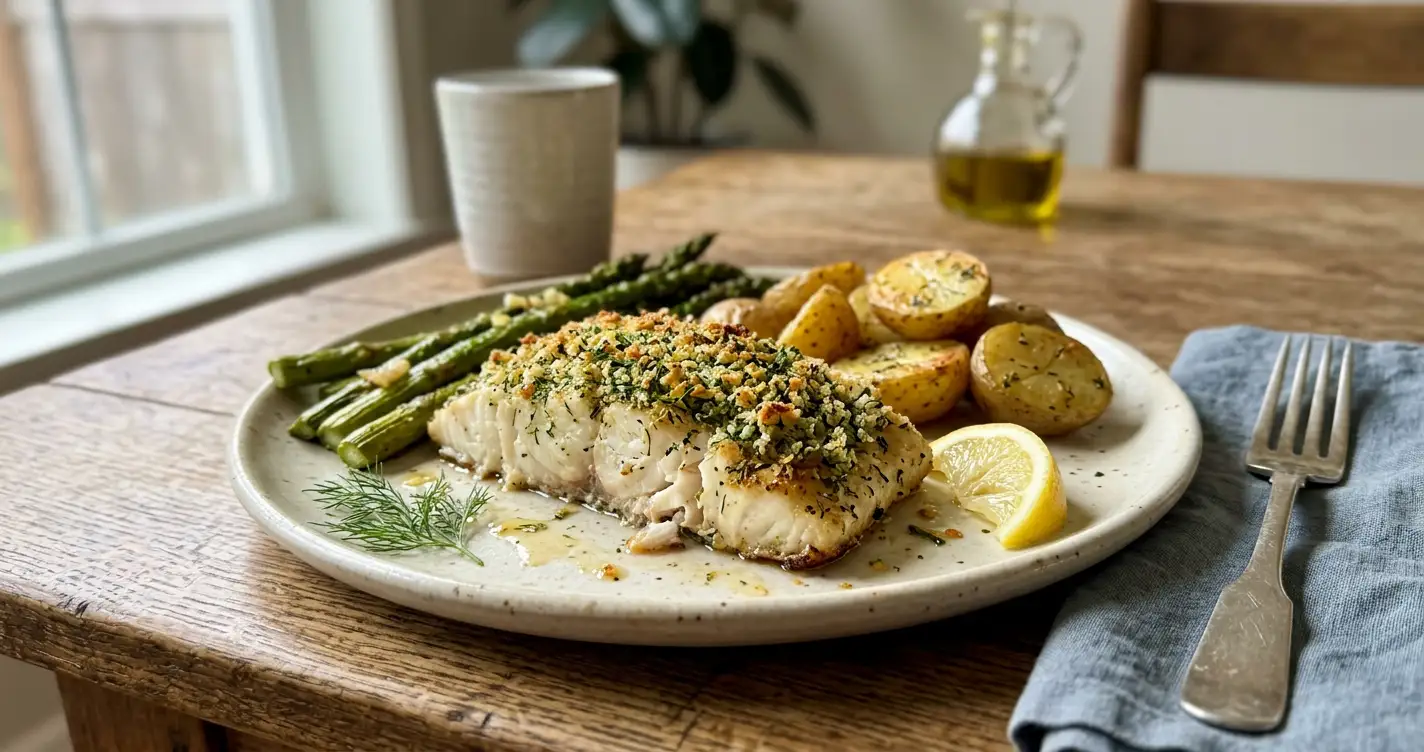
How to Make Baked Halibut Perfect 7-Step Easy Recipe
Looking for a dinner that feels elegant but stays simple enough for a weeknight? Baked Halibut is one of the best answers I know. The fish has a clean, mild flavor and a firm texture that stays tender when you cook it right. Moreover, baking keeps the method gentle and hands-off, which means you can focus on sides or simply relax while dinner cooks.
I’ve baked halibut many times using different temperatures, seasonings, and techniques, and the basics always matter most. The fish needs to be dry before it goes in the oven. The seasoning should enhance rather than bury the flavor. And the timing needs to be just right because halibut can go from perfectly flaky to dry in a matter of minutes. Therefore, once you understand those small details, Baked Halibut becomes one of the most reliable recipes in your rotation.
In this guide, I’ll walk you through what Baked Halibut is, why it works so well, the ingredients I recommend, a clear step-by-step method, storage and reheating tips, common mistakes to avoid, several easy variations, and the best ways to serve it for a satisfying, complete meal.
Table of Contents
What is Baked Halibut
Baked Halibut is halibut fish seasoned and cooked in the oven until tender and flaky. Halibut is a firm, mild white fish with a slightly sweet flavor and a meaty texture that holds up beautifully to dry-heat cooking methods like baking, roasting, or broiling.
Because halibut is lean, it can dry out easily if overcooked. However, when you bake it at the right temperature and pull it from the oven at just the right moment, the fish stays moist, tender, and full of clean flavor. As a result, Baked Halibut feels refined without being fussy.
Most versions keep the seasoning simple so the fish itself shines. A little olive oil, salt, pepper, garlic, and lemon usually do the job beautifully. On the other hand, you can build in bolder flavors with herbs, butter, citrus, or light sauces if you want something more layered.
This dish works well for both casual dinners and special occasions. In addition, it pairs easily with almost any side, which makes it one of the most versatile fish recipes you can master.
Why You Will Love This Baked Halibut
It cooks fast
Halibut bakes quickly, usually in less than 20 minutes depending on thickness. Because the oven does the work, you can prep sides or set the table while the fish cooks.
The texture stays tender and flaky
When you bake Baked Halibut correctly, the fish flakes into clean pieces without falling apart or turning dry. That balance is what makes halibut so dependable.
It tastes clean and mild
Halibut doesn’t have a strong fishy flavor, which makes it appealing even to people who don’t usually love seafood. Therefore, it’s a great choice when you want something light but still satisfying.
It feels special without being complicated
A beautifully baked piece of halibut looks restaurant-worthy. However, the method stays simple enough that you don’t need advanced skills or special equipment.
It’s versatile
You can season Baked Halibut in countless ways, serve it with different sides, or dress it up with sauces. Moreover, it fits well into low-carb, keto, or lighter eating plans.
Ingredients
A great Baked Halibut recipe depends on quality fish and a balanced approach to seasoning. You want to enhance the fish, not hide it.
Main Ingredients
| Ingredient | Amount | Notes |
|---|---|---|
| Halibut fillets | 4 pieces, 6 ounces each | Fresh or thawed, skin-on or skinless |
| Olive oil | 2 tablespoons | Helps seasonings stick and keeps fish moist |
| Kosher salt | 3/4 teaspoon | Essential for bringing out flavor |
| Black pepper | 1/4 teaspoon | Adds gentle heat |
| Garlic powder | 1/2 teaspoon | Builds savory depth |
| Paprika | 1/2 teaspoon | Adds color and mild sweetness |
| Fresh lemon juice | 2 tablespoons | Brightens the whole dish |
| Lemon zest | 1 teaspoon | Optional, but adds aromatic lift |
| Fresh parsley | 2 tablespoons | Chopped, for garnish |
Optional Add-ins
| Ingredient | Amount | Notes |
|---|---|---|
| Butter | 2 tablespoons | Adds richness if you want it richer |
| Fresh thyme | 4 sprigs | Great for herb flavor |
| Fresh dill | 1 tablespoon | Classic pairing with fish |
| White wine | 2 tablespoons | Adds subtle acidity |
| Capers | 1 tablespoon | Good for a briny accent |
| Cherry tomatoes | 1/2 cup | Halved, for roasting alongside |
| Dijon mustard | 1 teaspoon | Adds tang and depth |
The halibut itself is the star here, so choose the freshest fillets you can find. I also recommend patting them very dry before seasoning because excess moisture prevents browning and can make the fish steam instead of bake. In addition, fresh lemon juice makes a noticeable difference compared with bottled, especially in a dish this simple.
How to Make Baked Halibut Step by Step
This method is straightforward, but the timing and temperature matter a lot. Therefore, I follow these steps closely every time.
Step 1: Preheat the oven and prep the pan
Preheat your oven to 400°F and lightly grease a baking dish or line it with parchment paper. Because halibut can stick, a little oil or parchment makes cleanup easier and helps the fish release cleanly.
Step 2: Dry the fish thoroughly
Remove the halibut from the refrigerator and pat each fillet completely dry with paper towels. This step matters more than most people think. Dry fish browns better and absorbs seasoning more evenly, which improves the final flavor of Baked Halibut.
Step 3: Season the fish
Place the fillets in the prepared baking dish. Drizzle them with olive oil, then sprinkle evenly with salt, pepper, garlic powder, and paprika. Squeeze fresh lemon juice over the top and add lemon zest if using. Rub the seasonings gently so they coat the fish evenly.
Step 4: Add optional flavor boosters
If you’re using butter, dot small pieces over the fish. If you want herbs, tuck thyme or dill sprigs around the fillets. Cherry tomatoes or capers can go into the dish as well. However, keep the additions light so they support rather than overwhelm the halibut.
Step 5: Bake until just cooked through
Place the dish in the preheated oven and bake for 12 to 18 minutes, depending on the thickness of the fillets. The fish is done when it flakes easily with a fork and reaches an internal temperature of 130°F to 135°F. Most importantly, don’t overbake. Halibut turns dry quickly once it passes that point.
Step 6: Rest briefly
Let the fish rest in the pan for 2 to 3 minutes after you pull it from the oven. This allows the juices to settle, and as a result, the fish stays moist when you plate it.
Step 7: Garnish and serve
Transfer the Baked Halibut to plates, spoon any pan juices over the top, and garnish with fresh parsley and extra lemon wedges. Serve immediately while the fish is still warm and tender.
Storage and Make-Ahead Tips
Baked Halibut tastes best freshly cooked, but you can still store leftovers and prep parts of the recipe ahead.
Refrigerate leftovers properly
Store cooked halibut in an airtight container in the refrigerator for up to 2 days. Because the fish is lean, it can dry out when reheated, so handle it gently.
Reheat carefully
Warm leftover Baked Halibut in a low oven covered with foil, or enjoy it cold in a salad. Avoid the microwave if possible, since it can make the texture rubbery.
Season the fish ahead
You can season the raw fillets and refrigerate them for a few hours before baking. However, don’t add lemon juice until just before cooking, or the acidity can start to cook the fish.
Prep sides in advance
Because the fish cooks quickly, having your sides ready beforehand makes dinner smoother. Roast vegetables, cook rice, or prep a salad while the oven preheats.
Freeze with caution
Cooked halibut doesn’t freeze as well as other proteins because the texture can become softer. If you do freeze it, wrap it very well and use it within a month.
Common Mistakes and How to Fix Them
Even a simple recipe like Baked Halibut can disappoint if a few key details get missed. Fortunately, the fixes are easy.
Mistake 1: Overbaking the fish
This is the most common problem. Halibut cooks fast, and a few extra minutes can make it dry. Start checking early, and pull the fish as soon as it flakes easily.
Mistake 2: Using wet fish
If the fillets are wet, they steam instead of bake. Pat them completely dry before seasoning. Therefore, the surface can brown lightly and the seasonings stick better.
Mistake 3: Underseasoning
Because halibut is mild, it needs enough salt and seasoning to bring out its flavor. Don’t be shy with the salt, especially if you’re keeping other seasonings minimal.
Mistake 4: Baking at too low a temperature
Temperatures below 375°F can make the fish cook unevenly or turn mushy. I find 400°F works best for Baked Halibut because it cooks the fish quickly while keeping it tender.
Mistake 5: Skipping the rest
If you plate the fish immediately, some of the juices may run out. Let it rest briefly so the moisture redistributes, and as a result, each bite stays moist.
Mistake 6: Choosing uneven fillets
If some fillets are much thicker than others, they’ll cook unevenly. Try to choose pieces that are similar in size, or adjust the baking time for thicker ones.
Mistake 7: Forgetting acidity
Without lemon or another bright element, the fish can taste flat. Most importantly, a squeeze of fresh lemon at the end wakes up the whole dish.
Variations
Once you know the basic method, Baked Halibut is easy to adapt in several delicious ways.
Lemon butter version
Add melted butter with garlic, lemon juice, and fresh parsley. This makes the fish richer and gives it a classic French-inspired feel.
Mediterranean version
Top the halibut with cherry tomatoes, olives, capers, and a drizzle of olive oil. Bake everything together for a bright, briny finish.
Herb-crusted version
Mix panko breadcrumbs with chopped herbs, lemon zest, and a little melted butter. Press the mixture onto the fillets before baking for a lightly crisp topping.
Spicy version
Add a pinch of cayenne, smoked paprika, or red pepper flakes to the seasoning. This gives Baked Halibut a little heat without overwhelming the fish.
Asian-inspired version
Use sesame oil, soy sauce, ginger, and green onions. This shifts the flavor profile in a completely different direction while still keeping the method simple.
Pesto version
Spread a thin layer of basil pesto over the fillets before baking. The herbs and garlic complement the fish beautifully, and moreover, the pesto keeps it moist.
Serving Suggestions
Baked Halibut pairs well with a wide range of sides, which makes it easy to build a complete meal.
Serve with roasted vegetables
Roasted asparagus, Brussels sprouts, or green beans work especially well. Because they bake at a similar temperature, you can cook them alongside the fish.
Pair with rice or quinoa
A simple lemon rice, herb quinoa, or wild rice pilaf gives the meal substance without competing with the fish. In addition, rice soaks up any pan juices beautifully.
Add a light salad
A crisp green salad with a lemon vinaigrette balances the richness of the fish. Therefore, the meal feels fresh and complete.
Serve with mashed potatoes
If you want something more comforting, creamy mashed potatoes or garlic mashed cauliflower pair wonderfully with Baked Halibut.
Pair with pasta
Light pasta with olive oil, garlic, and lemon makes a great side. Because the flavors stay simple, they support rather than overshadow the fish.
Offer extra lemon and herbs
A few lemon wedges and a sprinkle of fresh herbs let everyone adjust their portions to taste. That small touch makes serving easier and more flexible.
Frequently Asked Questions
What temperature should I bake halibut at?
I recommend 400°F for Baked Halibut. This temperature cooks the fish quickly and evenly without drying it out.
How long does it take to bake halibut?
It usually takes 12 to 18 minutes, depending on the thickness of the fillets. Check the fish early and pull it as soon as it flakes easily.
How do I know when Baked Halibut is done?
The fish should flake easily with a fork and reach an internal temperature of 130°F to 135°F. Because it continues cooking slightly after you remove it, err on the side of slightly underdone.
Can I use frozen halibut?
Yes, but thaw it completely in the refrigerator first. Then pat it very dry before seasoning and baking.
Should I bake halibut with skin on or off?
Both work. Skin-on fillets can help the fish hold together, while skinless fillets look cleaner on the plate. Therefore, choose based on your preference.
Why is my halibut dry?
It’s almost always overbaked. Halibut is lean, so it dries out quickly once it cooks past the ideal temperature. Start checking early and remove it as soon as it’s done.
Can I make Baked Halibut ahead of time?
You can season it ahead and refrigerate it for a few hours, but bake it fresh for the best texture and flavor.
What sides go best with Baked Halibut?
Roasted vegetables, rice, quinoa, mashed potatoes, light pasta, or a fresh salad all pair beautifully. The fish is mild enough to work with almost any side.
A perfectly baked piece of halibut is one of those dishes that feels special every time you make it, yet the method stays refreshingly simple. Once you learn to season the fish well, bake it at the right temperature, and pull it from the oven at just the right moment, Baked Halibut becomes a go-to recipe for weeknight dinners, weekend meals, and even gatherings. It’s clean, elegant, and deeply satisfying without ever feeling complicated.