
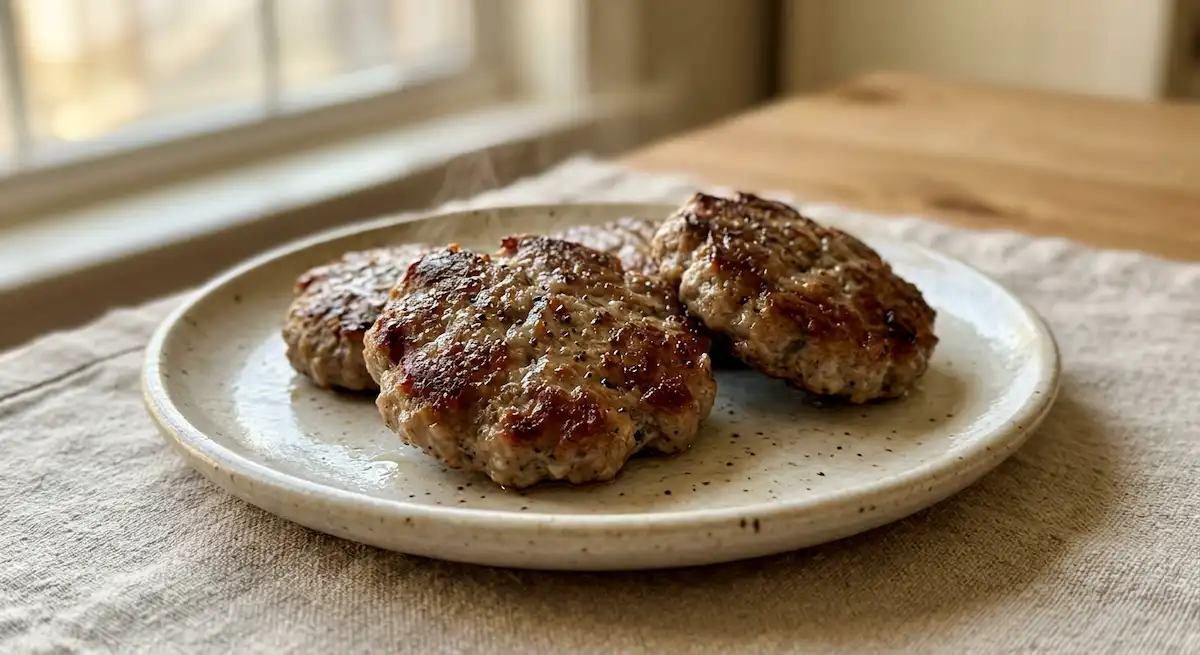
How to Make the Best Breakfast Sausage Patties in 4 Simple Steps
What transforms a good breakfast into a truly memorable morning meal? For countless families, the answer is sizzling breakfast sausage patties filling the kitchen with their savory, herb-scented aroma that makes everyone rush to the table. These golden-brown rounds of seasoned pork deliver satisfying flavor and protein that powers your morning while tasting infinitely better than anything you’ll find in the frozen food aisle.
Moreover, homemade breakfast sausage patties give you complete control over ingredients, seasoning levels, and quality no mysterious additives, excessive sodium, or questionable fillers. Throughout this comprehensive guide, you’ll discover exactly how to create restaurant-quality breakfast sausage patties with perfect seasoning, ideal texture, and that irresistible caramelized crust that makes breakfast feel special every single day.
Table of Contents
What is Breakfast Sausage Patties
Breakfast sausage patties are flat, round portions of seasoned ground pork formed into palm-sized discs and pan-fried until golden brown and cooked through. Unlike link sausages that require casings and specialized equipment, patties are simple to shape by hand and cook quickly in a regular skillet. The seasoning blend typically includes sage, black pepper, salt, and sometimes red pepper flakes or maple syrup, creating that characteristic breakfast sausage flavor profile.
Furthermore, these patties differ significantly from other sausage forms in their versatility and ease of preparation. They cook faster than links, fit perfectly on breakfast sandwiches, and allow for easy portion control. The flat shape creates maximum surface area for developing that delicious browned crust while ensuring even cooking throughout.
Additionally, breakfast sausage patties represent a foundational element of American breakfast culture, appearing on diner menus, fast-food breakfast sandwiches, and home breakfast tables across the country. Making them from scratch connects you to this tradition while offering superior flavor and quality compared to mass-produced alternatives.
Why You Will Love This Breakfast Sausage Patties
First and foremost, the flavor of homemade breakfast sausage patties is absolutely superior to store-bought versions. You control the seasoning intensity, adjust spice levels to your preference, and use fresh, high-quality pork without fillers or preservatives. The result tastes cleaner, more vibrant, and distinctly homemade in the best possible way.
Additionally, making your own patties is remarkably economical. Ground pork costs significantly less per pound than pre-made sausage patties, and the simple seasonings you’ll use are pantry staples. Therefore, you’ll save money while getting better quality and flavor—a rare combination in cooking.
Another compelling reason to master this recipe is the customization potential. Adjust the sage for those who prefer milder flavors, add maple syrup for subtle sweetness, increase red pepper flakes for heat lovers, or create unique flavor combinations that become your signature version. This flexibility means everyone in your family can enjoy breakfast sausage patties made exactly how they like them.
Moreover, the make-ahead and freezer-friendly nature makes these patties incredibly practical for busy mornings. Cook a large batch on Sunday, freeze individually, and you have grab-and-go breakfast protein for weeks. This convenience rivals any commercial product while maintaining homemade quality.
Finally, these patties are naturally gluten-free and fit easily into low-carb and keto eating plans. They provide satisfying protein and fat that keeps you full for hours without unnecessary carbohydrates or fillers that add no nutritional value.
Ingredients
Creating flavorful breakfast sausage patties requires simple ingredients that combine to create complex, satisfying taste. Quality pork makes the biggest difference here.
Main Ingredients
| Ingredient | Amount | Notes |
|---|---|---|
| Ground pork | 1 pound | Choose 80/20 for best flavor and moisture |
| Dried sage | 2 teaspoons | Key flavor; use rubbed, not ground |
| Salt | 1 teaspoon | Fine sea salt or kosher salt |
| Black pepper | 1 teaspoon | Freshly ground preferred |
| Brown sugar | 1 teaspoon | Balances savory flavors subtly |
| Red pepper flakes | ¼ teaspoon | Optional; adds gentle heat |
| Garlic powder | ½ teaspoon | Adds savory depth |
| Onion powder | ½ teaspoon | Enhances overall flavor complexity |
| Dried thyme | ½ teaspoon | Optional; adds herbal notes |
Optional Flavor Variations
| Ingredient | Amount | Notes |
|---|---|---|
| Pure maple syrup | 1 tablespoon | For maple-flavored sausage |
| Fennel seeds | ½ teaspoon crushed | Italian-style variation |
| Cayenne pepper | ⅛ teaspoon | For spicier patties |
| Fresh sage | 1 tablespoon minced | More vibrant than dried |
| Apple cider vinegar | 1 teaspoon | Adds subtle tang |
The ground pork forms the foundation of breakfast sausage patties, and fat content matters significantly. Choose pork with 80/20 ratio (80% lean, 20% fat) for patties that stay moist and flavorful during cooking. Leaner pork creates dry, crumbly patties that lack richness, while fattier blends can be greasy.
Meanwhile, dried sage is the signature seasoning that makes breakfast sausage instantly recognizable. Use rubbed sage rather than ground for better texture and more authentic flavor. The combination of sage, black pepper, and a touch of brown sugar creates that classic breakfast sausage taste everyone loves.
How to Make Breakfast Sausage Patties Step by Step
Creating perfectly seasoned, juicy breakfast sausage patties involves proper mixing and cooking techniques. Follow these detailed steps for consistently excellent results.
Step 1: Mix the Seasoning and Meat
In a small bowl, combine all the dried seasonings sage, salt, black pepper, brown sugar, red pepper flakes, garlic powder, onion powder, and thyme if using. Whisk these together thoroughly to ensure even distribution before adding to the meat. This pre-mixing step prevents pockets of intense seasoning in some patties while others taste bland.
Place the ground pork in a large mixing bowl and sprinkle the seasoning mixture evenly over the surface. Using your hands, gently mix the seasonings into the pork until everything is evenly distributed. Don’t overmix or squeeze the meat aggressively this develops the proteins too much and creates dense, tough patties. Mix just until you no longer see distinct areas of seasoning.
For best flavor development, cover the bowl and refrigerate the seasoned meat for at least 30 minutes, or up to 24 hours. This resting period allows the seasonings to penetrate the meat more deeply and the flavors to meld. If you’re in a hurry, you can skip this step, but the flavor won’t be quite as developed.
Step 2: Form the Patties
Remove the seasoned pork from the refrigerator and divide it into 8 equal portions, roughly 2 ounces each. Roll each portion into a ball, then gently flatten it into a patty about ½ inch thick and 3 inches in diameter. The key is making them uniform in thickness so they cook evenly thinner edges will overcook while thick centers remain raw.
Create a slight indentation in the center of each patty with your thumb. This prevents the breakfast sausage patties from puffing up into dome shapes during cooking, ensuring they stay flat and cook evenly. The indentation should be shallow, about ¼ inch deep.
If you’re making these for meal prep or freezing, place the formed patties on a parchment-lined baking sheet in a single layer. Freeze until solid, about 2 hours, then transfer to a freezer bag. This prevents them from sticking together and allows you to grab individual patties as needed.
Step 3: Cook the Patties
Heat a large skillet, preferably cast iron, over medium heat. There’s no need to add oil the pork contains enough fat to prevent sticking. Once the pan is hot but not smoking, carefully place the patties in the skillet, leaving space between each one. Don’t overcrowd the pan or they’ll steam rather than develop that desirable browned crust.
Cook the breakfast sausage patties for 4 to 5 minutes on the first side without moving them. Resist the temptation to flip them early let them develop a deep golden-brown crust before turning. When the edges look opaque and the bottom is nicely browned, flip them carefully with a spatula.
Cook for another 4 to 5 minutes on the second side until the patties reach an internal temperature of 160°F. The patties should be browned on both sides with no pink remaining in the center. If they’re browning too quickly before cooking through, reduce the heat slightly and cover the pan for the last few minutes to help them cook through without burning.
Step 4: Rest and Serve
Remove the cooked breakfast sausage patties from the skillet and transfer them to a paper towel-lined plate to absorb excess grease. Let them rest for 2 to 3 minutes before serving. This brief rest allows the juices to redistribute throughout the meat, ensuring every bite is moist and flavorful.
The patties will continue cooking slightly from residual heat during this rest, so removing them right at 160°F ensures they won’t overcook. Serve immediately while hot for the best texture and flavor, though they also reheat beautifully for meal prep purposes.
Storage and Make-Ahead Tips
Cooked breakfast sausage patties store beautifully in the refrigerator for up to 4 days. Cool them completely, then store in an airtight container separated by parchment paper to prevent sticking. Reheat individual patties in the microwave for 30 to 45 seconds, or warm them in a skillet over medium heat for 2 to 3 minutes per side.
For longer storage, freeze cooked patties for up to 3 months. Freeze them individually on a baking sheet first, then transfer to a freezer bag once solid. This prevents them from freezing together in a solid block. Thaw overnight in the refrigerator or reheat directly from frozen, adding an extra minute to your reheating time.
Furthermore, you can freeze uncooked formed patties using the same method. Form them, freeze on a baking sheet until solid, then transfer to freezer bags. Cook frozen patties directly from the freezer over medium-low heat, adding 2 to 3 extra minutes per side to ensure they cook through completely.
For make-ahead breakfast prep, cook a full batch on Sunday evening. Refrigerate or freeze the patties, then simply reheat throughout the week for quick, protein-rich breakfasts. Pair with scrambled eggs and toast for a complete meal that takes just minutes to assemble on busy mornings.
Additionally, you can prepare the seasoned meat mixture up to 2 days in advance without forming patties. Store it covered in the refrigerator, then form and cook fresh patties when needed. This gives you the convenience of prep work done while ensuring the freshest possible cooked patties.
Common Mistakes and How to Fix Them
One of the most frequent errors when making breakfast sausage patties is using ground pork that’s too lean. Pork labeled 93/7 or 90/10 creates dry, crumbly patties that lack flavor and moisture. Always choose 80/20 ground pork for patties that stay juicy and tender during cooking.
Another common mistake involves overmixing the meat and seasonings. Enthusiastic mixing develops the meat proteins excessively, creating dense, tough patties similar to meatballs rather than tender sausage. Mix just until the seasonings distribute evenly, then stop—the mixture should still look slightly loose and barely cohesive.
Moreover, many people make their patties too thick, which prevents proper cooking. Patties thicker than ½ inch brown beautifully on the outside while remaining raw in the center. Keep them uniformly ½ inch thick for patties that cook through perfectly while developing ideal crust.
Furthermore, cooking over heat that’s too high is a critical mistake. High heat burns the exterior before the center cooks through, creating bitter, charred crusts and undercooked interiors. Always use medium heat and adjust down to medium-low if you notice excessive browning. Patience ensures breakfast sausage patties cook evenly throughout.
Finally, flipping the patties too early prevents proper crust development. When you flip before the bottom develops a golden-brown crust, the patties stick to the pan and tear. Wait the full 4 to 5 minutes before flipping, even if you’re anxious to check on them. That patience rewards you with beautiful, intact patties.
Variations
The basic breakfast sausage patties recipe welcomes creative variations that keep breakfast interesting. For maple sausage, add 1 to 2 tablespoons of pure maple syrup to the meat mixture. This creates sweet-savory patties that pair beautifully with pancakes and waffles.
If you prefer Italian-inspired breakfast sausage, replace the sage with fennel seeds and add dried oregano and basil. Use ½ teaspoon crushed fennel seeds, ½ teaspoon dried oregano, and ¼ teaspoon dried basil for an Italian flavor profile that works wonderfully in breakfast burritos or alongside scrambled eggs with tomatoes.
For spicy breakfast sausage patties, increase the red pepper flakes to 1 teaspoon and add ¼ teaspoon cayenne pepper. Some people also add a dash of hot sauce to the mixture for even more heat. These spicy patties wake up your taste buds and pair perfectly with cooling ingredients like avocado or sour cream.
Additionally, create apple-sage sausage by adding ¼ cup finely diced dried apples to the meat mixture. The apple pieces rehydrate slightly during cooking and add pockets of sweet fruitiness that complement the sage beautifully. This variation feels particularly special during fall and winter months.
For a lower-fat option, substitute half the ground pork with ground turkey or chicken. Add an extra tablespoon of olive oil to the mixture to compensate for the leaner meat. While the flavor will be milder, you’ll significantly reduce the fat and calorie content while maintaining good texture.
Another popular variation uses fresh herbs instead of dried. Replace the dried sage with 1 tablespoon minced fresh sage, and add 1 tablespoon fresh thyme leaves. Fresh herbs create brighter, more vibrant flavor that tastes particularly fresh and special.
Serving Suggestions
Breakfast sausage patties shine in classic breakfast sandwiches. Place a cooked patty on a toasted English muffin with a fried egg and slice of cheese for a homemade version that rivals any fast-food breakfast sandwich. The combination of runny yolk, melted cheese, and savory sausage creates morning perfection.
For a hearty breakfast plate, serve these patties alongside scrambled eggs, hash browns, and toast. The protein-rich patties complement the eggs while the crispy hash browns provide textural contrast. Add fresh fruit on the side for a complete, balanced breakfast.
Moreover, crumble cooked breakfast sausage patties into breakfast burritos or scrambled eggs for distributed flavor throughout. The crumbled sausage seasons the entire dish rather than providing distinct bites, creating a different but equally delicious eating experience.
Additionally, these patties work wonderfully in breakfast bowls. Layer them over quinoa or cauliflower rice with roasted vegetables, avocado, and a fried egg for a nutrient-dense breakfast bowl that powers your morning with sustained energy.
For brunch gatherings, serve breakfast sausage patties on a platter with maple syrup for dipping. This interactive serving style lets guests customize their sweet-to-savory ratio and feels special for leisurely weekend breakfasts.
Furthermore, use these patties as pizza toppings for breakfast pizzas. Crumble cooked sausage over pizza dough spread with scrambled eggs, cheese, and vegetables for a fun twist on both breakfast and pizza night.
Frequently Asked Questions
Can I make breakfast sausage patties with ground turkey?
Yes, though the flavor and texture will differ from pork-based patties. Use ground turkey with at least 15% fat and add 1 tablespoon of olive oil to the mixture to prevent dryness. Increase the seasonings slightly as turkey has milder flavor than pork.
How do I know when breakfast sausage patties are fully cooked?
Use an instant-read thermometer to check the internal temperature, which should reach 160°F. Visually, the patties should be browned on both sides with no pink remaining in the center. When you cut one open, the juices should run clear, not pink.
Can I bake breakfast sausage patties instead of pan-frying?
Absolutely! Arrange formed patties on a parchment-lined baking sheet and bake at 400°F for 15 to 18 minutes, flipping once halfway through. They won’t develop quite the same crust as pan-fried versions, but they cook more hands-off and with less mess.
Why are my homemade sausage patties dry?
Dry patties typically result from using pork that’s too lean, overcooking, or overmixing the meat. Use 80/20 ground pork, cook just to 160°F, and mix the seasonings in gently without overworking the meat for juicy results.
How long do uncooked breakfast sausage patties last in the refrigerator?
Store uncooked formed patties for up to 2 days in the refrigerator, or freeze them for up to 3 months. The seasoned but unformed meat mixture keeps for 2 days refrigerated. Always ensure raw pork stays cold and cooks to proper temperature.
Can I reduce the salt in breakfast sausage patties?
You can reduce salt to ½ teaspoon if you’re watching sodium intake, though the flavor will be noticeably milder. Salt enhances all the other seasonings, so reducing it too much creates bland patties. Start with ¾ teaspoon as a middle ground.
What’s the best pan for cooking breakfast sausage patties?
Cast iron skillets work beautifully because they retain heat evenly and develop excellent crusts. However, any heavy-bottomed skillet works well. Nonstick pans make cleanup easier but don’t brown quite as well as cast iron or stainless steel.
How do I prevent breakfast sausage patties from shrinking?
Some shrinkage is natural as fat renders during cooking. Minimize it by not overmixing the meat, making a slight indentation in each patty’s center, and cooking over medium rather than high heat. These steps help patties maintain their size and shape.
Mastering homemade breakfast sausage patties transforms your morning routine from ordinary to exceptional. These flavorful, protein-rich patties cost less than store-bought versions while tasting infinitely better and containing only ingredients you recognize and trust.
The simple seasonings combine with quality pork to create breakfast magic that fills your kitchen with irresistible aromas and brings everyone eagerly to the table. Whether you’re cooking for everyday breakfasts or special weekend brunches, these versatile patties adapt to your needs while consistently delivering satisfaction.
So grab some ground pork, gather your spices, and discover just how easy and rewarding it is to make breakfast sausage patties that rival anything you’d find at your favorite breakfast spot. Once you experience the superior flavor and quality of homemade, you’ll never settle for frozen patties again.