
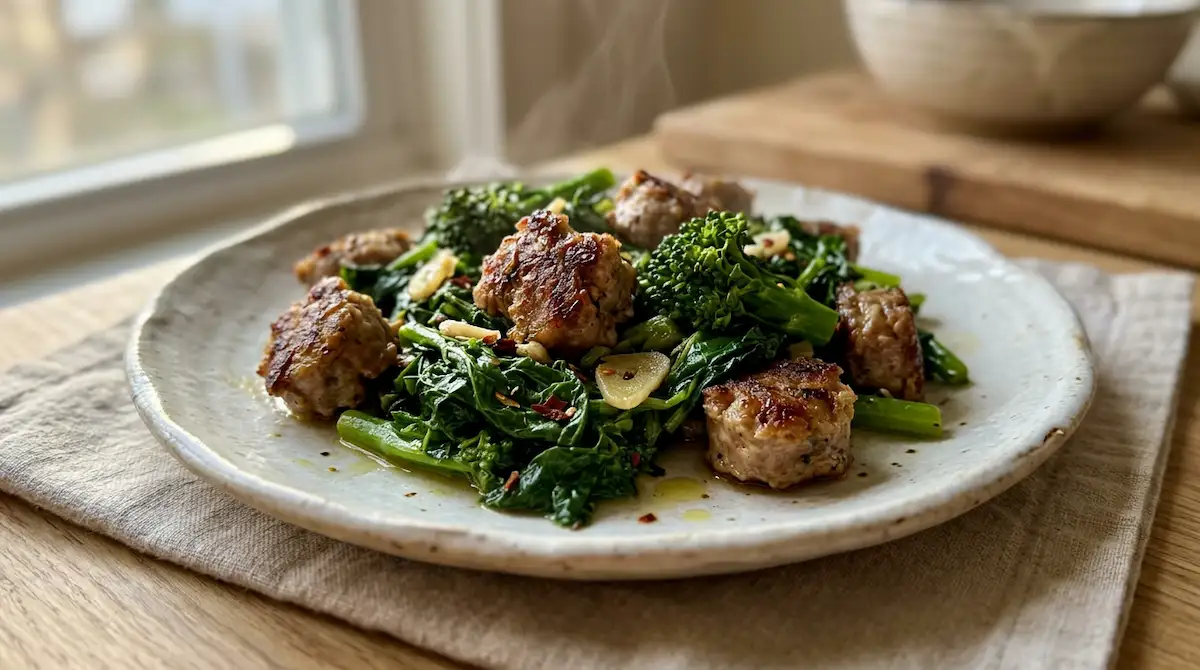
How to Make Delicious Broccoli Rabe and Sausage in 5 Simple Steps
When was the last time you craved something deeply savory, slightly bitter, and absolutely satisfying? Broccoli rabe and sausage delivers exactly that combination, bringing together the bold, peppery greens with rich Italian sausage in a dish that tastes like Sunday dinner at an Italian grandmother’s house. This classic pairing has fed families for generations because it’s straightforward, requires minimal ingredients, and transforms simple components into something truly memorable. In this guide, you’ll learn everything you need to know about preparing broccoli rabe and sausage, from selecting the freshest ingredients to mastering the cooking technique that balances bitterness with savory richness perfectly.
Table of Contents
What is Broccoli Rabe and Sausage
Broccoli rabe and sausage is a traditional Italian-American dish that combines rapini (commonly called broccoli rabe) with seasoned Italian sausage, garlic, and olive oil. Despite its name, broccoli rabe isn’t actually broccoli—it’s more closely related to turnips and has a distinctive bitter, peppery flavor that stands up beautifully to rich, fatty meats.
This dish originated in Southern Italy, particularly in regions like Campania and Calabria, where cooks have long appreciated the balance between bitter greens and savory pork. When Italian immigrants arrived in America, they brought this preparation method with them, and it quickly became a staple in Italian-American kitchens across the Northeast.
The beauty of broccoli rabe and sausage lies in its simplicity. You don’t need fancy techniques or complicated sauces. Instead, the dish relies on proper blanching of the greens to tame their bitterness, browning the sausage to develop deep flavor, and bringing everything together with garlic and olive oil. Moreover, this preparation method allows each ingredient to shine while creating a harmonious whole that’s greater than the sum of its parts.
Many Italian families serve broccoli rabe and sausage over pasta, alongside crusty bread, or simply on its own as a hearty main course. The slight bitterness of the greens cuts through the richness of the sausage, creating a balanced dish that never feels heavy despite its robust flavors.
Why You Will Love This Broccoli Rabe and Sausage
First and foremost, broccoli rabe and sausage comes together in roughly thirty minutes from start to finish. This makes it perfect for busy weeknights when you want something substantial and flavorful without spending hours in the kitchen. Furthermore, the hands-on time is minimal most of the cooking happens while you prep the next component.
The flavor profile of broccoli rabe and sausage is incredibly satisfying, especially if you appreciate bold, assertive tastes. The slight bitterness of the greens pairs beautifully with the fennel and garlic notes in Italian sausage, while red pepper flakes add just enough heat to keep things interesting. Additionally, the dish offers wonderful textural contrast between the tender greens, crispy sausage edges, and any pasta you might serve it with.
Another reason to love this recipe is its versatility. You can serve broccoli rabe and sausage over pasta for a complete meal, pile it onto crusty bread for hearty sandwiches, or enjoy it on its own as a low-carb dinner option. Each serving method brings out different qualities in the dish.
Nutritionally, broccoli rabe and sausage delivers impressive benefits. Broccoli rabe contains high levels of vitamins A, C, and K, plus calcium and iron. When you combine these nutrient-dense greens with protein-rich sausage, you create a meal that’s genuinely nourishing while tasting indulgent.
Finally, this dish reheats exceptionally well. The flavors actually deepen overnight, making broccoli rabe and sausage ideal for meal prep or enjoying as leftovers the next day.
Ingredients
Main Ingredients
| Ingredient | Amount | Notes |
|---|---|---|
| Broccoli rabe | 2 bunches (about 2 pounds) | Look for firm stems and bright green leaves; trim tough ends |
| Italian sausage | 1 pound | Use sweet or hot based on preference; remove from casings |
| Garlic cloves | 6 cloves | Thinly sliced, not minced; provides better texture |
| Extra virgin olive oil | ¼ cup | Use quality oil for best flavor; divided for cooking |
| Red pepper flakes | ½ teaspoon | Adjust to taste; adds warmth without overwhelming heat |
| Salt | 2 teaspoons | For blanching water; seasons greens thoroughly |
| Black pepper | ½ teaspoon | Freshly ground provides the best flavor |
Optional Ingredients
| Ingredient | Amount | Notes |
|---|---|---|
| Lemon zest | 1 teaspoon | Brightens the dish and cuts richness beautifully |
| Parmesan cheese | ½ cup grated | For serving; adds salty, umami depth |
| White wine | ¼ cup | Deglazes pan and adds acidity to balance flavors |
The quality of your sausage significantly impacts the final dish, so choose fresh Italian sausage from a butcher if possible. The broccoli rabe should feel firm when you squeeze the stems gently, and the leaves should be deep green without yellowing. As for the garlic, slicing it thinly rather than mincing creates little chips that add textural interest and prevent burning during the cooking process.
How to Make Broccoli Rabe and Sausage Step by Step
Step 1: Prepare and Blanch the Broccoli Rabe
Start by bringing a large pot of water to a rolling boil and add two teaspoons of salt. While the water heats, trim the bottom inch off each broccoli rabe stem and discard any yellowed leaves. Roughly chop the broccoli rabe into two-inch pieces, keeping the leafy parts, florets, and tender stems together. Once the water boils vigorously, add all the broccoli rabe and blanch for exactly two minutes. This crucial step tames the intense bitterness while maintaining the vegetable’s structural integrity. Therefore, don’t skip this step or reduce the time. After two minutes, drain the broccoli rabe and sausage greens in a colander and run cold water over them to stop the cooking process immediately.
Step 2: Brown the Sausage
Heat two tablespoons of olive oil in a large skillet over medium-high heat. Remove the sausage from its casings and add the meat to the hot pan, breaking it into bite-sized chunks with a wooden spoon. Allow the sausage to brown undisturbed for about three minutes before stirring this creates flavorful caramelized bits that enhance the entire dish. Continue cooking, stirring occasionally, until the sausage is completely cooked through and golden brown in spots, which typically takes eight to ten minutes total. Once done, use a slotted spoon to transfer the cooked sausage to a plate, leaving the rendered fat in the pan.
Step 3: Cook the Garlic
Reduce the heat to medium and add the sliced garlic to the sausage fat remaining in the pan. If there’s less than a tablespoon of fat, add another tablespoon of olive oil. Cook the garlic gently, stirring constantly, for about one minute until it becomes fragrant and just barely golden around the edges. Watch carefully because garlic can burn quickly, and burnt garlic tastes bitter and acrid. As soon as the garlic becomes aromatic, immediately proceed to the next step.
Step 4: Combine Everything
Add the blanched broccoli rabe to the skillet with the garlic, tossing everything together with tongs. Sprinkle in the red pepper flakes and season with black pepper. Cook for three to four minutes, stirring frequently, until the greens are tender and well-coated with the garlicky oil. Return the cooked sausage to the pan and toss everything together thoroughly. At this point, your broccoli rabe and sausage should look glossy and cohesive, with the flavors melding beautifully.
Step 5: Finish and Adjust Seasoning
Drizzle the remaining olive oil over the broccoli rabe and sausage and toss one final time. Taste the dish and adjust the seasoning, adding more salt if needed, though the sausage usually provides plenty. If you’re using lemon zest, add it now and toss briefly to distribute. Remove from heat and serve immediately while everything is hot and the flavors are at their peak.
Storage and Make-Ahead Tips
Broccoli rabe and sausage stores remarkably well in the refrigerator for up to four days. Transfer any leftovers to an airtight container once they’ve cooled to room temperature. When reheating, use a skillet over medium heat rather than the microwave to maintain the best texture and prevent the greens from becoming mushy.
Interestingly, the flavors in broccoli rabe and sausage actually improve after a day in the refrigerator as the garlic and sausage seasonings permeate the greens more thoroughly. Many Italian families deliberately make this dish a day ahead for exactly this reason.
If you want to prep components in advance, you can blanch the broccoli rabe up to two days ahead. After blanching and shocking in cold water, squeeze out excess moisture and store in an airtight container in the refrigerator. Similarly, you can brown the sausage a day ahead and refrigerate it separately. When ready to serve, simply reheat the sausage, cook fresh garlic, and proceed with combining everything.
For freezing, broccoli rabe and sausage maintains decent quality for up to two months. Freeze in portion-sized containers for easy reheating. Thaw overnight in the refrigerator before reheating in a skillet. However, the texture of the greens will be softer after freezing, so this works better when you plan to serve the dish over pasta rather than on its own.
Never freeze unblanched broccoli rabe, as the bitterness intensifies dramatically and becomes unpleasant.
Common Mistakes and How to Fix Them
The most common error when making broccoli rabe and sausage is skipping or shortening the blanching step. Raw or under-blanched broccoli rabe tastes overwhelmingly bitter and can ruin the entire dish. Always blanch for the full two minutes in properly salted water, as this step is absolutely essential.
Another frequent mistake involves overcrowding the pan when browning sausage. If you pile too much sausage into the skillet at once, it steams rather than browns. This creates a gray, textureless result instead of the flavorful caramelization you want. Therefore, if your pan seems crowded, brown the sausage in two batches instead.
Many home cooks burn the garlic because they keep the heat too high or add it too early. Remember that garlic cooks much faster than onions and needs just one minute in the hot oil. If your garlic turns dark brown or black, discard it and start fresh, as burnt garlic will make your broccoli rabe and sausage taste acrid and bitter.
Using pre-cooked or pre-sliced sausage instead of fresh sausage in casings significantly diminishes the dish’s quality. Fresh sausage provides better texture, more flavor, and creates the delicious rendered fat that becomes part of the sauce. Pre-cooked varieties simply can’t match this depth.
Finally, some cooks add too much liquid to the pan, turning broccoli rabe and sausage into a soupy mess. The blanched greens already contain moisture, so you rarely need additional liquid beyond the olive oil. If your finished dish looks watery, simply increase the heat and cook uncovered for a few extra minutes to evaporate excess moisture.
Variations
While traditional broccoli rabe and sausage uses pork sausage, you can substitute turkey or chicken sausage for a leaner version. Choose varieties seasoned with Italian herbs and fennel to maintain the characteristic flavor profile, though the dish will be less rich.
For a white bean variation, add one can of drained and rinsed cannellini beans during the final combining step. The beans add creaminess and make the broccoli rabe and sausage more substantial while stretching the recipe to serve more people.
You can transform this into a pasta dish by tossing everything with one pound of cooked orecchiette, penne, or rigatoni. Add some pasta cooking water to create a light sauce that coats everything beautifully. This version of broccoli rabe and sausage becomes a complete one-pot meal.
For a spicier version, use hot Italian sausage instead of sweet and increase the red pepper flakes to one teaspoon. Some cooks also add sliced cherry peppers for extra heat and tang.
If broccoli rabe is unavailable, you can substitute broccolini, regular broccoli, or even kale, though each green brings a different flavor profile. Broccolini provides the closest match, while kale creates a milder, earthier broccoli rabe and sausage variation.
Add sun-dried tomatoes during the final toss for a sweet-tart element that complements the bitter greens beautifully. This creates a more complex flavor profile while adding visual appeal.
Serving Suggestions
Traditional Italian families serve broccoli rabe and sausage alongside thick slices of crusty Italian bread for sopping up the garlicky oil. This simple accompaniment turns the dish into a satisfying meal without any additional components.
For a heartier presentation, serve broccoli rabe and sausage over creamy polenta. The smooth, mild polenta provides a wonderful contrast to the assertive flavors and creates a restaurant-quality presentation that’s perfect for dinner parties.
You can also pile broccoli rabe and sausage onto toasted Italian rolls to create incredible sandwiches. Add a few slices of provolone cheese and run the assembled sandwiches under the broiler until the cheese melts for an elevated version.
As mentioned earlier, tossing broccoli rabe and sausage with short pasta shapes creates a complete meal. Orecchiette is traditional because its cup shape captures the small pieces of sausage and greens perfectly. However, penne, rigatoni, or even spaghetti work beautifully.
Serve broccoli rabe and sausage as part of an Italian antipasto spread alongside other small plates like marinated artichokes, olives, aged cheeses, and prosciutto. This allows guests to sample multiple flavors while appreciating each dish’s unique qualities.
Don’t forget a generous grating of Parmesan cheese over the top just before serving. The nutty, salty cheese adds another layer of flavor and helps tie everything together.
Frequently Asked Questions
Can I make broccoli rabe and sausage less bitter?
Absolutely, and the key is proper blanching. Make sure you blanch the broccoli rabe for the full two minutes in well-salted boiling water. Additionally, you can blanch it for up to three minutes if you find even the standard preparation too bitter. However, longer blanching will soften the texture more. Another trick is to add a squeeze of fresh lemon juice at the end, as the acidity balances the bitterness beautifully.
What’s the difference between broccoli rabe and regular broccoli?
Despite the similar names, broccoli rabe and regular broccoli are completely different vegetables. Broccoli rabe belongs to the turnip family and has long, leafy stems with small florets and a distinctly bitter, peppery taste. Regular broccoli has large, tight florets and a milder, slightly sweet flavor. You cannot substitute one for the other in broccoli rabe and sausage and expect the same results, though broccolini makes a decent alternative.
Do I have to remove sausage from casings for broccoli rabe and sausage?
Yes, removing the sausage from its casings is essential for this preparation. Leaving the sausage in links creates an entirely different dish where the meat and greens remain separate rather than integrated. When you remove the casings and break the sausage into small pieces, it distributes throughout the broccoli rabe and sausage, ensuring every bite contains both components and the sausage fat coats the greens.
Can I use pre-washed broccoli rabe?
You can, though you should still rinse it quickly before cooking. Pre-washed broccoli rabe saves some time, but it often costs significantly more and may not be as fresh as whole bunches. Additionally, you’ll still need to trim the tough stem ends regardless of whether it comes pre-washed. Therefore, buying whole bunches and washing them yourself typically provides better value and fresher results for your broccoli rabe and sausage.
How do I know when broccoli rabe is bad?
Fresh broccoli rabe should have firm, crisp stems and vibrant green leaves. If the leaves are yellowing, wilted, or slimy, or if the stems feel soft and bendy, the broccoli rabe has gone bad. Additionally, any off smell indicates spoilage. Use fresh broccoli rabe within three to four days of purchase for the best results in broccoli rabe and sausage.
What wine pairs well with broccoli rabe and sausage?
The bitter greens and rich sausage in broccoli rabe and sausage pair beautifully with medium-bodied Italian red wines like Chianti, Barbera, or Montepulciano d’Abruzzo. These wines have enough acidity to cut through the richness while complementing the savory flavors. If you prefer white wine, choose something with good acidity like Vermentino or Greco di Tufo.
Making broccoli rabe and sausage at home connects you to generations of Italian cooks who understood that simple ingredients, prepared properly, create the most satisfying meals. This dish proves that you don’t need elaborate techniques or exotic ingredients to put something truly delicious on the table. Once you master the basic method, you’ll find yourself returning to this recipe again and again, perhaps tweaking it here and there to make it your own. The combination of bitter greens and savory sausage might seem unusual at first, but one bite will show you why this pairing has endured for so long. Gather your ingredients, heat up that skillet, and prepare to enjoy one of Italian cooking’s most beloved combinations.