
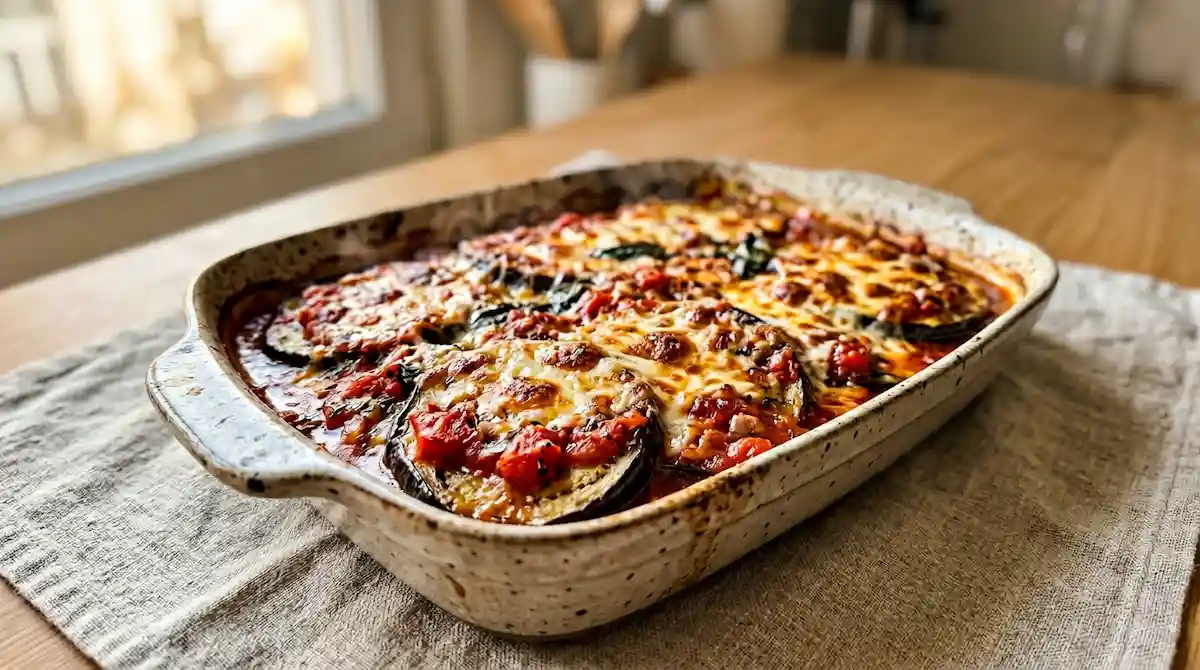
How to Make the Best Eggplant Casserole in 6 Simple Steps
Ever wonder why eggplant gets such a bad rap, especially when it can transform into something as comforting and delicious as a perfectly baked casserole?
I used to be skeptical too, until I discovered that eggplant casserole is one of those dishes that converts even the pickiest eaters into fans.
This is not some complicated restaurant recipe that requires culinary school skills. Instead, it is a straightforward, home-style dish that layers tender eggplant with rich tomato sauce, cheese, and aromatic herbs.
The result? A bubbling, golden-topped masterpiece that works just as well for a cozy family dinner as it does for impressing guests at your next gathering. I am going to walk you through every step, share the tricks I have learned from making this dozens of times, and show you exactly how to avoid the common pitfalls that can turn eggplant mushy or bitter.
Table of Contents
What is Eggplant Casserole
An eggplant casserole is essentially a layered baked dish that showcases eggplant as the star ingredient, similar in concept to lasagna but with a lighter, more vegetable-forward approach.
Think of it as eggplant parmesan’s more casual, easier-to-make cousin.
The basic structure involves sliced eggplant layered with tomato sauce, cheese (usually mozzarella and parmesan), and often some herbs and seasonings that tie everything together beautifully.
What makes this dish special is how the eggplant transforms during baking. It goes from firm and slightly spongy to incredibly tender and almost creamy in texture.
The eggplant soaks up all those savory flavors from the sauce and cheese, creating this harmonious blend where every component enhances the others.
Some versions include a breadcrumb topping for extra crunch, while others keep it simple with just cheese on top.
The beauty of eggplant casserole lies in its versatility and adaptability. You can make it vegetarian, add ground meat for extra heartiness, incorporate different cheeses based on what you love, or adjust the seasonings to match your taste preferences.
It is also a fantastic make-ahead dish that actually tastes better the next day after all the flavors have had time to meld together.
Whether you are looking for a satisfying meatless main course or a side dish that steals the show, this casserole delivers every single time.
Why You Will Love This Eggplant Casserole
This eggplant casserole recipe is going to become one of your go-to dishes for so many reasons, and I am not just saying that.
First off, it is way easier than it looks. When people see that gorgeous layered casserole come out of the oven, they assume you spent hours slaving away in the kitchen.
The truth? Most of the work is just slicing and layering. The oven does the heavy lifting while you relax or prep something else.
Another reason you will love this is how incredibly satisfying it tastes without being heavy. Unlike cream-based casseroles that leave you feeling sluggish, this one is lighter while still being totally comforting.
The eggplant provides substance without weighing you down, and you can control exactly how much cheese you use based on your preferences.
I also appreciate how this eggplant casserole works for different dietary needs. It is naturally vegetarian, and you can easily make it gluten-free or dairy-free with simple substitutions.
Plus, it is packed with vegetables, so you are actually getting serious nutrition along with all that delicious flavor.
Here is something else: this recipe is incredibly forgiving. If your slices are not perfectly even or you add a bit more sauce than called for, it still turns out great.
The casserole format is super flexible, which makes it perfect for home cooks of any skill level.
And let’s talk about leftovers for a second. Most casseroles are good reheated, but eggplant casserole is genuinely better the next day.
Those flavors deepen and intensify overnight, making your lunch the most envied meal in the office break room.
Ingredients
Let’s gather everything you need to create this incredible eggplant casserole. The ingredient list is refreshingly simple and uses items you can find at any grocery store.
Main Ingredients
| Ingredient | Amount | Notes |
|---|---|---|
| Large eggplants | 2 (about 2 lbs) | Look for firm ones without soft spots |
| Olive oil | 1/4 cup | For brushing the eggplant slices |
| Salt | 2 teaspoons | Helps draw out moisture and bitterness |
| Marinara sauce | 3 cups | Store-bought or homemade both work |
| Mozzarella cheese, shredded | 2 cups | Fresh mozzarella works but is pricier |
| Parmesan cheese, grated | 1 cup | Freshly grated tastes much better |
| Fresh basil | 1/2 cup, chopped | Dried basil works in a pinch (use 2 tbsp) |
| Garlic | 4 cloves, minced | Never skip this flavor foundation |
| Black pepper | 1 teaspoon | Freshly ground makes a difference |
| Italian seasoning | 1 tablespoon | Or use oregano and thyme mix |
Optional Add-Ins
| Ingredient | Amount | Notes |
|---|---|---|
| Ricotta cheese | 1 cup | Makes it creamier, almost lasagna-like |
| Breadcrumbs | 1/2 cup | For a crispy topping layer |
| Red pepper flakes | 1/2 teaspoon | If you like a little heat |
| Fresh oregano | 2 tablespoons | Adds authentic Italian flavor |
| Sliced mushrooms | 1 cup | Extra umami and texture |
The ingredients in this eggplant casserole work together to create layers of flavor and texture that make every bite interesting.
The eggplant provides a meaty texture that is surprisingly substantial, while the marinara sauce brings acidity and sweetness that balances the richness of the cheese.
Meanwhile, the combination of mozzarella and parmesan gives you both gooey, melty goodness and sharp, nutty flavor that elevates everything.
The herbs are not just garnish they are essential for that authentic Italian taste that makes this dish so crave-worthy.
How to Make Eggplant Casserole Step by Step
Alright, let’s get cooking! I am going to walk you through this process step by step, and trust me, it is more straightforward than you might think.
Step 1: Prepare and Salt the Eggplant
Start by slicing your eggplants into rounds about half an inch thick. Try to keep them relatively uniform so they cook evenly, but do not stress if some are slightly different.
Lay the slices out on paper towels or clean kitchen towels and sprinkle both sides generously with salt.
This step is crucial because it draws out excess moisture and any bitterness from the eggplant.
Let the slices sit for about thirty minutes. You will notice beads of moisture forming on the surface that is exactly what you want to see.
After the time is up, pat the slices dry with paper towels to remove the moisture and excess salt. This prevents your eggplant casserole from turning watery during baking.
Some people skip this salting step, and honestly, modern eggplants are less bitter than they used to be, but I still do it for the texture benefits alone.
Step 2: Roast or Pan-Fry the Eggplant
Preheat your oven to 400°F. Line a couple of baking sheets with parchment paper for easy cleanup.
Brush both sides of each eggplant slice lightly with olive oil you do not need to drench them, just a light coating works perfectly.
Arrange the slices in a single layer on your baking sheets and roast for about twenty to twenty-five minutes, flipping halfway through.
You want them golden and tender but not falling apart. They should be cooked through but still hold their shape when you transfer them.
Alternatively, you can pan-fry the slices in batches if you prefer. Heat a bit of olive oil in a large skillet over medium-high heat and cook the slices for about three minutes per side until golden.
Pan-frying gives you a slightly richer flavor, but roasting is easier and uses less oil. Either method works beautifully for this eggplant casserole.
Step 3: Prepare Your Sauce
While your eggplant is cooking, warm up your marinara sauce in a saucepan over medium heat. Add the minced garlic and let it cook for about a minute until fragrant.
Stir in your Italian seasoning, black pepper, and half of the fresh basil. Let the sauce simmer gently for about ten minutes to allow the flavors to blend together.
Taste and adjust the seasoning if needed sometimes I add a pinch of sugar if the sauce tastes too acidic, or a bit more salt if it needs it.
If you are making your own sauce from scratch, even better! Just make sure it is not too watery, as excess liquid will make your eggplant casserole soggy.
A thicker sauce clings to the eggplant layers better and creates that perfect texture you are going for.
Step 4: Layer Your Casserole
Now comes the fun part building your casserole! Grab a 9×13 inch baking dish and spread about half a cup of sauce on the bottom.
This prevents sticking and ensures every bite has flavor. Arrange a layer of eggplant slices, overlapping them slightly to cover the sauce completely.
Spoon more sauce over the eggplant layer, then sprinkle with mozzarella, parmesan, and some of the remaining fresh basil.
Repeat this layering process eggplant, sauce, cheese, basil until you have used up all your ingredients. You should get about three layers total, depending on your dish size.
For the top layer, be generous with the cheese because that is what creates that gorgeous golden crust. If you are using breadcrumbs, mix them with a little parmesan and sprinkle them over the top layer of cheese.
Take a step back and admire your work your eggplant casserole is ready for the oven and already looks amazing!
Step 5: Bake to Perfection
Lower your oven temperature to 375°F. Cover your casserole dish tightly with aluminum foil and slide it into the oven.
Bake covered for about thirty minutes. This allows the eggplant to finish cooking through and the flavors to meld together without the top burning.
After thirty minutes, remove the foil and continue baking for another fifteen to twenty minutes until the cheese is bubbly and golden brown on top.
You want to see those gorgeous browned spots on the cheese that is where the best flavor lives. If you want an extra-crispy top, pop it under the broiler for just two minutes at the end.
Watch it carefully though, because cheese goes from perfect to burnt in seconds under the broiler. The eggplant casserole is done when it is bubbling around the edges and the top is beautifully golden.
Step 6: Rest Before Serving
Here is where patience pays off let your eggplant casserole rest for at least fifteen minutes before cutting into it. I know it is hard to wait when it smells so incredible, but this resting time is essential.
It allows the layers to set up properly so you get clean slices instead of a saucy mess when you serve it.
During this time, the sauce thickens slightly and everything firms up just enough to hold together beautifully on the plate.
Use this time to make a quick salad or set the table. When you finally cut into it, you will see those gorgeous distinct layers that make casseroles so visually appealing.
Garnish with some fresh basil leaves right before serving for a pop of color and fresh flavor.
Storage and Make-Ahead Tips
One of the best things about eggplant casserole is how well it stores and reheats, making it perfect for meal prep or making ahead for busy weeks.
Let the casserole cool completely before storing it. Cover the baking dish tightly with plastic wrap or aluminum foil, or transfer portions to airtight containers.
Store it in the refrigerator for up to five days. Honestly, I think it tastes even better on day two after all those flavors have had time to really get to know each other.
To reheat, you have a few options. For individual portions, microwave on medium power for two to three minutes until heated through.
For larger portions or the whole casserole, reheat in a 350°F oven covered with foil for about twenty-five minutes, then uncover for the last five minutes to crisp up the top.
If you want to freeze your eggplant casserole, absolutely go for it. It freezes beautifully for up to three months.
I recommend portioning it into meal-sized servings before freezing for easier reheating later. Wrap each portion tightly in plastic wrap, then again in foil to prevent freezer burn.
Thaw frozen casserole in the refrigerator overnight before reheating. You can also make the entire eggplant casserole ahead and freeze it before baking.
Assemble everything in a freezer-safe dish, wrap it well, and freeze. When you are ready to eat, thaw it overnight and bake as directed, adding maybe ten extra minutes to the covered baking time.
This is such a lifesaver for those nights when you need a homemade meal but do not have time to cook from scratch.
Common Mistakes and How to Fix Them
Let me save you from some frustrations I have experienced while perfecting my eggplant casserole technique over the years.
The biggest mistake people make is skipping the salting step or not patting the eggplant dry afterward. This results in a watery, soggy casserole that nobody wants.
Even if you are in a rush, take the time to salt your eggplant and let it drain for at least twenty minutes. The difference in texture is massive.
If you forget and your casserole turns out too watery, there is unfortunately no great fix, so just make a mental note for next time.
Another common error is slicing the eggplant too thin or too thick. Too thin and it disintegrates into mush; too thick and it does not cook through properly.
Aim for that half-inch thickness it is the sweet spot where the eggplant gets tender but maintains its structure beautifully.
If you accidentally slice them unevenly, put the thicker pieces on the bottom layers where they will get more cooking time.
People also tend to use too much sauce, thinking more is better. Actually, too much sauce makes your eggplant casserole soupy and the layers slide around instead of staying put.
You want just enough sauce to coat each layer without pooling in the dish. If you accidentally add too much, tilt the pan and spoon some out before baking.
Do not forget to let your casserole rest before cutting into it! I know I mentioned this earlier, but it is worth repeating because so many people skip this step.
Cutting into it immediately causes all the layers to collapse and the sauce to run everywhere. Those fifteen minutes of resting make the difference between a beautiful presentation and a sloppy mess.
Finally, watch your oven temperature. Every oven is different, and if yours runs hot, your cheese might brown too quickly before the inside is properly heated.
If you notice the top browning too fast, tent it with foil and lower the temperature by twenty-five degrees. Your eggplant casserole should cook gently and evenly.
Variations
The basic eggplant casserole is fantastic, but there are so many fun ways to customize it based on your preferences or what you have on hand.
For a heartier version, brown some Italian sausage or ground beef and layer it between the eggplant and sauce. This transforms it into a complete one-dish meal that even serious meat-eaters will devour.
Just make sure to drain the meat well so you are not adding excess grease to your casserole.
If you want to go full Mediterranean, add layers of sliced zucchini or yellow squash along with the eggplant. Throw in some kalamata olives and feta cheese instead of mozzarella for a Greek-inspired twist.
A sprinkle of cinnamon in the sauce might sound weird, but it is traditional in Greek moussaka and adds this subtle warmth that is absolutely delicious.
For a creamier eggplant casserole, spread ricotta cheese mixed with an egg and some parmesan between the layers, just like you would in lasagna.
This makes it richer and more indulgent perfect for special occasions or when you really want to treat yourself.
Try a vegan version by using cashew cream instead of cheese, or simply skip the cheese altogether and add extra herbs and nutritional yeast for a savory, umami flavor.
You would be surprised how delicious it is even without dairy. Some people swear by adding a layer of thinly sliced potatoes along with the eggplant for extra heartiness and texture contrast.
For a low-carb keto-friendly eggplant casserole, skip any breadcrumbs and use full-fat cheeses. Add some cooked bacon or pancetta for extra fat and flavor that fits perfectly within keto guidelines.
The possibilities really are endless once you master the basic technique, you can play around with flavors and ingredients to make it uniquely yours.
Serving Suggestions
An eggplant casserole is substantial enough to serve as your main course, but the right sides can turn it into a truly memorable meal.
My favorite pairing is a simple arugula salad with lemon vinaigrette. The peppery greens and bright, acidic dressing cut through the richness of the cheese perfectly.
Just toss some arugula with olive oil, fresh lemon juice, salt, and pepper right before serving. Sometimes I add shaved parmesan and pine nuts to make it a bit fancier.
Crusty bread is basically mandatory in my house when I serve this. You need something to soak up that delicious sauce and cheese that pools on your plate.
A warm baguette or some homemade garlic bread makes everyone happy. If you are avoiding carbs, roasted vegetables like asparagus or green beans work beautifully alongside the casserole.
For a complete Italian feast, start with a simple antipasto platter some olives, marinated artichokes, roasted red peppers, and good salami.
Your eggplant casserole becomes the main event, and you can finish with something light like fresh fruit or a scoop of gelato.
Wine pairing is easy here. A medium-bodied red like Chianti or Sangiovese complements the tomato sauce and cheese beautifully.
If you prefer white wine, try a crisp Pinot Grigio that will not compete with the flavors. For non-alcoholic options, sparkling water with lemon or a light iced tea works perfectly.
The key is keeping your sides relatively simple so your eggplant casserole remains the star of the show.
You have put effort into making it delicious, so let it shine without too much competition on the plate.
Frequently Asked Questions
Do I need to peel the eggplant for eggplant casserole?
Nope, you do not need to peel it! The skin is totally edible and actually adds nice color and texture to your casserole.
It also helps the slices hold together better during baking instead of falling apart. The skin becomes tender as it cooks, so you will not even notice it is there.
However, if you are using a really large, mature eggplant with thick, tough skin, you might want to peel it. Just use a vegetable peeler and remove it in strips before slicing.
For regular-sized eggplants from the grocery store, though, just leave the skin on and save yourself the extra work.
Can I make eggplant casserole ahead of time?
Absolutely! In fact, this is one of the best make-ahead dishes I know. You can assemble the entire eggplant casserole up to two days in advance.
Just cover it tightly and keep it in the refrigerator until you are ready to bake it. You might need to add an extra ten minutes to the covered baking time since it is starting cold.
You can also make it completely, bake it, and then reheat portions as needed throughout the week. As I mentioned earlier, the flavors actually improve after a day in the fridge.
This makes it perfect for meal prep or when you are having guests and want to get most of the cooking done beforehand.
How do I prevent my eggplant casserole from being watery?
The key to avoiding a watery eggplant casserole is all in the prep work. First, definitely salt your eggplant slices and let them drain for at least twenty minutes.
This draws out excess moisture before you even start cooking. Second, make sure to pat them completely dry after salting.
Also, use a thick marinara sauce rather than a thin, runny one. If your sauce seems too watery, simmer it uncovered for ten minutes to reduce and thicken it.
Finally, do not skip the resting time after baking. This allows any excess moisture to be reabsorbed and the layers to set properly.
What is the best cheese for eggplant casserole?
The classic combination is mozzarella and parmesan, and honestly, it is classic for a reason it works beautifully. Mozzarella gives you that gooey, melty texture, while parmesan adds sharp, nutty flavor.
However, you can definitely experiment! Provolone adds a slightly smoky flavor, while fontina makes it extra creamy and rich.
Some people love adding a bit of ricotta between the layers for a lasagna-like texture. For the best results, use a combination of cheeses rather than just one type.
This creates more complex flavor and better texture in your finished eggplant casserole.
Can I use Japanese or Chinese eggplant instead of regular eggplant?
Sure, you can use different varieties of eggplant, though the cooking time might need slight adjustment. Japanese and Chinese eggplants are smaller and more delicate with fewer seeds.
They have a sweeter flavor and tender texture that works great in casseroles. You will just need more of them to equal the same amount as two large globe eggplants.
They also cook a bit faster, so keep an eye on them during the roasting step. The slicing and layering process works exactly the same way.
Some people actually prefer these varieties because they are less bitter and have a creamier texture when cooked.
How do I know when my eggplant casserole is done?
Your eggplant casserole is ready when the cheese on top is golden brown and bubbling, and you can see the sauce bubbling around the edges of the dish.
If you insert a knife into the center, it should slide through the eggplant layers easily without resistance. The internal temperature should reach about 165°F if you want to check with a thermometer.
The top should be beautifully browned with some darker spots where the cheese has caramelized. If the top is browning too quickly but the inside is not hot enough, cover it with foil and continue baking.
Better to take it a few minutes longer than to serve it undercooked.
Can I freeze eggplant casserole?
Yes, eggplant casserole freezes really well! You can freeze it either before or after baking, depending on what works better for your schedule.
To freeze unbaked casserole, assemble everything in a freezer-safe dish, wrap it tightly in plastic wrap and then foil, and freeze for up to three months.
Thaw it completely in the refrigerator overnight before baking as directed. For already-baked casserole, let it cool completely, then portion it or freeze the whole thing wrapped well.
Reheat from frozen in a 350°F oven, covered, for about forty-five minutes, or thaw first and reheat for twenty-five minutes. The texture stays surprisingly good after freezing.
Making a delicious eggplant casserole is one of those cooking skills that seems impressive but becomes second nature once you have done it a few times.
The first time might feel like a bit of a process with all the slicing and layering, but by your third attempt, you will be breezing through it without even thinking.
What I love most about this dish is how it bridges the gap between everyday comfort food and something special enough for company.
You can serve this eggplant casserole on a random Tuesday because you had eggplants to use up, or you can make it the centerpiece of a dinner party it works beautifully either way.
The flexibility, the make-ahead friendly nature, and the way it actually improves with time make it perfect for our real, busy lives.
Start with this basic recipe and nail down the technique. Then feel free to experiment with the variations until you find your perfect version.
Before you know it, you will have people asking for your eggplant casserole recipe, and you will proudly share it knowing they are about to discover something truly delicious.
Now go grab some eggplants and get cooking you have totally got this!