
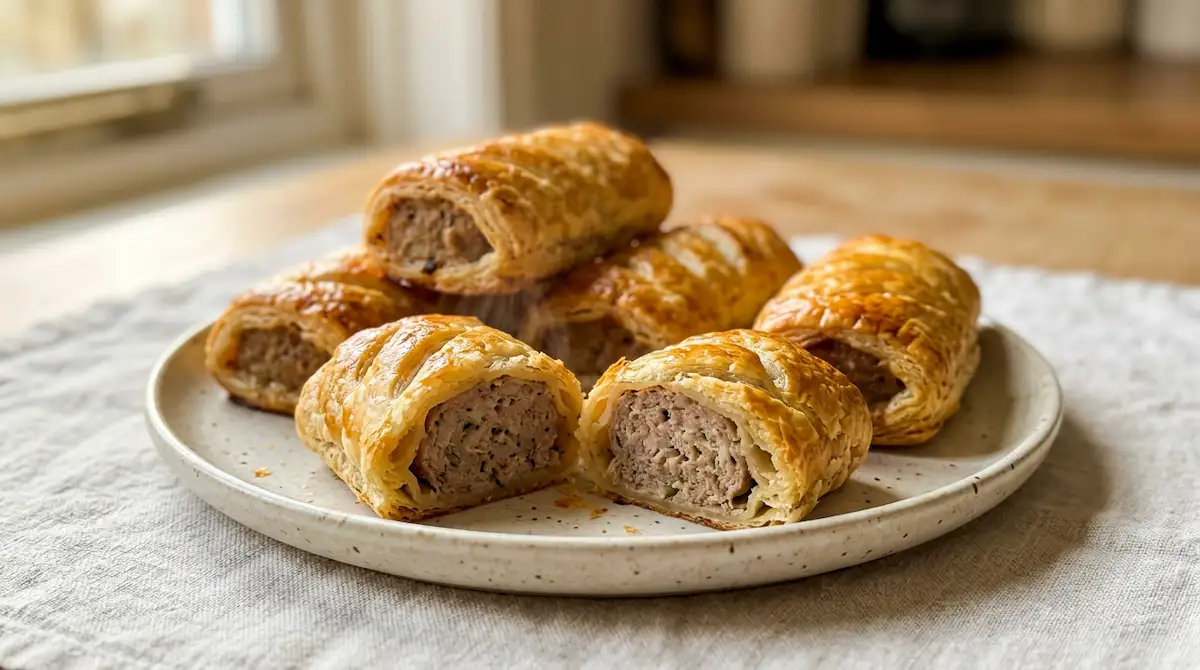
How to Make Perfect Puff Pastry Sausage Rolls in 4 Simple Steps
There’s something almost magical about pulling a tray of golden, flaky Puff Pastry Sausage Rolls from the oven. That buttery aroma fills your kitchen, and suddenly everyone appears asking when they can eat. I’ve been making these for years for game day parties, holiday gatherings, random Tuesday nights when I need comfort food and they never disappoint.
The contrast between the crispy, shattered puff pastry and the savory, perfectly seasoned sausage filling is absolutely addictive. What makes them even better? They’re surprisingly simple to make, even if you’ve never worked with puff pastry before. In this guide, I’ll share everything I’ve learned through countless batches, including the mistakes I made so you can skip straight to perfect sausage rolls every time.
Table of Contents
What is Puff Pastry Sausage Rolls
Puff Pastry Sausage Rolls are a beloved British classic that have conquered appetizer tables worldwide. At their core, they’re seasoned sausage meat wrapped in buttery puff pastry and baked until golden and crispy. Simple concept, spectacular results.
The beauty lies in the contrast. Puff pastry contains hundreds of delicate layers created by folding butter into dough repeatedly. When it bakes, steam separates those layers, creating that signature flaky texture that shatters when you bite into it. Meanwhile, the sausage filling stays juicy and flavorful inside its crispy shell.
These aren’t just party food, though they certainly excel in that role. I’ve served Puff Pastry Sausage Rolls as quick weeknight dinners alongside a salad, packed them in lunch boxes, brought them to potlucks, and watched them disappear at every single gathering. They’re equally at home on an elegant brunch spread or a casual game-day snack table.
Traditionally, British sausage rolls use pork sausage meat mixed with herbs and spices. However, the concept has evolved beautifully over time. You’ll find versions with different meats, vegetarian options, and creative seasoning combinations. The foundational technique remains the same, which means once you master it, you can customize endlessly.
Why You Will Love This Puff Pastry Sausage Rolls
First off, these Puff Pastry Sausage Rolls taste expensive and impressive but require minimal effort. Nobody needs to know you used store-bought puff pastry and threw everything together in about 15 minutes of actual hands-on work. I certainly never volunteer that information when people are complimenting them.
The make-ahead factor is huge. You can assemble an entire tray, freeze them unbaked, and pull out exactly as many as you need whenever company arrives unexpectedly or you need a quick snack. Consequently, I always keep a stash in my freezer because they’ve saved me countless times when I needed to feed people without notice.
They’re also incredibly versatile. The basic recipe works beautifully, but you can adapt it endlessly. Add different herbs, swap proteins, adjust seasonings, make them spicy or keep them mild. Therefore, you’ll never get bored making the same version repeatedly.
Cost-effectiveness matters too. A package of puff pastry and a pound of sausage creates dozens of rolls. Compare that to buying premade appetizers or ordering catering, and the savings add up quickly. Moreover, homemade versions taste significantly better than anything you’ll find in the frozen food aisle.
Most importantly, they just make people happy. I’ve watched quiet guests suddenly become chatty after trying one. I’ve seen kids who “don’t like sausage” devour three in a row. There’s something universally appealing about the combination of buttery pastry and savory filling that transcends age, dietary preferences, and even pickiness. Every single time I make Puff Pastry Sausage Rolls, they disappear completely.
Ingredients
Main Ingredients
| Ingredient | Amount | Notes |
|---|---|---|
| Puff pastry sheets | 2 sheets (17.3 oz package) | Thaw in fridge overnight for best results |
| Ground pork sausage | 1 lb | Use your favorite breakfast or Italian sausage |
| Breadcrumbs | ½ cup | Fresh or panko both work wonderfully |
| Egg | 1 large | Beaten, for binding and egg wash |
| Fresh parsley | 2 tablespoons | Finely chopped, adds brightness |
| Garlic | 2 cloves | Minced, essential for depth |
| Onion powder | 1 teaspoon | Distributes more evenly than fresh onion |
| Dried thyme | ½ teaspoon | Classic pairing with sausage |
| Salt | ½ teaspoon | Adjust based on sausage saltiness |
| Black pepper | ½ teaspoon | Freshly ground preferred |
| Dijon mustard | 1 tablespoon | Secret ingredient for complexity |
Optional Add-ins
| Ingredient | Amount | Notes |
|---|---|---|
| Fresh sage | 1 tablespoon chopped | Wonderful for fall/winter versions |
| Red pepper flakes | ¼ teaspoon | For a gentle kick |
| Grated apple | ¼ cup | Adds moisture and subtle sweetness |
| Sesame seeds | 2 tablespoons | Sprinkle on top before baking |
The puff pastry is your foundation here, so quality matters. I always use frozen puff pastry sheets from the grocery store they’re consistent and reliable. The key is proper thawing. Leave them in the refrigerator overnight rather than on the counter. This prevents them from becoming too soft and difficult to work with.
That tablespoon of Dijon mustard might seem random, but trust me on this one. It adds a subtle tanginess that deepens the overall flavor without making the rolls taste like mustard. I discovered this accidentally when I added it to one batch, and now I never skip it. The breadcrumbs serve double duty they help bind the filling together and absorb excess moisture, preventing soggy bottoms.
How to Make Puff Pastry Sausage Rolls Step by Step
Step 1: Prepare the Sausage Filling
Start by making your filling because it needs to chill before you assemble everything. In a large bowl, combine the ground sausage, breadcrumbs, minced garlic, chopped parsley, onion powder, thyme, salt, pepper, and that crucial tablespoon of Dijon mustard. Crack your egg, beat it lightly, then add half to the sausage mixture. Save the other half for the egg wash later.
Now here’s where people usually get tentative, but don’t be get your hands in there and mix everything thoroughly. I tried using a spoon once. It took forever and didn’t distribute the seasonings evenly. Your hands work so much better for this. Mix until everything is completely combined and the mixture looks uniform throughout.
Once mixed, cover the bowl and refrigerate for at least 30 minutes. This chilling time makes the filling easier to shape and helps the flavors meld together. Meanwhile, this is the perfect time to prepare your puff pastry. Remove it from the fridge and let it sit at room temperature for about 10 minutes. You want it pliable but still cold.
Step 2: Roll and Shape the Pastry
Lightly flour your work surface just a dusting, not a snowstorm. Too much flour makes the pastry tough. Unfold one puff pastry sheet and gently roll it just slightly to smooth out the fold lines. You’re not trying to make it bigger, just even.
Cut the sheet lengthwise into two equal rectangles. You should now have two long strips from one sheet. Repeat with the second sheet, giving you four strips total.
Take one-quarter of your chilled sausage mixture and shape it into a log running down the center of one pastry strip. Keep the log diameter consistent from end to end this ensures even cooking. Leave about an inch of space at each end. I learned this the hard way after making rolls where the sausage burst out the ends during baking. Not pretty.
Step 3: Seal and Cut the Rolls
Here’s where your Puff Pastry Sausage Rolls really take shape. Brush the exposed edges of the pastry with your reserved beaten egg. This acts as glue, creating a tight seal that won’t pop open during baking.
Fold one side of the pastry over the sausage filling, then fold the other side over to overlap slightly. Press the seam firmly to seal. You want a good seal here be thorough. Then gently roll the log so the seam is on the bottom.
Using a sharp knife, cut the log into individual rolls about 1.5 inches wide. I usually get about 6-7 pieces per log, giving me roughly 24-28 rolls total from the whole recipe. Make clean, decisive cuts. Sawing back and forth smushes the layers and ruins that beautiful flaky texture.
Place each roll seam-side down on a parchment-lined baking sheet, spacing them about an inch apart. They’ll puff up considerably, so don’t crowd them.
Step 4: Egg Wash and Bake to Golden Perfection
Preheat your oven to 400°F while you finish prepping. Brush the top of each roll generously with the remaining egg wash. This creates that gorgeous golden-brown shine and helps any toppings stick. If you’re using sesame seeds or everything bagel seasoning, sprinkle them on now.
For extra-crispy results, I sometimes score the tops with a sharp knife just shallow diagonal slashes. This isn’t necessary, but it gives them a professional bakery look and creates even more crispy edges.
Bake for 20-25 minutes, rotating the pan halfway through for even browning. You’re looking for deep golden color on top and bottom. The pastry should look puffed and crispy, and if you peek underneath, the bottom should be golden too, not pale or doughy.
Let the Puff Pastry Sausage Rolls cool on the baking sheet for about 5 minutes before transferring to a serving platter. They’re incredibly hot inside initially, and this brief rest makes them safer to eat while keeping them perfectly crispy.
Storage and Make-Ahead Tips
Here’s where Puff Pastry Sausage Rolls really shine they’re phenomenally freezer-friendly and make-ahead compatible. For short-term storage, keep baked rolls in an airtight container in the refrigerator for up to 3 days. Reheat them in a 350°F oven for about 8-10 minutes to restore crispiness. The microwave works in a pinch, but you’ll lose that flaky texture.
For freezing baked rolls, cool them completely first. Arrange them on a baking sheet and freeze until solid, then transfer to freezer bags. This prevents them from sticking together. They’ll keep for up to 2 months. Reheat from frozen at 350°F for 12-15 minutes until heated through and crispy again.
However, I actually prefer freezing them unbaked. This is my secret weapon for effortless entertaining. Assemble the rolls completely, brush with egg wash, arrange on a parchment-lined baking sheet, and freeze until solid. Then transfer to freezer bags or containers. They’ll keep for up to 3 months.
When you’re ready to bake, place frozen rolls on a baking sheet and bake at 400°F for 25-30 minutes. No thawing required. They go from freezer to golden perfection while you’re setting out drinks and arranging other snacks. I always have at least one batch in my freezer because unexpected guests happen, and these make me look far more prepared than I actually am.
You can also prep just the filling up to 2 days ahead. Store it covered in the fridge, then assemble and bake when needed. This breaks up the work nicely if you’re planning for a party.
Common Mistakes and How to Fix Them
The biggest mistake I see people make with Puff Pastry Sausage Rolls is working with pastry that’s too warm. When puff pastry gets too soft, it becomes sticky, tears easily, and won’t puff properly in the oven. Keep it cold. If it starts getting too soft while you’re working, pop it back in the fridge for 10 minutes. Patience here pays off enormously.
Overfilling is another common disaster. I get it you want maximum sausage in every bite. But too much filling prevents the pastry from sealing properly and causes blowouts during baking. Stick to the recommended amount. You want a nice balance of pastry to filling, not sausage exploding out of inadequate pastry wrapping.
Not sealing the seam properly leads to opened rolls that look messy and dry out. Use enough egg wash on the edges and press firmly to seal. Check each roll before placing it seam-side down on the baking sheet. If the seal looks weak, add more egg wash and press again.
Cutting the rolls with a dull knife smushes the layers together, preventing proper puffing. Use your sharpest knife and make clean, decisive cuts. I sharpen my knife right before cutting the rolls because it truly makes that much difference.
Underbaking is tempting because you’re worried about burning them. But pale Puff Pastry Sausage Rolls with undercooked bottoms are disappointing. Bake until deeply golden, and always check the bottom of one roll to ensure it’s cooked through. The pastry should shatter when you bite it, not bend.
Finally, skipping the resting time after baking might seem trivial, but those few minutes allow the filling to set slightly, making the rolls much easier to eat without burning your mouth or having filling squirt out everywhere.
Variations
The basic Puff Pastry Sausage Rolls are fantastic, but variations keep things interesting. For a spicy version, use hot Italian sausage or add diced jalapeños and pepper jack cheese to the filling. I make these for game days, and they disappear even faster than the regular version.
Try a breakfast sausage roll by using maple breakfast sausage and adding a small piece of sharp cheddar inside each roll before sealing. These are phenomenal for brunch or holiday morning gatherings. Serve them with maple syrup for dipping, and watch people lose their minds.
For a more sophisticated option, make a caramelized onion and sage version. Slowly caramelize two onions, mix them into the sausage filling with fresh sage, and add a bit of gruyere cheese. These feel fancy enough for upscale gatherings but use the exact same technique.
Vegetarian versions work beautifully too. I’ve made them with a mixture of finely chopped mushrooms, walnuts, breadcrumbs, and herbs, all bound with an egg. Season aggressively vegetarian fillings need more help in the flavor department. Add miso paste or soy sauce for umami depth.
Apple and sage sausage rolls are my fall favorite. Mix grated apple and fresh sage into pork sausage. The apple adds moisture and a subtle sweetness that pairs beautifully with sage. Utterly delicious with a glass of hard cider.
For an international twist, try a Middle Eastern-spiced lamb version with cumin, coriander, and pine nuts. Or go Asian-inspired with ground pork mixed with ginger, scallions, and a splash of soy sauce. The puff pastry works with virtually any flavor profile you can imagine.
Serving Suggestions
Puff Pastry Sausage Rolls are self-sufficient finger food, but dipping sauces elevate them considerably. My go-to is a simple honey mustard mix equal parts Dijon mustard and honey with a splash of apple cider vinegar. It’s sweet, tangy, and takes literally 30 seconds to make.
Spicy ketchup works surprisingly well. Mix regular ketchup with sriracha and a squeeze of lime juice. The acidity cuts through the rich pastry perfectly. I also love a whole grain mustard sauce whole grain mustard whisked with a bit of mayo and lemon juice.
For fancier gatherings, serve them with caramelized onion jam or fig jam. The sweetness against the savory sausage is absolutely divine. I’ve also done a cranberry-horseradish sauce for holiday parties that people request by name now.
As far as side dishes go, a simple green salad with vinaigrette provides nice contrast to the rich rolls. Pickled vegetables gherkins, pickled onions, or pickled peppers add bright acidity that cuts through the butter. For more substantial accompaniments, roasted vegetables or a hearty soup turn these into a complete meal.
When setting up for a party, arrange the rolls on a large platter while they’re still warm. Garnish with fresh herbs for color if you’re feeling decorative. Place your dipping sauces in small bowls around the platter. Keep backup rolls warming in a low oven so you can replenish the platter as it empties and trust me, it will empty.
For casual gatherings, I sometimes set up a DIY station where people can add their own toppings different mustards, hot sauces, pickles. It becomes interactive and fun, plus it takes pressure off me as the host.
Frequently Asked Questions
Can I make Puff Pastry Sausage Rolls with homemade puff pastry?
Absolutely, if you’re feeling ambitious. Homemade puff pastry does taste phenomenal. However, I’m being completely honest when I say I never bother making it from scratch for this recipe. Store-bought frozen puff pastry is consistently excellent, saves hours of work, and lets you focus on the filling instead. Save your energy for things where homemade makes a dramatic difference.
What’s the best type of sausage to use?
I typically use regular pork breakfast sausage because it’s reliably seasoned and widely available. Italian sausage works beautifully too sweet or hot depending on your preference. The key is using ground sausage meat, not link sausages. If you can only find links, just remove the casings. Some fancy butchers sell loose sausage meat with interesting seasonings. Those are fun to experiment with, but standard supermarket sausage produces fantastic results.
Why are my Puff Pastry Sausage Rolls soggy on the bottom?
This usually happens for one of three reasons. First, the filling might be releasing too much moisture. Adding breadcrumbs to the mixture helps absorb excess liquid. Second, you might be underbaking them. Make sure the bottoms are golden, not pale. Finally, check that you’re not overcrowding the pan. The rolls need space for air to circulate underneath. Using a wire rack for cooling also helps keep bottoms crispy.
Can I make these ahead and bake them the next day?
Yes, assemble the rolls, cover them tightly with plastic wrap, and refrigerate for up to 24 hours before baking. Let them sit at room temperature for about 10 minutes before baking, then proceed with the recipe as written. You might need an extra 2-3 minutes of baking time since they’re starting cold. This is perfect for holiday mornings when you want fresh rolls without early morning assembly work.
How do I prevent the pastry from shrinking?
Puff pastry naturally contracts somewhat during baking, but excessive shrinking usually means you stretched it too much while rolling. Roll gently and minimally. Also, let the assembled rolls rest in the fridge for 15-20 minutes before baking. This relaxes the gluten and reduces shrinkage. Finally, make sure your oven is fully preheated. Putting pastry into a cold oven causes more shrinking.
What can I substitute for breadcrumbs?
Crushed crackers, panko, or even rolled oats ground in a food processor all work well. You can also use almond flour for a lower-carb option. The purpose is to absorb moisture and help bind the filling, so anything with that capability works. I’ve even used crushed stuffing mix in a pinch, which added extra seasoning to the filling.
How many Puff Pastry Sausage Rolls does this recipe make?
You’ll typically get 24-28 rolls depending on how thick you cut them. I aim for about 1.5 inches per roll, which gives a nice ratio of pastry to filling and makes them perfect two-bite appetizers. Cut them larger for more substantial portions or smaller for elegant cocktail party bites. The recipe scales beautifully too, so double it if you’re feeding a crowd.
Making Puff Pastry Sausage Rolls has become one of my most-used recipes because they deliver maximum impact with minimal stress. Whether you’re hosting your first dinner party or your fiftieth, trying to impress picky in-laws, or just wanting something delicious on a random weeknight, these rolls show up and perform. The first time I made them, I was nervous about working with puff pastry. It seemed intimidating and professional.
But after that first successful batch came out golden and beautiful, I realized they’re actually incredibly forgiving. The pastry wants to puff and turn crispy. The filling is nearly impossible to mess up. Your main job is just not getting in the way of ingredients that already want to be delicious. Make a batch this week. Freeze half if you’re disciplined enough. And enjoy the compliments when people ask where you bought these amazing Puff Pastry Sausage Rolls then casually mention you made them yourself.