
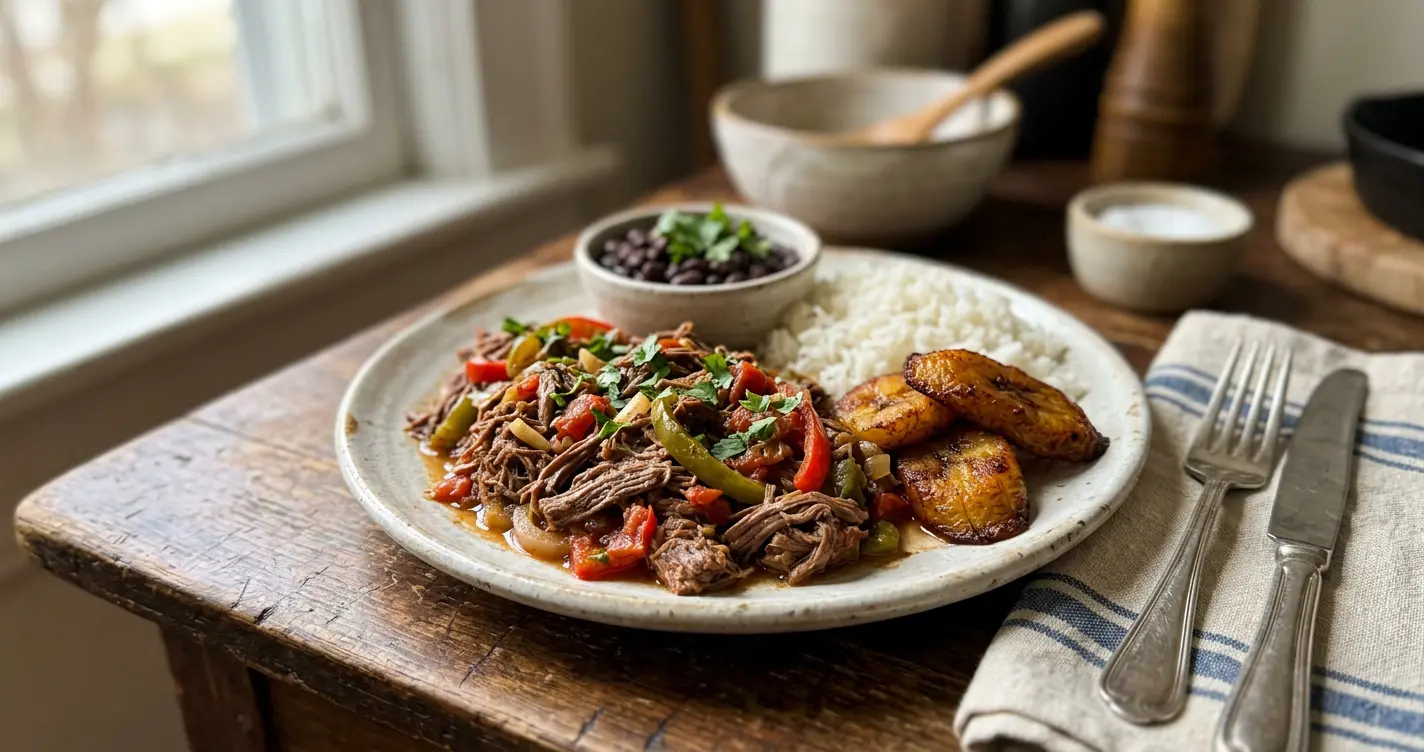
How to Make Ropa Vieja Authentic 7-Step Perfect Recipe
Ever want a dish that fills the whole house with the smell of slow-cooked comfort? Ropa vieja does exactly that. This classic Cuban dish turns tough flank steak into tender, shredded beef swimming in a rich tomato sauce loaded with peppers, onions, and warm spices. The name literally means “old clothes” in Spanish, which describes how the meat looks after it’s been braised and pulled apart into soft, ragged strands.
I’ve made ropa vieja many times, and I can tell you that the difference between a good version and a truly memorable one comes down to patience and layering flavors properly. The beef needs enough time to break down completely. The vegetables need to cook until soft and sweet. And the sauce needs balance between tomato, pepper, and the briny punch from olives and capers. Therefore, when each element gets its due attention, the finished dish tastes deep, satisfying, and genuinely worth the time.
In this guide, I’ll walk you through what ropa vieja is, why it works so well, the ingredients that matter most, a step-by-step method that builds flavor at every stage, smart storage tips, common mistakes to avoid, easy variations, and the best ways to serve it.
Table of Contents
What is Ropa Vieja
Ropa vieja is a traditional Cuban dish made with braised flank steak that’s cooked until very tender, then shredded and simmered in a tomato-based sauce with bell peppers, onions, garlic, olives, and capers. The dish has roots in the Canary Islands but became a cornerstone of Cuban cuisine.
The cooking method matters as much as the ingredients. Because flank steak is lean and fibrous, it needs slow, moist heat to become tender enough to shred. Braising breaks down the connective tissue, and as a result, the meat turns soft and absorbs the flavors of the sauce.
A proper ropa vieja should taste rich but not heavy, with a balance of savory, slightly sweet, and briny notes. The peppers and onions add sweetness, the tomatoes bring acidity, and the olives and capers give the dish its signature tangy bite. Moreover, the dish improves with time, which makes it excellent for meal prep or making ahead.
You’ll find versions of ropa vieja across Latin America and the Caribbean, each with slight regional differences. However, the Cuban version remains the most widely recognized, especially in the United States.
Why You Will Love This Ropa Vieja
The beef becomes incredibly tender
When you braise the meat properly, it practically falls apart. Because the long cooking time breaks down all the tough fibers, every bite feels soft and rich.
The flavors are deep and layered
This isn’t a one-note dish. The ropa vieja builds complexity through browning the meat, softening the vegetables, and letting everything simmer together until the flavors marry completely.
It feeds a crowd easily
One batch makes a lot of food, and moreover, it stretches beautifully when served with rice, beans, or plantains. Therefore, it’s perfect for family dinners or gatherings.
It tastes even better the next day
The flavors deepen after the dish rests overnight. As a result, ropa vieja is one of those rare dishes that actually improves with time.
It’s versatile
You can serve it traditionally over rice, stuff it into sandwiches, roll it into tacos, or even spoon it over mashed potatoes. The shredded beef works in many different formats.
Ingredients
A great ropa vieja depends on good beef, patient cooking, and the right balance of vegetables, tomatoes, and briny accents.
Main Ingredients
| Ingredient | Amount | Notes |
|---|---|---|
| Flank steak | 2 to 2.5 pounds | The traditional cut for this dish |
| Olive oil | 3 tablespoons | For browning and sautéing |
| Yellow onion | 1 large | Sliced thin |
| Red bell pepper | 1 large | Sliced into strips |
| Green bell pepper | 1 large | Sliced into strips |
| Garlic cloves | 6 cloves | Minced |
| Crushed tomatoes | 1 can (28 ounces) | Forms the sauce base |
| Tomato paste | 2 tablespoons | Deepens the tomato flavor |
| Beef broth | 2 cups | Adds richness to the braising liquid |
| Bay leaves | 2 | Adds background depth |
| Ground cumin | 1 1/2 teaspoons | Warm, earthy flavor |
| Dried oregano | 1 teaspoon | Classic Cuban seasoning |
| Paprika | 1 teaspoon | Adds color and mild sweetness |
| Kosher salt | 1 1/2 teaspoons | Adjust to taste |
| Black pepper | 1/2 teaspoon | Adds gentle heat |
| Green olives | 1/2 cup | Pitted and sliced |
| Capers | 2 tablespoons | Adds briny punch |
| White wine or sherry | 1/4 cup | Optional, but adds acidity |
| Fresh cilantro | 1/4 cup | Chopped, for garnish |
Optional Add-ins
| Ingredient | Amount | Notes |
|---|---|---|
| Carrots | 2 medium | Sliced, for extra sweetness |
| Peas | 1/2 cup | Traditional in some versions |
| White vinegar | 1 tablespoon | Brightens the sauce |
| Red pepper flakes | 1/4 teaspoon | Adds mild heat |
| Fresh lime juice | 1 tablespoon | For finishing brightness |
The flank steak is essential because it has the right texture for shredding. I also strongly recommend using both red and green bell peppers because they bring different levels of sweetness and depth. In addition, don’t skip the olives and capers. They give ropa vieja its characteristic flavor, and without them, the dish can taste flat.
How to Make Ropa Vieja Step by Step
This recipe takes time, but the method is straightforward. Each step builds flavor, so don’t rush through them.
Step 1: Brown the beef
Pat the flank steak dry and season it generously with salt and pepper. Heat olive oil in a large Dutch oven or heavy pot over medium-high heat. Brown the steak on both sides until a deep crust forms, about 4 minutes per side. Then remove it and set it aside. This browning step creates the foundation of flavor for the entire ropa vieja.
Step 2: Braise the beef until tender
Add the beef back to the pot along with the beef broth, bay leaves, and enough water to cover the meat by about an inch. Bring to a boil, then reduce the heat to low, cover, and simmer for 2 to 2.5 hours, or until the meat shreds easily with a fork. Because flank steak needs time to break down, don’t rush this stage.
Step 3: Shred the beef
Remove the beef from the braising liquid and let it cool slightly. Reserve the braising liquid. Then shred the meat into strips using two forks or your hands. The texture should look ragged and soft, which is where ropa vieja gets its name.
Step 4: Cook the vegetables
In the same pot, heat a little more olive oil over medium heat. Add the sliced onions and bell peppers. Cook, stirring occasionally, until they soften and start to caramelize slightly, about 8 to 10 minutes. Then add the garlic and cook for another minute. This step builds sweetness and depth in the sauce.
Step 5: Build the sauce
Stir in the tomato paste and cook for a minute until it darkens slightly. Then add the crushed tomatoes, cumin, oregano, paprika, salt, and pepper. Pour in about 1 cup of the reserved braising liquid and the wine if using. Bring the mixture to a simmer and let it cook for 10 minutes so the flavors start to blend.
Step 6: Add the beef and briny ingredients
Return the shredded beef to the pot along with the olives and capers. Stir everything together, reduce the heat to low, and let it simmer gently for 20 to 30 minutes. The beef should absorb the sauce, and moreover, the flavors should deepen and marry completely. If the sauce looks too thick, add a little more braising liquid. On the other hand, if it looks too thin, let it simmer uncovered until it reduces.
Step 7: Adjust and serve
Taste the ropa vieja and adjust the seasoning with more salt, pepper, or a splash of vinegar or lime juice if needed. Remove the bay leaves, garnish with fresh cilantro, and serve hot over rice, with beans, or alongside fried plantains.
Storage and Make-Ahead Tips
One of the best things about ropa vieja is how well it stores and reheats. In fact, it often tastes better after a day in the refrigerator.
Refrigerate for up to 4 days
Store the cooled ropa vieja in an airtight container in the refrigerator. The sauce keeps the beef moist, and therefore, it reheats beautifully without drying out.
Freeze for longer storage
You can freeze ropa vieja in portions for up to 3 months. Thaw it overnight in the refrigerator, then reheat gently on the stove with a splash of broth or water if needed.
Reheat gently
Warm the dish over low heat, stirring occasionally. Because the beef is already tender, you just need to bring it back to serving temperature without overcooking it further.
Make it ahead for gatherings
This is one of the best make-ahead dishes I know. Cook it a day or two before you need it, refrigerate it, and reheat before serving. As a result, the flavors deepen and you save time on the day of your event.
Save the braising liquid
Don’t throw away all the braising liquid. It’s rich with flavor and works beautifully for adjusting the sauce or making rice or beans.
Common Mistakes and How to Fix Them
Even though ropa vieja is forgiving, a few common mistakes can affect the final result.
Mistake 1: Not browning the beef
Skipping the browning step means you lose a whole layer of flavor. Take the time to sear the meat well before braising, because that caramelization builds depth.
Mistake 2: Rushing the braising time
If the beef doesn’t cook long enough, it won’t shred properly. Flank steak needs at least 2 hours of gentle simmering. Therefore, plan accordingly and don’t cut the time short.
Mistake 3: Using the wrong cut of meat
Flank steak is traditional for a reason. Leaner cuts like sirloin or tenderloin won’t shred the same way. However, skirt steak or brisket can work in a pinch.
Mistake 4: Underseasoning the sauce
Because the dish has so many components, it needs enough salt and seasoning to bring everything together. Taste as you go, especially after adding the beef back in.
Mistake 5: Skipping the olives and capers
These briny ingredients are essential to the flavor profile of ropa vieja. Without them, the dish can taste one-dimensional and too sweet from the peppers and tomatoes.
Mistake 6: Letting the sauce get too thick
If the sauce reduces too much, the dish can become pasty. Add a little braising liquid or broth to keep it saucy and rich.
Mistake 7: Serving it immediately
While you can serve ropa vieja right away, letting it rest for a few hours or overnight allows the flavors to settle and deepen. Most importantly, it tastes noticeably better the next day.
Variations
Once you know the traditional method, ropa vieja is easy to adapt based on what you have or what you prefer.
Slow cooker version
After browning the beef and sautéing the vegetables, transfer everything to a slow cooker. Cook on low for 7 to 8 hours or high for 4 to 5 hours. This makes the process even more hands-off.
Instant Pot version
Brown the beef using the sauté function, then pressure cook with the broth and aromatics for 45 minutes. Shred the beef, sauté the vegetables, build the sauce, and simmer everything together. Therefore, you cut the total time significantly.
Spicier version
Add jalapeños, chipotle peppers, or red pepper flakes to the sauce. This gives ropa vieja more heat without losing the traditional flavor balance.
Extra-vegetable version
Add carrots, peas, or even zucchini to the sauce for a heartier, more vegetable-forward dish. This works especially well if you want to stretch the recipe further.
Tomato-free version
Some versions use more broth and wine instead of crushed tomatoes. This creates a lighter, brothier sauce that still tastes rich and flavorful.
Serve it in different formats
Use the shredded beef for Cuban sandwiches, tacos, empanadas, or even over mashed potatoes. The versatility of ropa vieja makes it useful in many different meals.
Serving Suggestions
Ropa vieja is traditionally served with rice and beans, but it pairs well with many different sides.
Serve with white rice
This is the classic pairing. The rice soaks up the rich sauce beautifully, and moreover, it balances the bold flavors of the beef.
Add black beans
Cuban black beans, either whole or refried, complete the traditional plate. In addition, they add protein and make the meal more filling.
Pair with fried plantains
Sweet fried plantains (maduros) or savory green plantains (tostones) add textural contrast and a touch of sweetness that complements the savory beef.
Serve with avocado salad
A simple salad with avocado, tomato, lettuce, and lime dressing adds freshness and cuts through the richness of the ropa vieja.
Make Cuban sandwiches
Layer the shredded beef with ham, Swiss cheese, pickles, and mustard on Cuban bread, then press and grill. This turns leftovers into a completely different meal.
Offer lime wedges and hot sauce
Let everyone adjust their portions to taste. A squeeze of lime brightens the dish, while hot sauce adds extra kick for those who want it.
Frequently Asked Questions
What does ropa vieja mean?
It means “old clothes” in Spanish. The name refers to the shredded, ragged appearance of the braised beef after it’s pulled apart.
What cut of beef is best for ropa vieja?
Flank steak is traditional and works best because it shreds beautifully after long, slow cooking. Skirt steak or brisket can also work well.
Can I make ropa vieja in a slow cooker?
Yes. Brown the beef and sauté the vegetables first, then transfer everything to a slow cooker and cook on low for 7 to 8 hours.
How long does it take to make ropa vieja?
The total time is usually around 3 to 3.5 hours, with most of that being hands-off braising time. Therefore, plan ahead if you want to serve it fresh.
Can I freeze ropa vieja?
Absolutely. It freezes very well for up to 3 months. Thaw it in the refrigerator overnight and reheat gently on the stove.
Why is my ropa vieja dry?
The beef likely cooked too long without enough liquid, or the sauce reduced too much. Keep the dish saucy by adding reserved braising liquid as needed.
Do I have to use olives and capers?
They’re traditional and essential to the flavor, but if you really don’t like them, you can reduce the amount. However, the dish won’t taste quite the same.
What should I serve with ropa vieja?
White rice, black beans, fried plantains, and a simple salad are all classic pairings. The dish is rich, so lighter sides help balance the plate.
A homemade batch of ropa vieja is one of those dishes that feels like a true accomplishment. The beef turns tender, the sauce tastes rich and balanced, and the whole meal feels generous and comforting. Once you learn to brown the meat well, braise it patiently, and layer the flavors properly, ropa vieja becomes a recipe you’ll trust for family dinners, gatherings, and any time you want something deeply satisfying and genuinely worth the effort.