
How to Cook Flat Iron Steak Amazing 7-Step Juicy Perfection
Some of the best steak dinners don’t come from the most expensive cuts. Flat Iron Steak is proof of that. This well-marbled, surprisingly tender cut sits in a price range that won’t make you hesitate, yet it delivers bold, beefy flavor that stands up easily against far pricier options. Moreover, because the cut stays flat and uniform in thickness, it cooks evenly and quickly, which makes it ideal for both experienced cooks and beginners.
I’ve tested this cut repeatedly across different cooking methods, heat levels, and seasoning approaches. Every time, the same fundamentals produce the best results. The steak must be dry before it touches the pan. The heat must be high enough to sear properly. And resting before slicing is the step that separates a good steak from a genuinely outstanding one. Therefore, if you’ve ever struggled with Flat Iron Steak turning out chewy or dry, the details in this guide will solve those problems.
Here, I’ll cover exactly what Flat Iron Steak is, why it deserves a permanent spot in your cooking rotation, the best seasoning and ingredient choices, a step-by-step cooking method, storage advice, mistakes to avoid, smart variations, and the best ways to complete your plate.
Table of Contents
What is Flat Iron Steak
Flat Iron Steak comes from the shoulder of the cow, cut from the top blade muscle in the chuck primal section. It gets its name from its shape, which is flat, wide, and roughly rectangular, similar in outline to an old-fashioned flat iron used for pressing clothes.
For years, this muscle was overlooked because a tough strip of connective tissue ran directly through its center, making it difficult to use as a single steak. However, once butchers developed a technique to remove that tissue cleanly, Flat Iron Steak became one of the most desirable affordable cuts on the market. Because the remaining muscle is well-marbled and consistently tender, it performs like a premium steak at a fraction of the cost.
The cut has a firm, slightly coarse grain compared with tenderloin, but it compensates with much more flavor. As a result, it responds well to high-heat cooking and benefits from being sliced against the grain for maximum tenderness. It also takes marinades well, which makes it adaptable across many different cuisines and flavor profiles.
Most importantly, Flat Iron Steak is now widely available in grocery stores and butcher shops, which makes it easy to cook regularly rather than just for special occasions.
Why You Will Love This Flat Iron Steak
It punches above its price point
This cut delivers genuinely impressive flavor and tenderness for what it costs. In fact, many people who try Flat Iron Steak for the first time are surprised it competes so well with much more expensive cuts.
It cooks consistently
Because the steak stays flat and relatively even in thickness, it heats through at a reliable rate. Therefore, hitting your target doneness becomes more predictable than with unevenly shaped cuts.
It’s rich and satisfying
The marbling in Flat Iron Steak melts into the meat during cooking, which creates a juicy, rich bite that holds up to bold seasoning and sauces without getting lost.
It works for many different meals
You can serve it as a classic steak dinner, slice it for tacos or fajitas, use it in steak salads, or layer it into sandwiches. Moreover, it reheats more gracefully than leaner cuts.
It’s fast enough for weeknights
Because Flat Iron Steak cooks quickly over high heat, you can have dinner on the table in under 30 minutes, including the rest time, which makes it practical for busy evenings.
Ingredients
A great Flat Iron Steak doesn’t require an elaborate ingredient list. However, choosing each element thoughtfully still makes a clear difference in the final result.
Main Ingredients
| Ingredient | Amount | Notes |
|---|---|---|
| Flat iron steak | 1 to 1.5 pounds | Look for good marbling throughout |
| Kosher salt | 1 teaspoon | Season generously and early |
| Freshly cracked black pepper | 1/2 teaspoon | Fresh cracking gives more bite |
| Garlic powder | 1/2 teaspoon | Adds savory backbone |
| Smoked paprika | 1/2 teaspoon | Builds color and mild smokiness |
| Neutral oil or avocado oil | 1 tablespoon | High smoke point handles the heat |
| Unsalted butter | 2 tablespoons | For basting at the finish |
| Smashed garlic cloves | 2 cloves | Infuses the butter during basting |
| Fresh rosemary or thyme | 2 sprigs | Aromatic basting enhancement |
Optional Marinade Ingredients
| Ingredient | Amount | Notes |
|---|---|---|
| Soy sauce | 3 tablespoons | Adds umami and helps tenderize |
| Worcestershire sauce | 1 tablespoon | Deepens savory notes |
| Olive oil | 2 tablespoons | Carries other marinade flavors |
| Dijon mustard | 1 teaspoon | Adds tang and helps bind the marinade |
| Brown sugar | 1 teaspoon | Encourages caramelization |
| Fresh lemon juice | 1 tablespoon | Adds brightness and a touch of acidity |
| Crushed red pepper | 1/4 teaspoon | Optional mild heat |
The steak itself carries most of the flavor, so quality matters. I always look for a Flat Iron Steak with visible marbling and a deep red color. In addition, the butter basting step during cooking isn’t strictly required, but it adds a layer of richness and aroma that makes the finished steak taste noticeably more complete.
How to Make Flat Iron Steak Step by Step
This method uses a cast iron skillet for the most consistent sear, but a heavy stainless steel pan works well too. The same timing applies to grilling with only minor adjustments.
Step 1: Season the steak early and let it rest at room temperature
Remove the Flat Iron Steak from the refrigerator 35 to 45 minutes before cooking. Pat both sides completely dry with paper towels, then season generously with salt, pepper, garlic powder, and smoked paprika. Letting the steak come closer to room temperature before cooking helps it sear more evenly and reduces the chance of a cold center.
Step 2: Preheat the pan thoroughly
Set a cast iron skillet over high heat and leave it for at least 2 to 3 minutes before adding any oil. The pan should feel intensely hot when you hold your hand a few inches above the surface. Because a sufficiently hot pan is what creates the proper crust, this step deserves patience and shouldn’t be skipped.
Step 3: Add the oil and place the steak
Pour the oil into the hot pan and swirl quickly. Immediately lay the Flat Iron Steak in the pan, placing it away from you to avoid splatter. You should hear a strong, immediate sizzle. If the sound is weak, pull the steak out and let the pan heat further before trying again. That sizzle tells you the surface is hot enough to sear rather than steam.
Step 4: Sear the first side without touching it
Press the steak down gently once to ensure full surface contact, then leave it completely alone. Don’t move it, press it repeatedly, or check it too early. Let it cook for 3 to 4 minutes until the underside develops a deep brown crust. Most importantly, the steak will release naturally from the pan when the first side is ready. If it sticks when you try to lift it, it needs more time.
Step 5: Flip and sear the second side
Flip the Flat Iron Steak once using tongs. Cook the second side for another 3 to 4 minutes, depending on your preferred doneness. Start checking the internal temperature after 3 minutes. Target 125°F for rare, 130°F to 135°F for medium-rare, 140°F to 145°F for medium. Because the cut is thinner than most steaks, it moves through temperature ranges quickly, so check early and often.
Step 6: Baste with butter and aromatics
Reduce the heat to medium and add butter, smashed garlic, and herb sprigs to the pan. As the butter foams, tilt the pan slightly and use a large spoon to scoop the hot butter over the Flat Iron Steak continuously for about 60 seconds. This basting builds a glossy, aromatic finish that dramatically improves the flavor of the outer crust.
Step 7: Rest the steak fully before slicing
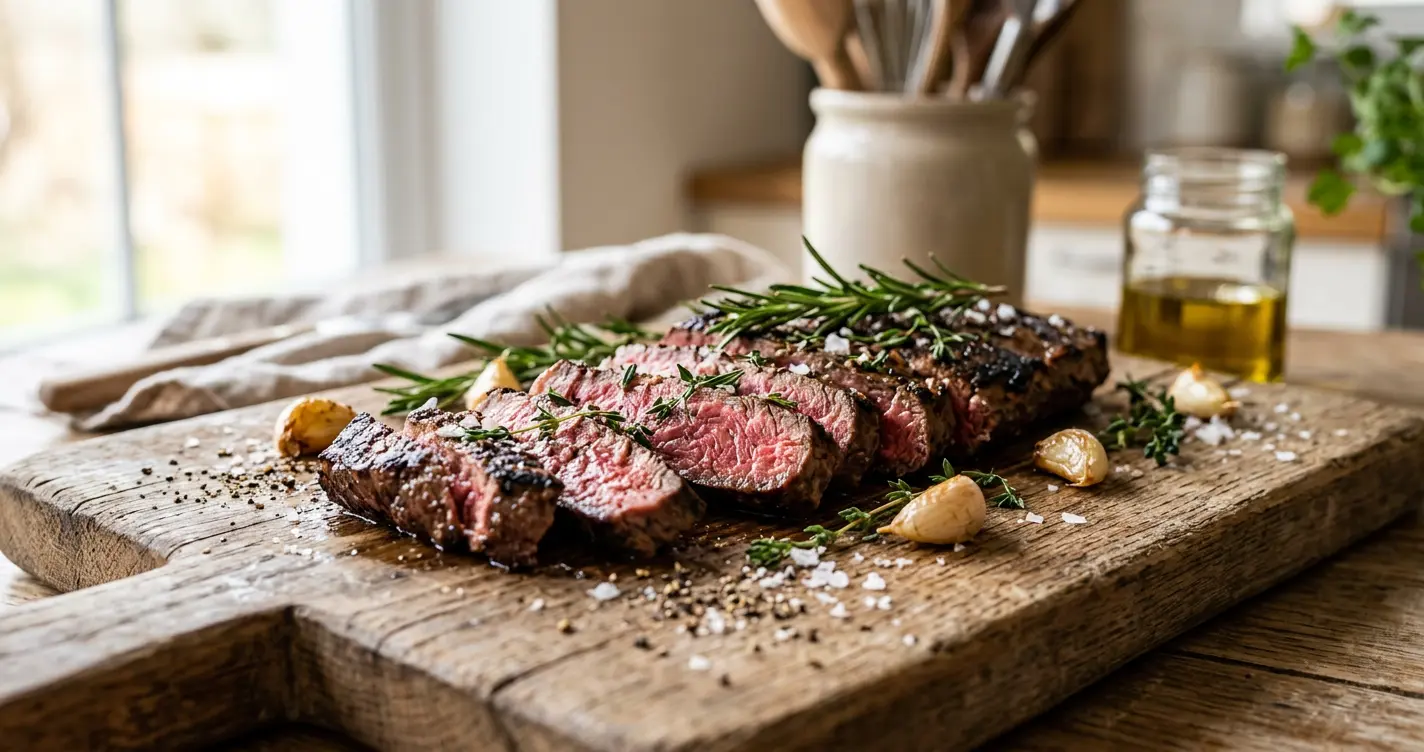
Move the steak to a cutting board and let it rest uncovered for 5 to 8 minutes. Because cutting too soon releases the juices before they redistribute, skipping the rest is one of the most costly mistakes you can make. After resting, slice the steak against the grain at a slight diagonal angle. Thin slices against the grain give you the most tender bite from this cut.
Storage and Make-Ahead Tips
Flat Iron Steak stores and reheats better than most people expect, especially when you handle it carefully.
Refrigerate cooked steak within two hours
Place leftover steak in an airtight container or wrap it tightly in foil and refrigerate for up to 3 days. Because the marbling helps retain moisture, the steak holds up better during storage than leaner cuts do.
Reheat low and slow for best results
Place leftover Flat Iron Steak in a low oven at 250°F, loosely tented with foil, until just warmed through. Then, if you want a refreshed surface, give it 30 seconds in a hot pan. This approach preserves texture far better than microwaving, which tends to make steak rubbery.
Slice it cold for next-day meals
Cold slices of Flat Iron Steak work beautifully in grain bowls, over salads, or inside wraps. In fact, I often intentionally cook a larger piece so I can use the leftovers the following day without any reheating at all.
Prep the marinade ahead
If you use a marinade, mix it the night before and keep it refrigerated. Then add the raw steak in the morning so it soaks throughout the day. However, don’t marinate longer than 18 to 24 hours, especially with acidic ingredients, or the texture can soften too much.
Freeze raw steak without issue
Wrap the raw Flat Iron Steak tightly and freeze for up to 3 months. Thaw overnight in the refrigerator, pat dry, and cook as normal.
Common Mistakes and How to Fix Them
Most problems with Flat Iron Steak trace back to a handful of consistent errors. Fortunately, each one has a straightforward fix.
Mistake 1: Cooking straight from the refrigerator
Cold steak going into a hot pan cooks unevenly. The exterior can overbrown before the center reaches the right temperature. Therefore, always let the steak rest at room temperature before cooking.
Mistake 2: Using a pan that isn’t hot enough
A lukewarm pan produces gray, steamed meat instead of a browned crust. Preheat the pan for a full 2 to 3 minutes before adding any oil or steak.
Mistake 3: Moving or pressing the steak repeatedly
Every time you lift or shift the steak, you disrupt the sear and lose contact with the hot surface. Leave the Flat Iron Steak alone until it releases naturally.
Mistake 4: Skipping the thermometer
Guessing doneness by time alone leads to overcooking or undercooking. Use an instant-read thermometer every time. It takes seconds and removes all the guesswork.
Mistake 5: Cutting immediately after cooking
This drains the juices out onto the board, leaving the steak drier than it should be. Rest the Flat Iron Steak for a full 5 to 8 minutes before slicing.
Mistake 6: Slicing in the wrong direction
Slicing with the grain makes even a tender steak feel chewy. Always identify the grain direction and cut directly across it.
Mistake 7: Underseasoning
Flat Iron Steak has great flavor, but it still needs enough salt to bring it out fully. Season more generously than you think necessary, especially because some of the seasoning stays on the surface crust rather than penetrating deep into the meat.
Variations
Once you’re comfortable with the base technique, Flat Iron Steak adapts easily to many different flavor directions.
Garlic herb version
Add extra rosemary and thyme to the butter basting stage, and press a clove of raw garlic directly onto the steak surface just before resting. This version feels classic and works for almost any side.
Fajita-style version
Marinate the Flat Iron Steak in lime juice, cumin, chili powder, and garlic. After cooking and slicing, serve it with sautéed peppers and onions in warm tortillas for a straightforward and excellent weeknight dinner.
Asian-inspired version
Use a marinade of soy sauce, sesame oil, rice vinegar, fresh ginger, and a small amount of honey. Slice the cooked steak thin and serve over steamed rice with sliced scallions and sesame seeds.
Chimichurri version
Keep the seasoning simple and let the steak speak for itself, then spoon generous chimichurri over the sliced meat. The herb, garlic, and vinegar flavors complement the richness of Flat Iron Steak beautifully.
Grilled version
Season and grill the steak over direct high heat for 3 to 4 minutes per side. The grill adds a smoky char that suits this cut especially well for outdoor meals.
Steak salad version
Slice cold leftover Flat Iron Steak thin and arrange it over arugula, shaved parmesan, cherry tomatoes, and a lemon vinaigrette. This is one of my favorite ways to use any leftover steak.
Serving Suggestions
A well-cooked Flat Iron Steak is substantial enough to anchor a full meal, and the right sides help complete the plate without competing with the steak’s flavor.
Pair with roasted potatoes
Crispy smashed potatoes, roasted fingerlings, or garlic mashed potatoes all complement Flat Iron Steak beautifully. Because potatoes stay neutral, they let the meat stay front and center.
Serve with sautéed greens
Wilted spinach with garlic, sautéed kale, or roasted asparagus adds color and freshness. Moreover, the slight bitterness of green vegetables balances the richness of the steak.
Add a compound butter
A pat of herb compound butter melting over hot steak slices adds richness and aroma. Compound butter made with blue cheese, tarragon, or roasted garlic all work especially well.
Build a grain bowl
Slice the Flat Iron Steak thin and serve it over farro, quinoa, or brown rice with roasted vegetables, pickled onions, and a bold vinaigrette for a complete and satisfying meal.
Serve alongside crusty bread
Good bread soaks up the pan juices and butter basting beautifully. Therefore, keep a few slices on the side, especially when the steak produces a rich fond in the pan.
Frequently Asked Questions
What makes Flat Iron Steak so tender?
The top blade muscle has a fine texture and significant marbling. Once butchers remove the central connective tissue, the remaining meat ranks among the most tender cuts available, second only to tenderloin according to many industry sources.
Do I need to marinate Flat Iron Steak?
No, you don’t. The cut has enough natural flavor to taste excellent with just salt, pepper, and a good sear. However, a marinade adds a new dimension, especially for tacos or Asian-style preparations.
What’s the best doneness level for Flat Iron Steak?
Medium-rare, around 130°F to 135°F, gives you the best texture and the richest flavor from this cut. Cooking much beyond medium can make the steak tighter and chewier.
Can I cook Flat Iron Steak on a grill?
Yes, absolutely. Grill over direct high heat for 3 to 4 minutes per side, using the same temperature targets as pan-searing. The grill adds a pleasant smoky element that suits the cut well.
Why do I need to slice against the grain?
Slicing against the grain shortens the muscle fibers you’re cutting through, which makes each bite noticeably more tender. If you slice with the grain, the long fibers make even good steak feel tougher than it actually is.
Can I cook Flat Iron Steak in the oven?
Yes. Sear it in an oven-safe pan on the stovetop first, then finish it in a 400°F oven until it reaches your target temperature. This method works well if you prefer more control over the final internal temperature.
How long should I rest Flat Iron Steak?
Rest it for 5 to 8 minutes before slicing. Because the steak is thinner than many cuts, it doesn’t need as long as a thick ribeye, but it still needs enough time for the juices to settle.
Where can I buy Flat Iron Steak?
Most well-stocked grocery stores carry it, as do butcher shops and warehouse stores. If you can’t find it labeled as flat iron, ask the butcher for top blade steak, which is the same cut.
A properly cooked Flat Iron Steak is one of those meals that rewards you in a way that feels genuinely disproportionate to the effort involved. The cut is affordable, widely available, and consistently satisfying when you apply a few straightforward techniques. Once you get the pan temperature right, learn to trust the natural release of the crust, and commit to resting the meat before slicing, Flat Iron Steak becomes the kind of recipe you return to regularly, for weeknights, for guests, and for any time you want a steak dinner that actually delivers on its promise.