
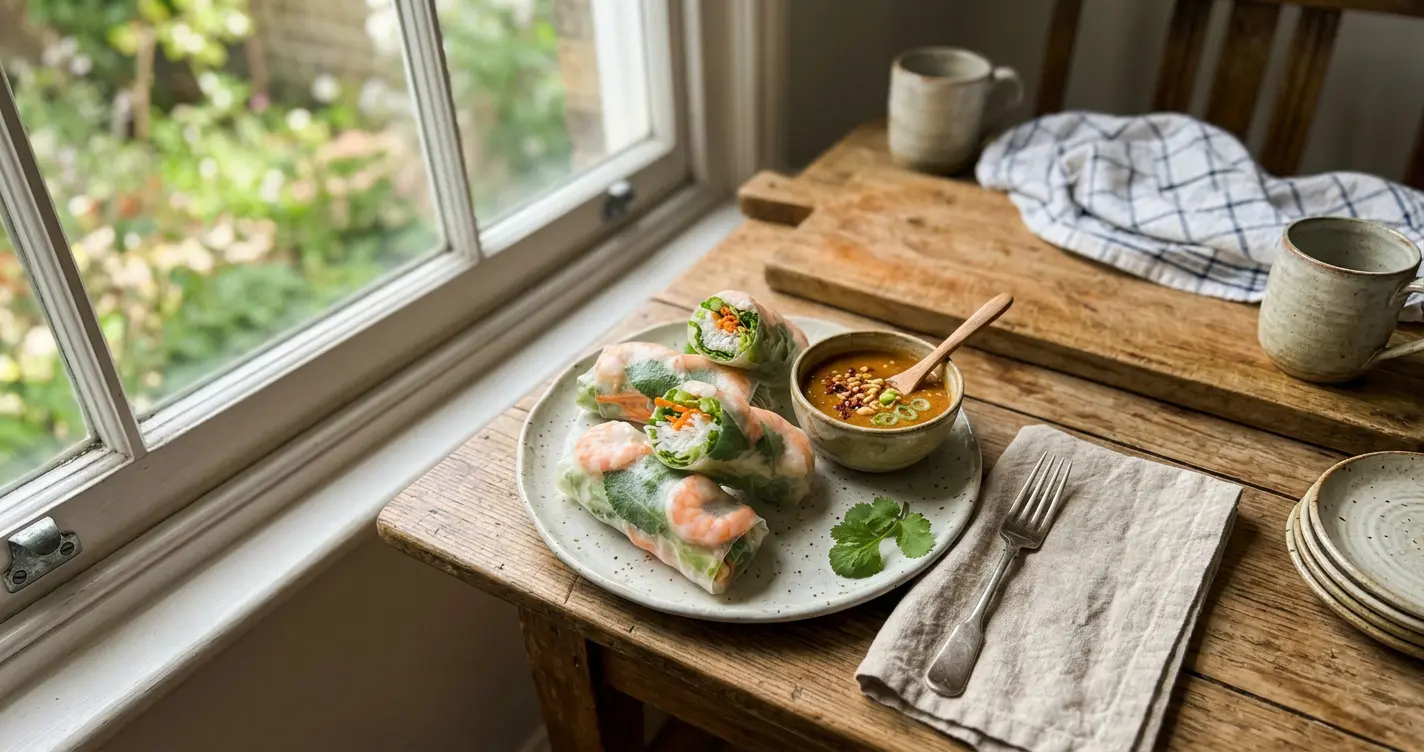
How to Make Shrimp Spring Rolls Fresh 7-Step Perfect Bites
Need an appetizer that feels light, fresh, and a little special without turning your kitchen into a project? Shrimp Spring Rolls are one of my favorite answers. They look elegant, they taste clean and bright, and, moreover, they’re far easier to master than most people assume. Once you understand how to soften the wrappers and layer the filling, the whole process becomes calm and repeatable.
I’ve made Shrimp Spring Rolls for quick lunches, casual dinners, and warm-weather gatherings, and this method is the one I trust most. It gives you rolls that stay neat, hold together well, and deliver the right balance of shrimp, herbs, noodles, and crunch in every bite. In addition, they feel satisfying without being heavy, which makes them incredibly useful when you want something refreshing. In this guide, I’ll walk you through what they are, why they work, the ingredients that matter most, the exact rolling method, smart storage tips, common mistakes, easy variations, and the best ways to serve them.
Table of Contents
What is Shrimp Spring Rolls
Shrimp Spring Rolls are fresh rolls made with rice paper wrappers filled with cooked shrimp, rice noodles, crisp vegetables, and herbs. Unlike fried spring rolls, these are soft, cool, and refreshing. They usually rely on texture and freshness rather than a crunchy shell.
The exact filling can vary, but the core idea stays the same. You soften rice paper in warm water, layer the ingredients, and roll everything into a compact bundle. Because the wrappers are delicate, the technique matters. However, once you practice a few times, the process becomes surprisingly easy.
Many people confuse fresh spring rolls with egg rolls or fried spring rolls. They are very different. Fried rolls have a crisp exterior and richer flavor, while Shrimp Spring Rolls feel lighter and brighter. As a result, they often work better as a warm-weather appetizer or a light lunch.
What I like most is the balance. The shrimp adds protein and sweetness, the herbs bring freshness, the noodles make the rolls satisfying, and the vegetables give them crunch. Therefore, Shrimp Spring Rolls taste complete even though the ingredient list is simple.
Why You Will Love This Shrimp Spring Rolls
They feel fresh and light
Some appetizers leave you full before the meal even starts. These do the opposite. Because they use fresh herbs, vegetables, and rice paper, Shrimp Spring Rolls feel clean and balanced from the first bite.
They look impressive without being difficult
At first, rice paper can seem intimidating. However, once you learn not to over-soak it, the rolls come together smoothly. That means Shrimp Spring Rolls look polished enough for guests without demanding advanced technique.
They are highly customizable
You can keep the filling classic or adjust it based on what you have. For example, you can add avocado, swap lettuce for cabbage, or include extra herbs. Therefore, Shrimp Spring Rolls fit real-life cooking very well.
They work for many occasions
I’ve served them as an appetizer, a light dinner, and even a make-ahead lunch. In addition, they pair beautifully with peanut sauce, hoisin-based dips, or a light fish sauce dressing, so they adapt easily to different menus.
They offer great texture
This recipe works because every element brings something useful. The shrimp stays tender, the noodles soften the bite, and the vegetables keep everything crisp. As a result, Shrimp Spring Rolls never feel flat or boring when you build them properly.
Ingredients
Main Ingredients
| Ingredient | Amount | Notes |
|---|---|---|
| Cooked medium shrimp | 1 pound | Peel, devein, and halve lengthwise |
| Rice paper wrappers | 12 wrappers | Use 8 to 9-inch wrappers |
| Rice vermicelli noodles | 4 ounces | Cook and cool before using |
| Butter lettuce or romaine | 8 leaves | Tear into wrapper-sized pieces |
| Cucumber | 1 medium | Cut into thin matchsticks |
| Carrots | 2 medium | Julienne or shred finely |
| Red bell pepper | 1 medium | Slice very thin for crunch |
| Fresh mint leaves | 1/2 cup | Adds cooling freshness |
| Fresh cilantro | 1/2 cup | Use leaves and tender stems |
| Fresh basil | 1/3 cup | Thai basil if available |
| Warm water | As needed | For softening wrappers |
Optional Add-ins
| Ingredient | Amount | Notes |
|---|---|---|
| Avocado | 1 small | Adds creaminess |
| Purple cabbage | 1 cup | Extra color and crunch |
| Bean sprouts | 1 cup | Very traditional and crisp |
| Green onions | 2 | Slice thinly for bite |
| Sesame seeds | 1 teaspoon | Sprinkle into filling if desired |
Simple Dipping Sauce
| Ingredient | Amount | Notes |
|---|---|---|
| Hoisin sauce | 1/4 cup | Sweet and savory base |
| Peanut butter | 2 tablespoons | Makes it creamy |
| Warm water | 2 to 3 tablespoons | Thin to dipping consistency |
| Lime juice | 1 tablespoon | Brightens the sauce |
| Soy sauce | 1 teaspoon | Adds depth |
| Sriracha | 1 teaspoon | Optional heat |
The shrimp should be fully cooked, chilled, and patted dry before you start. Wet shrimp can make the wrappers slippery, which makes rolling harder than it needs to be. I also like using a mix of mint, cilantro, and basil because Shrimp Spring Rolls taste far more layered when the herbs are not limited to just one note.
How to Make Shrimp Spring Rolls Step by Step
Step 1: Prepare the noodles
Cook the rice vermicelli according to the package instructions, then rinse under cool water and drain well. After that, cut them slightly with kitchen scissors if they seem long. This makes Shrimp Spring Rolls easier to bite and easier to roll neatly.
Step 2: Prep the shrimp and vegetables
Halve the cooked shrimp lengthwise so they sit flatter inside the wrapper. Slice the cucumber, carrots, and bell pepper into thin matchsticks, and wash and dry the herbs and lettuce. Good prep matters here because Shrimp Spring Rolls come together quickly once the wrappers are softened.
Step 3: Mix the dipping sauce
Whisk the hoisin, peanut butter, lime juice, soy sauce, sriracha, and enough warm water to make a smooth dipping sauce. Taste and adjust as needed. I usually make the sauce first because it gives Shrimp Spring Rolls a clear finishing point once the rolling starts.
Step 4: Set up a rolling station
Fill a wide shallow bowl or skillet with warm water. Then arrange the wrappers, noodles, shrimp, vegetables, herbs, lettuce, and a clean damp towel or work surface nearby. This setup helps enormously because Shrimp Spring Rolls move best when everything is within easy reach.
Step 5: Soften one wrapper at a time
Dip one rice paper wrapper into warm water for about 5 to 10 seconds, just until it starts to soften. Then lay it on your work surface and let it continue softening for a few seconds more. If you soak it too long, Shrimp Spring Rolls become much harder to roll cleanly.
Step 6: Fill in the right order
Place a small piece of lettuce on the lower third of the wrapper, then add a small bundle of noodles, some cucumber, carrots, bell pepper, and herbs. Set the shrimp closer to the top side if you want them to show through the wrapper. Keeping the filling modest helps Shrimp Spring Rolls stay tight and balanced.
Step 7: Roll firmly but gently
Fold the bottom of the wrapper over the filling, tuck it in gently, then fold in the sides and continue rolling upward until sealed. The wrapper clings to itself naturally, so you do not need extra pressure. Once finished, Shrimp Spring Rolls should feel snug, not stretched or bursting.
Step 8: Repeat and keep them covered
Continue with the remaining wrappers and filling, placing finished rolls under a lightly damp towel so they do not dry out. This simple step keeps Shrimp Spring Rolls supple and pleasant while you finish the batch.
Storage and Make-Ahead Tips
Store them for short periods only
Fresh rolls taste best the day you make them. However, you can store them for several hours or overnight if needed. Wrap each one loosely in plastic wrap or place them in a container with a damp paper towel to help Shrimp Spring Rolls stay soft.
Keep the wrappers from drying out
Rice paper dries quickly once exposed to air. Therefore, always cover finished rolls with a lightly damp towel if they will sit for even a short time. This small habit protects the texture of Shrimp Spring Rolls more than almost anything else.
Make components ahead
You can cook the noodles, prep the shrimp, cut the vegetables, wash the herbs, and mix the sauce ahead of time. Then assemble everything shortly before serving. This is my favorite way to prepare Shrimp Spring Rolls for guests because the final assembly stays fast and relaxed.
Avoid long refrigeration if possible
After a full day in the fridge, the wrappers can toughen and the herbs lose some freshness. They are still edible, but the texture declines. As a result, Shrimp Spring Rolls are at their best within the first several hours after rolling.
Common Mistakes and How to Fix Them
Over-soaking the rice paper
This is the most common problem. If the wrapper feels floppy in the water, you soaked it too long. Dip it briefly and let it soften on the work surface instead. That alone makes Shrimp Spring Rolls much easier to handle.
Overfilling the rolls
It is tempting to pack in extra noodles and vegetables, especially the first time. However, too much filling causes tearing and loose ends. Use less than you think you need, and your Shrimp Spring Rolls will look and feel much better.
Using wet ingredients
If the lettuce, noodles, or shrimp are too wet, the wrapper gets slippery and fragile. Dry the ingredients well before assembling. Therefore, a little extra prep work pays off with much cleaner Shrimp Spring Rolls.
Rolling too loosely
A loose roll falls apart when you pick it up or dip it. Tuck the first fold snugly, then continue rolling with gentle tension. Once you find that rhythm, Shrimp Spring Rolls hold together naturally.
Letting them sit uncovered
Even a short time in open air can dry the wrappers. Cover finished rolls with a damp towel right away. This keeps Shrimp Spring Rolls soft and pleasant instead of leathery around the edges.
Skipping herbs
You can technically make them without herbs, but the flavor falls flat. Mint, cilantro, and basil add the fresh lift that makes Shrimp Spring Rolls feel complete rather than plain.
Variations
Shrimp Spring Rolls Variations You Can Try
Avocado version
Add thin avocado slices for a creamier bite. This works especially well if you like a softer contrast against the crunchy vegetables. Moreover, avocado gives Shrimp Spring Rolls a richer feel without making them heavy.
Mango version
A few thin slices of ripe mango add sweetness and a bright, juicy contrast. This variation pairs beautifully with shrimp and herbs, so Shrimp Spring Rolls feel even more refreshing in warm weather.
Spicy version
Add sliced jalapeño, a little chili crisp, or extra sriracha in the dipping sauce. If you like a stronger kick, this version gives Shrimp Spring Rolls more edge while keeping the same fresh base.
Noodle-light version
Use fewer noodles and add more lettuce and herbs for a lighter roll. This keeps Shrimp Spring Rolls especially crisp and fresh, which I like for lunch or very warm days.
Peanut-free version
Skip the peanut dipping sauce and serve them with a limey fish sauce dip or a soy-ginger sauce instead. Therefore, Shrimp Spring Rolls stay flexible for different dietary needs and preferences.
Extra-crunch version
Add cabbage or bean sprouts along with the usual vegetables. This gives Shrimp Spring Rolls a sharper, fresher bite and helps them feel especially lively on the plate.
Serving Suggestions
Serve with a flavorful dipping sauce
A creamy peanut-hoisin dip is the classic choice for many people, and it works beautifully here. However, a lighter fish sauce dressing or soy-lime dip also complements Shrimp Spring Rolls very well.
Pair them with a light meal
These rolls fit naturally beside a simple soup, a crisp salad, or a rice bowl. Because they are cool and fresh, Shrimp Spring Rolls balance heavier dishes nicely.
Cut them for appetizer platters
If you want a more elegant presentation, slice each roll in half on a diagonal and arrange them close together with dipping sauce nearby. This makes Shrimp Spring Rolls feel especially party-friendly.
Serve them for warm-weather gatherings
They are ideal when you want food that feels refreshing rather than rich. In addition, Shrimp Spring Rolls hold their own on brunch tables, lunch spreads, and casual outdoor meals.
Add complementary sides
Pickled vegetables, cucumber salad, edamame, or chilled noodles all pair well. As a result, Shrimp Spring Rolls can move easily from appetizer to light main meal with very little extra work.
Frequently Asked Questions
Can I make Shrimp Spring Rolls ahead of time?
Yes, but they taste best the day you roll them. For the best texture, prep the filling ahead and assemble a few hours before serving. Cover them well so the wrappers stay soft.
Why are my Shrimp Spring Rolls tearing?
This usually happens when the wrapper is over-soaked or the filling is too wet or too bulky. Soften the rice paper briefly, dry the ingredients well, and use a little less filling.
What herbs are best for Shrimp Spring Rolls?
Mint, cilantro, and basil are my favorite combination. They create the fresh, layered flavor that makes the rolls taste lively rather than flat.
Can I use pre-cooked shrimp for Shrimp Spring Rolls?
Absolutely. In fact, pre-cooked shrimp makes the process faster and easier. Just make sure the shrimp are well-drained, chilled, and patted dry before assembling.
How do I keep Shrimp Spring Rolls from sticking together?
Do not stack them directly on top of each other. Leave a little space between each roll, or wrap them individually if you plan to store them for several hours.
Are Shrimp Spring Rolls served hot or cold?
They are usually served cool or at room temperature. That fresh temperature is part of what makes them so refreshing and different from fried rolls.
Can I make them without noodles?
Yes. You can reduce the noodles or skip them entirely and use more lettuce, herbs, and vegetables instead. The rolls will feel lighter, but they still work very well.
What is the best dipping sauce for Shrimp Spring Rolls?
A peanut-hoisin sauce is the most popular choice, but fish sauce-based dips and soy-lime sauces also taste excellent. The best one depends on whether you want creamy, tangy, or more savory flavor.
Fresh, light, and full of texture, Shrimp Spring Rolls are one of the most useful appetizers you can keep in your rotation. Once you get comfortable with the wrappers, the whole process feels much simpler than it first appears. Whether you serve Shrimp Spring Rolls for a gathering, a lunch, or a relaxed dinner at home, they bring that clean, satisfying bite that always feels a little special.