
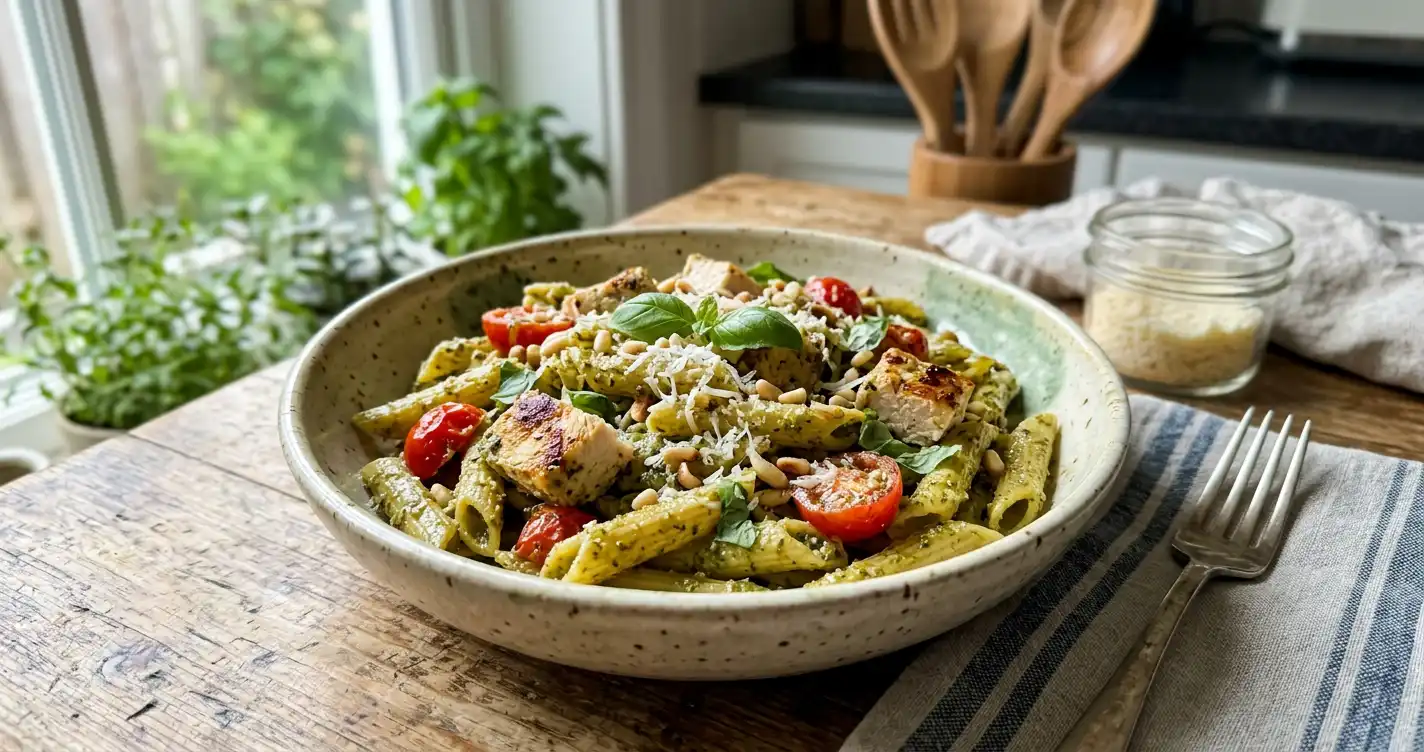
How to Make Pesto Chicken Pasta Easy 7-Step Perfect Dinner
Need a dinner that feels comforting, flavorful, and dependable without taking over your whole evening? Pesto Chicken Pasta is one of those recipes I come back to again and again because it solves that problem beautifully. It tastes rich and fresh at the same time, and, moreover, it uses familiar ingredients in a way that feels a little more special than the usual weeknight routine.
I’ve tested Pesto Chicken Pasta with different cuts of chicken, several pesto styles, and more than a few pasta shapes, and this version is the one I trust most. It gives you juicy chicken, pasta that stays tender instead of mushy, and a sauce that coats everything without turning oily or heavy. In addition, it adapts easily depending on what you already have in the kitchen. In this guide, I’ll walk you through what this dish is, why it works so well, the ingredients that matter most, the full step-by-step method, storage tips, common mistakes, simple variations, serving ideas, and answers to the questions people ask most often.
Table of Contents
What is Pesto Chicken Pasta
Pesto Chicken Pasta is a pasta dish made with cooked chicken and pesto sauce, usually finished with cheese, pasta water, and sometimes a little cream, lemon, or vegetables. At its core, it combines the bold herb-and-garlic flavor of pesto with tender pasta and savory chicken for a complete, satisfying meal.
The beauty of this dish is its balance. Pesto brings brightness from basil, richness from olive oil and nuts, and depth from Parmesan and garlic. The chicken adds protein and heartiness, while the pasta gives the sauce something to cling to. As a result, Pesto Chicken Pasta feels both fresh and comforting.
You can make it in a lighter style with just pesto and pasta water, or you can turn it a little creamier with a splash of cream or extra cheese. However, the most important part is keeping the flavors in balance. If one ingredient dominates too strongly, the whole dish loses its clean, vibrant appeal.
What I love most is how flexible it is. You can use homemade pesto or a good store-bought jar, chicken breast or thighs, and several pasta shapes. Therefore, Pesto Chicken Pasta works just as well for a quick weeknight meal as it does for a relaxed dinner with guests.
Why You Will Love This Pesto Chicken Pasta
It tastes fresh and comforting at once
Some pasta recipes lean heavy, while others feel too light to satisfy. This one hits the middle beautifully. Because pesto brings herbs and brightness, Pesto Chicken Pasta stays lively even though it still feels hearty and filling.
It works well on busy nights
This recipe comes together fast once the water boils. If you prep the chicken while the pasta cooks, dinner moves quickly. Therefore, Pesto Chicken Pasta is especially useful when you want something homemade without a lot of stress.
It uses easy-to-find ingredients
You do not need a long shopping list or anything fancy. Pasta, chicken, pesto, Parmesan, and a few basics are enough to build a really solid meal. Moreover, most of the ingredients are flexible, which makes the recipe forgiving.
It reheats better than many pasta dishes
Some pasta turns dull or dry the next day. This one holds up surprisingly well if you save a little pasta water or add a splash of water when reheating. As a result, Pesto Chicken Pasta is a smart meal-prep option too.
It adapts to your preferences
You can make it creamy or not, add vegetables or keep it simple, use different proteins, or switch the pasta shape. In addition, Pesto Chicken Pasta feels easy to personalize without losing the character that makes it so reliable.
Ingredients
Main Ingredients
| Ingredient | Amount | Notes |
|---|---|---|
| Boneless skinless chicken breast | 1 1/2 pounds | Slice into bite-size pieces for quick cooking |
| Pasta | 12 ounces | Penne, fusilli, farfalle, or rotini work well |
| Basil pesto | 3/4 cup | Homemade or good-quality store-bought |
| Parmesan cheese | 1/2 cup | Freshly grated melts best |
| Olive oil | 1 tablespoon | For cooking the chicken |
| Garlic | 3 cloves | Mince finely for even flavor |
| Heavy cream | 1/4 cup | Optional for a silkier sauce |
| Lemon juice | 1 tablespoon | Brightens the pesto nicely |
| Salt | 1 teaspoon | Adjust to taste |
| Black pepper | 1/2 teaspoon | Freshly ground if possible |
| Red pepper flakes | 1/4 teaspoon | Optional for gentle heat |
| Pasta water | 1 cup reserved | Helps loosen and emulsify the sauce |
Optional Add-ins
| Ingredient | Amount | Notes |
|---|---|---|
| Cherry tomatoes | 1 cup | Halve and toss in at the end |
| Baby spinach | 2 cups | Wilts quickly into the hot pasta |
| Mozzarella pearls | 1/2 cup | Add for a richer finish |
| Toasted pine nuts | 2 tablespoons | Bring extra crunch and nuttiness |
| Sun-dried tomatoes | 1/3 cup | Add concentrated savory flavor |
| Chicken thighs | 1 1/2 pounds | Use instead of breast for juicier meat |
The pesto carries a lot of the dish, so choose one you actually enjoy on its own. I also strongly recommend reserving pasta water before draining. That starchy water is the difference between a sauce that clings and a sauce that sits in oily patches around the pasta.
How to Make Pesto Chicken Pasta Step by Step
Step 1: Boil the pasta
Bring a large pot of salted water to a boil and cook the pasta until just al dente according to the package directions. Before draining, reserve about 1 cup of pasta water. This matters because Pesto Chicken Pasta comes together best when the sauce has starchy water to help it coat every piece smoothly.
Step 2: Season the chicken
While the pasta cooks, pat the chicken dry and season it with salt, black pepper, and a pinch of red pepper flakes if you want a little heat. Dry chicken browns better, and better browning gives Pesto Chicken Pasta much more flavor in the final dish.
Step 3: Sear the chicken
Heat olive oil in a large skillet over medium-high heat. Add the chicken in a single layer and cook until golden and cooked through, stirring only as needed. Do not crowd the pan. If you pile it in, the chicken steams instead of browning, and Pesto Chicken Pasta loses that savory depth.
Step 4: Add the garlic
Lower the heat slightly and stir in the minced garlic for about 30 seconds, just until fragrant. Keep it moving so it does not burn. Garlic cooks fast, and when it stays mellow rather than bitter, Pesto Chicken Pasta tastes cleaner and more balanced.
Step 5: Build the sauce
Add the drained pasta to the skillet along with the pesto, lemon juice, Parmesan, and heavy cream if you want a creamier texture. Pour in a little reserved pasta water and toss everything together until the sauce loosens and coats the pasta evenly. This is the stage where Pesto Chicken Pasta becomes glossy and cohesive instead of dry or clumpy.
Step 6: Adjust the texture
Keep tossing and add more pasta water as needed, a few tablespoons at a time. The sauce should cling lightly to the pasta rather than pool in the pan. If it feels too thick, loosen it. If it feels too thin, add a little extra Parmesan. Therefore, Pesto Chicken Pasta ends up silky instead of heavy.
Step 7: Finish and serve
Taste and adjust with extra salt, pepper, lemon juice, or Parmesan if needed. If you’re using spinach or tomatoes, fold them in now so they soften slightly from the heat. Serve the dish warm while the sauce still looks glossy and fresh. At that point, Pesto Chicken Pasta is at its absolute best.
Storage and Make-Ahead Tips
Refrigerate leftovers properly
Let the pasta cool slightly, then transfer it to an airtight container and refrigerate for up to 4 days. I like to store Pesto Chicken Pasta before it dries out completely, because fresher leftovers always reheat better than overly chilled, compacted pasta.
Reheat gently
Warm leftovers in a skillet over low heat with a splash of water, broth, or cream. Stir often so the sauce loosens gradually instead of separating. Although a microwave works, gentle stovetop reheating keeps Pesto Chicken Pasta much closer to its original texture.
Keep extra pesto on hand
If you know you’ll have leftovers, save a spoonful of pesto separately. Stirring that in during reheating brings the flavor back to life. As a result, Pesto Chicken Pasta tastes fresher the next day.
Prep ahead in parts
You can cook the chicken, grate the cheese, and even boil the pasta ahead if needed. However, I prefer combining everything just before serving so the sauce stays vibrant. If you plan ahead this way, Pesto Chicken Pasta still comes together quickly at dinner time.
Common Mistakes and How to Fix Them
Using too much pesto
More pesto sounds like it should mean more flavor, but too much can make the dish oily, salty, and overpowering. Start with less and add more only if needed. Balanced sauce makes Pesto Chicken Pasta taste fresher and more polished.
Forgetting the pasta water
This is one of the biggest mistakes. Without starchy pasta water, the sauce often clumps or sits unevenly on the noodles. A few spoonfuls help Pesto Chicken Pasta emulsify and coat properly.
Overcooking the chicken
Chicken breast dries out fast if you cook it too long. Cut the pieces evenly and remove them as soon as they’re done. Juicy chicken gives Pesto Chicken Pasta a much better overall texture.
Letting the garlic burn
Garlic should smell fragrant, not harsh. Burnt garlic turns bitter quickly and can make the entire pan taste off. Therefore, add it after the chicken browns and cook it briefly.
Overheating the pesto
Pesto tastes brightest when you warm it gently rather than cook it hard. If you blast it over high heat for too long, the basil loses freshness. Keep the heat moderate so Pesto Chicken Pasta keeps that clean, herb-forward flavor.
Draining the pasta too far ahead
If drained pasta sits too long before you toss it with the sauce, it cools and sticks. Try to move quickly from pot to skillet. That timing helps Pesto Chicken Pasta come together smoothly.
Variations
Pesto Chicken Pasta Variations to Try
Creamy version
Add a little more cream and extra Parmesan for a richer, silkier finish. This style makes Pesto Chicken Pasta feel more luxurious and works especially well when you want comfort food with a fresher flavor.
Tomato and spinach version
Stir in halved cherry tomatoes and a few handfuls of spinach at the end. The tomatoes add sweetness, while the spinach softens quickly into the sauce. As a result, Pesto Chicken Pasta feels even more balanced.
Sun-dried tomato version
Chop a few oil-packed sun-dried tomatoes and toss them in with the chicken. They bring concentrated flavor and a slight tang that pairs beautifully with basil pesto. Therefore, Pesto Chicken Pasta gets a deeper, more savory edge.
Mozzarella version
Add mozzarella pearls right before serving so they soften slightly without fully melting. This gives Pesto Chicken Pasta a creamy, almost caprese-style twist that works especially well in summer.
Chicken thigh version
If you prefer juicier meat, use boneless skinless chicken thighs instead of breasts. They stay tender with less effort, and many people find they make Pesto Chicken Pasta even more forgiving.
Lighter version
Skip the cream and rely only on pesto, lemon juice, Parmesan, and pasta water. This keeps Pesto Chicken Pasta lighter while still tasting complete and satisfying.
Serving Suggestions
Add a crisp green salad
A simple salad with lemon vinaigrette balances the richness of the sauce nicely. Because the pasta already has strong flavor, a fresh side keeps the meal from feeling too heavy.
Serve with warm bread
A piece of warm bread or garlic bread works well for catching any extra sauce left in the bowl. Moreover, it turns Pesto Chicken Pasta into a more generous dinner without much extra effort.
Pair with roasted vegetables
Roasted broccoli, zucchini, or asparagus fit especially well here. Their mild sweetness and slight char complement the herbiness of the pesto and make the meal feel more complete.
Make it part of a casual dinner spread
You can serve it alongside tomatoes, marinated vegetables, or a simple antipasto plate. Therefore, Pesto Chicken Pasta works not only as a quick family dinner but also as a relaxed meal for guests.
Keep the garnish simple
A little extra Parmesan, black pepper, lemon zest, or toasted pine nuts is enough. The dish already has strong flavor, so small finishing touches often do more than heavy toppings.
[INTERNAL LINK: homemade basil pesto recipe → suggested related post topic]
Frequently Asked Questions
Can I make Pesto Chicken Pasta ahead of time?
Yes, although it tastes best freshly tossed. If you want to prep ahead, cook the chicken and pasta separately, then combine them with the sauce just before serving. That keeps the texture much better.
What pasta works best for Pesto Chicken Pasta?
Short pasta shapes like penne, rotini, fusilli, and farfalle work best because the sauce clings to them well. However, long noodles can also work if that’s what you have.
Can I use store-bought pesto?
Absolutely. A good store-bought pesto works very well here. I use it often on busy nights. Just choose one with a fresh basil flavor and a balanced salt level.
Why is my Pesto Chicken Pasta dry?
It usually needs more reserved pasta water, a little extra pesto, or gentler reheating. Pasta absorbs sauce as it sits, so a splash of liquid often fixes the problem quickly.
Can I freeze Pesto Chicken Pasta?
You can, but I don’t recommend it if you want the best texture. The pasta softens and the pesto can lose some freshness after thawing. Refrigeration works much better for this dish.
Is Pesto Chicken Pasta better with chicken breast or thighs?
Both work. Chicken breast gives a leaner result, while thighs stay juicier and offer a little more forgiveness. I use breast most often, but thighs are excellent too.
Can I add vegetables to Pesto Chicken Pasta?
Yes, and they fit naturally. Spinach, broccoli, zucchini, peas, and cherry tomatoes all work well. Just add them in a way that keeps their texture pleasant rather than overcooked.
How do I keep the pesto bright?
Warm it gently and avoid prolonged high heat. Adding lemon juice at the end also helps the flavor stay lively and fresh-tasting.
There’s a reason Pesto Chicken Pasta stays in regular rotation for so many home cooks. It’s easy, flexible, and deeply satisfying without feeling overly complicated or heavy. Once you make it a couple of times, you’ll see how naturally it fits into busy weeknights, relaxed dinners, and even next-day lunches. When you want a meal that feels dependable but still full of flavor, Pesto Chicken Pasta is always a good idea.