
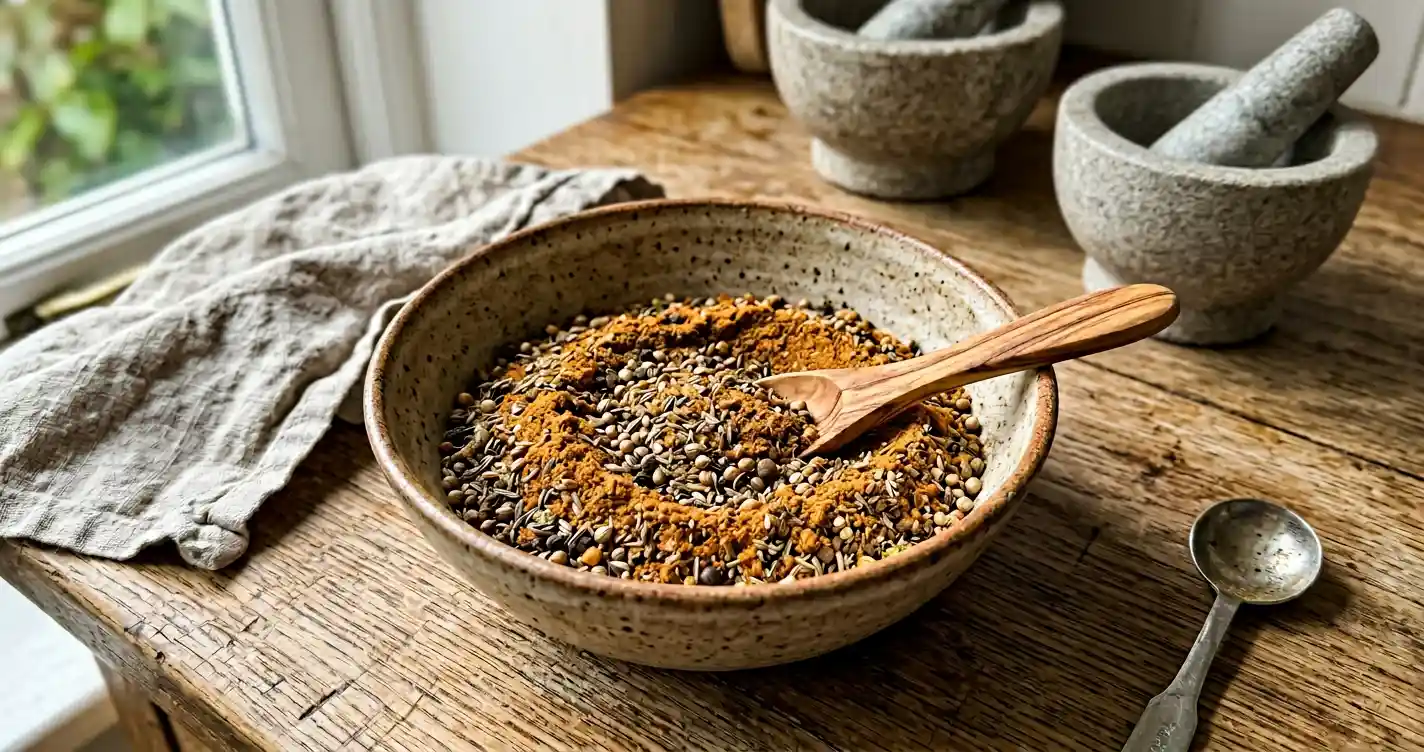
How to Make the Best Ras el Hanout Spice Mix with 27 Spices Perfect Every Time
Imagine opening a jar of spice blend and having your entire kitchen smell like a Moroccan souk. That is exactly what a well-made ras el hanout spice mix does. It is warm, layered, faintly floral, and complex in a way that no single spice can replicate on its own. Moreover, when you make it yourself, you control every layer of flavor, which means the result always fits your cooking exactly.
Most store-bought versions cut corners. They drop spices, reduce quality, or add fillers to lower costs. Therefore, once you blend your own ras el hanout spice mix, going back to a commercial jar feels like a genuine step backward. In this guide, you will learn what this blend actually is, why it deserves a permanent spot in your kitchen, which spices go into a full and authentic version, how to make it from scratch, and how to use it confidently across a wide range of dishes.
Table of Contents
What is Ras el Hanout Spice Mix
Ras el hanout spice mix translates loosely from Arabic as “head of the shop,” which means the best the spice merchant has to offer. That name tells you everything about its spirit. Traditionally, North African spice sellers assembled this blend from their finest, most prized ingredients, and every merchant had a slightly different version.
There is no single fixed recipe, and that is part of what makes it fascinating. However, most authentic versions share a foundation of warm spices, floral elements, earthy notes, and a gentle heat. Common ingredients include cumin, coriander, cinnamon, ginger, turmeric, cardamom, cloves, allspice, black pepper, and dried rose petals, among others. Some blends contain as few as 12 spices, while others climb past 30.
The blend originated in Morocco and spread across North African and Middle Eastern cooking over centuries. Today, you find it in tagines, couscous, grilled meats, roasted vegetables, and even some pastries. Because of its versatility, ras el hanout spice mix has become one of the most useful blends you can keep on hand.
What separates it from other complex blends like garam masala or baharat is that floral quality. Dried rose petals and sometimes lavender push it into a more perfumed, delicate direction. As a result, it works on both savory dishes and, surprisingly, certain sweet preparations as well.
Why You Will Love This Ras el Hanout Spice Mix
A lot of spice blends solve one problem. Ras el hanout spice mix solves several at once, and it does so in a way that genuinely changes how you cook.
It replaces multiple spices at once
Instead of reaching for six or eight separate jars, you open one. For weeknight cooking, that matters. Moreover, the proportions are already worked out, so you do not have to guess how much cumin balances how much cinnamon.
It elevates simple ingredients dramatically
Plain chicken thighs, a handful of chickpeas, or a tray of root vegetables all transform when you rub or toss them with ras el hanout spice mix. The flavor complexity does the heavy lifting, even when the technique stays simple.
It works across many cooking styles
You can stir ras el hanout spice mix into a slow braise, rub it onto meat before grilling, bloom it in butter for a quick pan sauce, or mix it into yogurt for a marinade. Few other blends cross that many cooking contexts so naturally.
It keeps very well
Because it contains no fresh ingredients, a properly stored batch lasts for months. Therefore, making a larger quantity upfront saves you time and effort later.
It connects you to a real culinary tradition
Cooking with ras el hanout spice mix is a small act of engaging with North African food culture. That connection adds something to the meal that goes beyond just flavor. First you taste the warmth, then you feel the history behind it.
Ingredients
A thorough ras el hanout spice mix draws from four flavor groups: warm and earthy spices, floral and sweet elements, savory and pungent notes, and gentle heat. When you build it this way, the blend feels balanced rather than chaotic.
Core Spices
| Ingredient | Amount | Notes |
|---|---|---|
| Ground cumin | 2 teaspoons | Earthy backbone; essential |
| Ground coriander | 2 teaspoons | Bright and citrusy; balances cumin |
| Ground cinnamon | 1 1/2 teaspoons | Use Ceylon for a softer sweetness |
| Ground ginger | 1 1/2 teaspoons | Adds warmth and slight heat |
| Ground turmeric | 1 teaspoon | Earthy, slightly bitter; adds color |
| Ground black pepper | 1 teaspoon | Freshly ground gives more punch |
| Ground cardamom | 1 teaspoon | Floral and slightly sweet |
| Ground allspice | 3/4 teaspoon | Adds complexity; use sparingly |
| Ground cloves | 1/2 teaspoon | Potent; do not overdo it |
| Ground nutmeg | 1/2 teaspoon | Freshly grated works best |
| Ground mace | 1/2 teaspoon | Softer than nutmeg; adds depth |
| Smoked paprika | 1 teaspoon | Adds subtle smokiness |
| Sweet paprika | 1 teaspoon | Rounds out the paprika layer |
| Ground cayenne | 1/2 teaspoon | Adjust for heat preference |
| Ground white pepper | 1/2 teaspoon | Earthier and milder than black |
| Ground fenugreek | 1/4 teaspoon | Slightly bitter and maple-like |
| Ground anise seed | 1/4 teaspoon | Gentle licorice note |
| Ground fennel seed | 1/4 teaspoon | Sweeter and softer than anise |
Floral and Finishing Spices
| Ingredient | Amount | Notes |
|---|---|---|
| Dried rose petals, ground | 1 teaspoon | The signature floral note; do not skip |
| Ground lavender (culinary) | 1/4 teaspoon | Optional but beautiful; use food-grade only |
| Ground galangal | 1/4 teaspoon | Similar to ginger; adds exotic depth |
| Ground orris root | 1/4 teaspoon | Optional; earthy and floral |
| Ground long pepper | 1/4 teaspoon | More complex than black pepper |
| Ground cubeb pepper | 1/4 teaspoon | Piney and peppery; optional |
| Ground grains of paradise | 1/4 teaspoon | Peppery and floral; optional |
| Ground dried chili flakes | 1/4 teaspoon | Optional for extra heat |
| Fine sea salt | 1/2 teaspoon | Optional; omit if you prefer salt-free |
The absolute stars of this blend are the dried rose petals, cumin, cinnamon, and cardamom. Together, they establish that instantly recognizable warmth with a floral lift that sets ras el hanout spice mix apart from every other blend in your kitchen. If you cannot source every optional spice, the core 18 spices deliver a deeply satisfying result on their own.
How to Make Ras el Hanout Spice Mix Step by Step
Making this blend at home takes about ten minutes. However, if you start with whole spices and toast them first, the depth of flavor improves considerably.
Step 1: Decide between whole and pre-ground spices
Before you measure anything, decide whether you want to start with whole spices or use pre-ground. Pre-ground spices work perfectly well and make this a very quick process. On the other hand, if you have whole cumin seeds, coriander seeds, cardamom pods, cloves, and peppercorns on hand, toasting and grinding them yourself produces a noticeably more vibrant ras el hanout spice mix. For most home cooks, a combination works best — toast and grind the spices that benefit most from it, and use pre-ground for the rest.
Step 2: Toast the whole spices (if using)
Place any whole spices into a dry skillet over medium-low heat. Then stir them constantly for two to three minutes until they smell fragrant and warm. Do not walk away from the pan. Because whole spices can burn quickly, you need to stay present and keep them moving. Once they smell toasted, transfer them immediately to a plate to cool. Letting them sit in the hot pan even briefly can cause them to over-roast and turn bitter.
Step 3: Grind the whole spices
Once your toasted spices feel completely cool, add them to a spice grinder or a clean coffee grinder. Grind them in short pulses until you reach a fine, even powder. If you do not have a grinder, a mortar and pestle works well, though it takes more effort. The goal is a uniform texture throughout your finished ras el hanout spice mix, so grind thoroughly and sift if needed.
Step 4: Grind the dried rose petals
Dried rose petals need their own grinding step. First, make sure they feel fully dry and not damp, because moisture causes clumping later. Then add them to your grinder and pulse until you have a fine petal powder. This step takes only about 20 seconds, but it distributes the floral element evenly throughout the blend. Do not skip this because whole petals create uneven texture in your finished ras el hanout spice mix.
Step 5: Combine all ground spices
Add every measured spice to a medium bowl. Then use a whisk or a fork to mix them thoroughly. Whisking works better than stirring because it breaks up small clumps and distributes fine powders like turmeric and ground clove more evenly. Spend at least 60 seconds whisking so every spoonful of your ras el hanout spice mix delivers the full complexity of the blend rather than a random cluster of individual spices.
Step 6: Taste and adjust
Dip a clean spoon into the blend and smell it first, then taste a small amount. You should notice warmth upfront, a floral middle note, and a gentle heat at the finish. If the cinnamon dominates too much, add a little more cumin and coriander to rebalance. If the heat feels sharp, add a pinch more ground ginger or cardamom to soften it. Adjusting your ras el hanout spice mix at this stage makes a real difference in the final result.
Step 7: Transfer to a storage jar
Funnel your finished blend into a clean, dry, airtight glass jar. Then label it with the date. Store the jar away from heat and direct light. At this point, your homemade ras el hanout spice mix is ready to use immediately, and it will only get better as the spices continue to meld over the next 24 to 48 hours.
Storage and Make-Ahead Tips
One of the best things about ras el hanout spice mix is how well it stores. Because every ingredient is fully dry, you do not have to worry about spoilage the way you would with a fresh herb paste or marinade.
How long does it last?
Store your ras el hanout spice mix in a sealed glass jar in a cool, dark cabinet, and it will stay potent for up to six months. After that, the blend does not become unsafe to eat, but the more volatile aromatics, particularly the floral notes and the top of the heat profile, start to fade.
How to check freshness
Open the jar and smell it. A fresh batch smells vibrant, warm, and immediately complex. An older batch smells flat or dusty. If the aroma has faded significantly, make a fresh batch rather than using double the amount to compensate.
Make-ahead strategy
Because this blend takes only ten minutes to assemble, doubling or tripling the batch makes a lot of sense. First, gather all your spices at once, which is the most time-consuming part. Then simply scale up the measurements and grind everything together. As a result, you get months of use from one short session.
What containers work best
Use glass jars with tight-fitting lids rather than plastic bags or loose containers. Glass does not absorb odors, and a tight lid keeps moisture out. Keep the jar away from the stove or any heat source, because even ambient warmth accelerates flavor loss in your ras el hanout spice mix.
Common Mistakes and How to Fix Them
Even experienced cooks run into a few issues when they first make ras el hanout spice mix. Fortunately, most problems have simple fixes.
Using stale spices
This is the most common mistake. Stale pre-ground spices produce a dull, flat blend. Therefore, before you start, rub a small amount of each spice between your fingers and smell it. If it smells weak or musty, replace it. Fresh spices make an immediate and obvious difference in ras el hanout spice mix.
Over-roasting the whole spices
Toasting amplifies flavor, but over-toasted spices turn acrid and bitter, and that bitterness carries through the finished blend. Stay at medium-low heat, keep the spices moving, and pull them from the heat the moment they become fragrant.
Skipping the rose petals
Some people leave out dried rose petals because they seem unusual. However, they provide the distinctive floral quality that separates ras el hanout spice mix from every other warm spice blend. Omitting them creates a competent blend, but not a truly authentic one. Most specialty grocery stores and online spice retailers carry them.
Uneven grinding
Coarsely ground spices distribute unevenly and give your finished blend a gritty texture. Take the time to grind everything to a fine, consistent powder. Then sift the blend through a fine mesh strainer if you want an especially smooth result.
Adding too much clove or mace
Both spices punch well above their weight. Too much clove overwhelms every other flavor. Therefore, stick to the measured amounts in the recipe and only increase them very gradually if you adjust the blend over time.
Variations
No two ras el hanout spice mix recipes are identical, and that flexibility is a feature, not a flaw.
Simplified everyday version
If sourcing 20-plus spices feels overwhelming, build a streamlined version using just the core eight: cumin, coriander, cinnamon, ginger, turmeric, cardamom, black pepper, and paprika. The result is simpler but still very good, and it covers most cooking applications well.
Extra floral version
Double the dried rose petals and add a small amount of food-grade lavender. This version works especially well on lamb, duck, and grain salads where the floral note can shine rather than get buried under bold sauces.
Smoky version
Increase the smoked paprika and add a small amount of ground chipotle. The smokiness works particularly well with grilled meats and roasted root vegetables.
Spicier version
Increase the cayenne and add more ground long pepper or grains of paradise. Because the base blend already contains multiple heat sources, small additions make a noticeable difference.
Sweet-savory version for pastries
Reduce or omit the pepper and cayenne entirely. Then increase the cinnamon, cardamom, and rose petals. This variation of ras el hanout spice mix works beautifully in Moroccan-style cookies, braised fruit, or spiced butter for pastries.
Serving Suggestions
Once you have a jar of ras el hanout spice mix, you will find yourself reaching for it constantly. Here are the best ways to put it to work.
On meat
Rub ras el hanout spice mix generously over chicken thighs, lamb shoulder, or beef short ribs before roasting or braising. The spices form a deeply aromatic crust, and the fat from the meat carries the flavor all the way through.
In tagines and stews
Stir one to two tablespoons of ras el hanout spice mix into your tagine or braise at the beginning of cooking. Therefore, the spices have time to bloom in the liquid and infuse every element of the dish.
On roasted vegetables
Toss root vegetables, cauliflower, or chickpeas with olive oil and a generous amount of ras el hanout spice mix before roasting. The result is deeply caramelized, warmly spiced, and satisfying enough to serve as a main dish.
In couscous and grain dishes
Stir ras el hanout spice mix into the cooking liquid for couscous, quinoa, or freekeh. Even a small amount transforms a plain grain side into something compelling.
In marinades and yogurt sauces
Mix ras el hanout spice mix into plain yogurt with a little lemon juice and olive oil for a marinade or dipping sauce. This works especially well alongside grilled flatbreads or crudités.
In butter or oil
Bloom ras el hanout spice mix briefly in warm butter or olive oil and then drizzle it over hummus, soup, or roasted squash. That simple step extracts the fat-soluble flavor compounds and makes the aroma incredibly intense.
Frequently Asked Questions
What is ras el hanout spice mix used for?
Ras el hanout spice mix works across a wide range of dishes including tagines, couscous, grilled meats, roasted vegetables, soups, stews, and marinades. Because of its balanced complexity, it fits both simple and elaborate recipes.
How many spices does ras el hanout spice mix contain?
Most authentic versions contain between 12 and 30 individual spices. The version in this guide uses 27, which gives you a full and traditional result while remaining achievable with spices you can source at well-stocked grocery stores or online.
Can I make ras el hanout spice mix without rose petals?
You can, but the floral character will be noticeably absent. Dried rose petals are what separates ras el hanout spice mix from other warm spice blends. If you cannot find them locally, look for food-grade dried rose petals from an online spice retailer.
Is ras el hanout spice mix spicy?
It has a gentle, layered warmth rather than aggressive heat. The heat level depends on how much cayenne and pepper you include. Therefore, you can easily make a mild version by reducing or omitting those elements.
How much ras el hanout spice mix should I use per serving?
For most dishes, one to two teaspoons per pound of meat or vegetables delivers a clear but not overwhelming flavor. However, you can increase the amount for a more assertive result. Start with less and adjust as you get more familiar with the blend.
Can I substitute ras el hanout spice mix with another blend?
Not directly. Garam masala or baharat both share some flavor ground, but neither captures the floral element or the exact balance of ras el hanout spice mix. For recipes where the blend plays a central role, it is worth making the real thing.
Does ras el hanout spice mix contain salt?
Traditional versions do not include salt, which lets you control seasoning separately in each dish. The recipe here includes an optional small amount. Omit it if you prefer full control over salt levels in your cooking.
Once you have a jar of your own homemade ras el hanout spice mix sitting in your cabinet, you will start thinking differently about everyday cooking. A plain weeknight chicken becomes something worth lingering over. A simple pot of lentils takes on warmth and depth that feels anything but ordinary. The blend rewards curiosity, so do not be afraid to experiment, adjust the ratios over time, and make it fully your own. That, in the end, is exactly the spirit this spice mix was always meant to carry.