
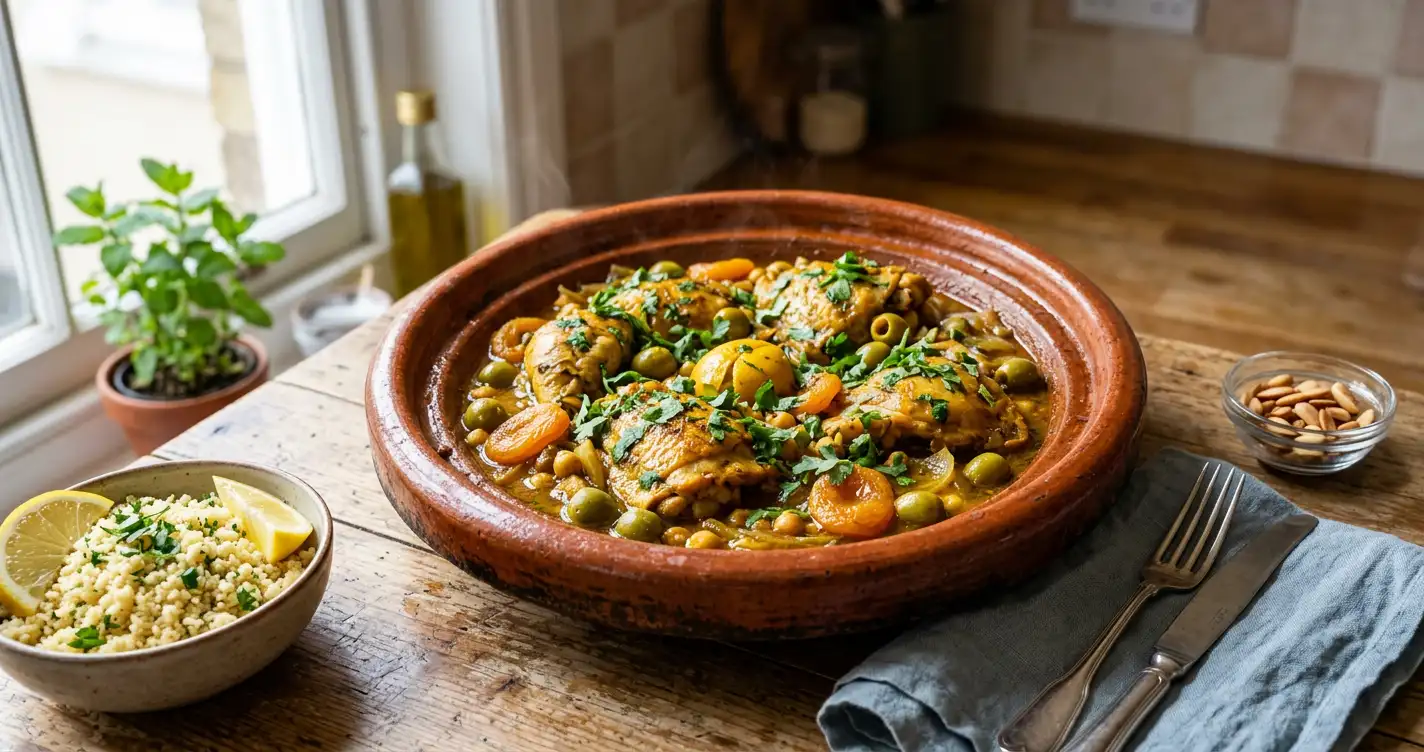
The Best Moroccan Chicken Tagine Recipe 1-Pot Dinner with 8 Perfect Tips
Some meals stop a conversation the moment they hit the table. Not because anything dramatic happened, but because the smell alone makes everyone look up from whatever they were doing. That is what a properly made moroccan chicken tagine recipe does. It fills the kitchen with something warm and spiced and slightly floral, and before you even sit down, you already know dinner is going to be good.
Here is the thing though this dish looks far more complicated than it actually is. The ingredient list seems long, the name sounds exotic, and people assume it requires special equipment or years of practice. None of that is true. Moreover, you do not even need a traditional clay tagine pot. A good Dutch oven handles everything just as well. Therefore, whether this is your first time attempting North African cooking or your twentieth, the method here works, and it works reliably.
In this guide, you will learn exactly what a moroccan chicken tagine recipe is, why it deserves a permanent place in your dinner rotation, which ingredients do the heavy lifting, and how to cook it from start to finish including what can go wrong and exactly how to fix it.
Table of Contents
What is a Moroccan Chicken Tagine Recipe
A moroccan chicken tagine recipe is a slow-cooked braise that originated in North Africa and takes its name from the conical clay pot traditionally used to prepare it. The word tagine describes both the vessel and the finished dish, which can confuse people at first. However, once you understand the cooking principle, everything clicks.
The clay tagine pot works through a beautifully simple mechanism. Its tall, cone-shaped lid traps rising steam, which then condenses and drips back down over the ingredients. That continuous moisture loop keeps the chicken tender, prevents the sauce from drying out, and gradually pulls every aromatic into the liquid. A Dutch oven with a tight lid mimics this effect almost perfectly, so do not let the lack of traditional equipment stop you.
What goes inside is where the magic lives. A classic moroccan chicken tagine recipe builds its flavor around a few key elements warm spices like cumin, cinnamon, ginger, and turmeric, along with preserved lemon and briny green olives. The preserved lemon in particular does something that no other ingredient can quite replicate. It adds a fermented, salty citrus depth that makes the sauce taste like it has been cooking for days even when it has not.
Regional and family variations exist across Morocco, and they are significant. Some families lean toward a sweeter profile with dried apricots or honey folded in. Others keep things purely savory and herb-forward, finishing with handfuls of fresh cilantro and parsley. As a result, there is no single correct version, which means you have genuine room to develop your own.
Why You Will Love This Moroccan Chicken Tagine Recipe
Plenty of braised chicken dishes exist, and many of them are excellent. However, the moroccan chicken tagine recipe has a few qualities that make it genuinely stand apart from the rest.
The flavor complexity feels earned without being exhausting
The technique here is layered but not difficult. You sear the chicken first, then soften the aromatics, then bloom the spices, then braise everything together slowly. Each step feeds the next, and by the time you lift the lid after forty minutes, the sauce has developed a depth that tastes like serious cooking even though most of that time involved simply waiting.
One pot means one cleanup
Everything happens in the same vessel the sear, the sauté, the braise. Moreover, all those caramelized bits from searing the chicken dissolve into the braising liquid and give the sauce real body and richness. So the laziest part of cooking this dish actually makes it taste better. That feels like a good deal.
It tastes even better the next day
This is one of those rare dishes where leftovers genuinely outperform the original. Make your moroccan chicken tagine recipe the night before a dinner, and by the time you reheat it, the spices have melded, the preserved lemon has settled into the sauce, and the whole thing tastes like you spent twice as long on it. Therefore, it ranks as one of the best make-ahead dinner options you can have in your repertoire.
It feeds a crowd without stress
Double the batch in a large pot, and you have a dinner party dish that feels impressive without requiring you to stand over the stove all evening. Because the oven or stovetop handles the heavy lifting during the braise, you can actually be present with your guests rather than tied to the kitchen.
It works for more people than you might expect
The base recipe contains no dairy and no gluten. Therefore, a moroccan chicken tagine recipe fits naturally into many different dietary needs without requiring awkward substitutions or separate dishes. And with a few easy tweaks, you can make it fully vegetarian as well.
Ingredients
Getting the ingredients right matters more here than in most recipes, because the moroccan chicken tagine recipe has a relatively short list of components which means each one carries real weight.
Main Ingredients
| Ingredient | Amount | Notes |
|---|---|---|
| Bone-in, skin-on chicken pieces | 3 to 3.5 pounds | Thighs and drumsticks stay juicy; avoid breasts if possible |
| Preserved lemon | 1 whole lemon | Rind only; rinse well before using |
| Green olives, pitted | 1/2 cup | Castelvetrano or Manzanilla work beautifully |
| Yellow onion, thinly sliced | 2 large | Slice thin so they melt down into the sauce |
| Garlic cloves, minced | 5 cloves | Fresh only — jarred garlic falls flat here |
| Fresh ginger, grated | 1 tablespoon | Substitute 1 teaspoon ground ginger if needed |
| Low-sodium chicken broth | 1 cup | Homemade gives the richest result |
| Olive oil | 3 tablespoons | For searing and sautéing |
| Fresh cilantro, chopped | 1/4 cup | Add at the very end for brightness |
| Fresh flat-leaf parsley, chopped | 1/4 cup | Adds freshness and color |
| Fine sea salt | 1 1/2 teaspoons | Season the chicken generously before marinating |
| Black pepper, freshly ground | 1 teaspoon | Freshly cracked makes a noticeable difference |
Spice Blend
| Ingredient | Amount | Notes |
|---|---|---|
| Ground cumin | 1 1/2 teaspoons | The earthy anchor of the whole blend |
| Ground coriander | 1 teaspoon | Bright and slightly citrusy; balances the cumin |
| Ground cinnamon | 3/4 teaspoon | Adds warmth; do not skip or reduce this |
| Ground turmeric | 3/4 teaspoon | Earthy and golden; colors the sauce beautifully |
| Sweet paprika | 1 teaspoon | Mild sweetness and deep red color |
| Ground ginger | 1/2 teaspoon | Works alongside fresh ginger for a layered effect |
| Ground cardamom | 1/4 teaspoon | Subtle floral note that lifts the whole blend |
| Cayenne pepper | 1/4 teaspoon | Adjust up or down based on your heat preference |
| Saffron threads | Small pinch | Steep in 2 tablespoons warm water; optional but worth it |
Optional Add-ins
| Ingredient | Amount | Notes |
|---|---|---|
| Dried apricots | 1/3 cup | Halve before adding; pairs brilliantly with olives |
| Cooked chickpeas | 1 cup | Makes the dish more filling and hearty |
| Honey | 1 tablespoon | Rounds out the bitterness of the olives |
| Harissa paste | 1 teaspoon | Adds North African chili depth and heat |
| Cherry tomatoes | 1/2 cup | Add in the last 20 minutes for freshness |
Two ingredients here deserve a special mention. First, the preserved lemon it is the soul of this dish, and there is genuinely no shortcut around it. The rind delivers a briny, fermented citrus complexity that fresh lemon cannot touch, so seek it out at a specialty grocery store or start making your own a few weeks ahead. Second, the spice blend functions as a single unit, not a collection of separate flavors. Each spice supports the others, so avoid the temptation to skip the ones that seem unfamiliar.
How to Make a Moroccan Chicken Tagine Recipe Step by Step
Work through these steps in order, and your moroccan chicken tagine recipe will develop the kind of layered, deeply satisfying flavor that makes people ask for the recipe before they have even finished eating.
Step 1: Marinate the chicken
Mix all the dry spices together in a small bowl, then stir in one tablespoon of olive oil to form a rough paste. Rub this paste all over your chicken pieces and really get it under the skin wherever you can, because that direct contact with the meat makes a significant difference. Cover the chicken and refrigerate it for at least one hour. Overnight is even better. This is not a step you want to skip, because it gives the spices time to work into the meat rather than just sitting on the surface. The result is a finished moroccan chicken tagine recipe where every single bite carries warmth, not just the outer layer.
Step 2: Prepare the preserved lemon
Rinse the preserved lemon under cold running water do this thoroughly, because it has been sitting in a heavy salt cure and the excess saltiness can overwhelm your finished sauce if you skip the rinse. Once rinsed, slice the lemon open and scoop out and discard all the soft interior pulp. The rind is the only part you want. Cut it into thin strips or small pieces and set it aside. This takes about two minutes, but it shapes the entire flavor of your moroccan chicken tagine recipe, so treat it with a little care.
Step 3: Sear the chicken properly
Heat the remaining olive oil in your Dutch oven over medium-high heat and wait until it shimmers before adding anything. Then lay the chicken pieces skin-side down and leave them alone for five solid minutes. Resist the urge to move them. When the skin releases naturally and turns a deep, burnished gold, flip the pieces and sear the other side for two more minutes. Work in batches if your pot feels crowded an overcrowded pan steams the chicken instead of searing it, and you lose all that gorgeous browning. This step builds the flavor foundation that the entire moroccan chicken tagine recipe stands on, so do it properly.
Step 4: Build the aromatic base
Remove the seared chicken and set it aside on a plate. Reduce the heat to medium and add your sliced onions to the same pot. Let them cook slowly, stirring occasionally, for eight to ten minutes until they soften completely and turn a pale golden color. Add the minced garlic and fresh ginger and cook for another two minutes, stirring constantly, until the whole kitchen smells extraordinary. Onions that are properly cooked down at this stage dissolve into the sauce during braising and give it a naturally sweet, savory depth that rushed onions simply cannot provide.
Step 5: Deglaze and build the braising liquid
Pour the chicken broth into the pot and use a wooden spoon to scrape up every bit of the browned, sticky fond from the bottom. Those dark bits are concentrated flavor, and you want every last one of them in your sauce. Then add the saffron water if you are using it, along with the prepared preserved lemon strips. Stir everything together and let the liquid come to a gentle simmer. At this point, take a moment and just smell what is happening in that pot. It already smells like something very good is on its way.
Step 6: Braise low and slow
Nestle the seared chicken pieces back into the pot skin-side up, so the skin stays above the liquid rather than going soggy. The liquid should reach about halfway up the chicken pieces not fully submerge them. Cover the pot with a tight-fitting lid, reduce the heat to the lowest steady simmer your stovetop can hold, and let everything braise for 40 to 45 minutes. Check it once halfway through and add a small splash of broth if the pot looks too dry. Because the moroccan chicken tagine recipe relies on gentle, sustained heat rather than a hard boil, patience here pays off directly in how tender and flavorful the chicken becomes.
Step 7: Add olives and reduce the sauce
Remove the lid and add the pitted olives. If you are using dried apricots, chickpeas, honey, or harissa, add them now as well. Raise the heat slightly and let the sauce simmer uncovered for ten minutes. This reduces the liquid, concentrates the flavors, and brings the whole dish together into a cohesive sauce that coats a spoon but still flows generously. If it looks too thick, add a splash of broth. If it looks thin, give it a few more minutes uncovered. Taste it now and adjust the salt or add a tiny squeeze of fresh lemon if it needs brightening.
Step 8: Finish with herbs and rest
Turn off the heat and scatter both the fresh cilantro and parsley generously over the top of your moroccan chicken tagine recipe. Then let the pot sit uncovered for five minutes before serving. This resting time is short but genuinely matters the herbs wilt gently into the warm sauce, the juices redistribute through the chicken, and the flavors settle into each other one final time. Those five minutes are not wasted time. They are the last step that turns a very good dish into a memorable one.
Storage and Make-Ahead Tips
A moroccan chicken tagine recipe might be the single best argument for cooking ahead that exists in home cooking. The dish improves with time in a way that feels almost unfair.
Refrigerator storage
Let the tagine cool completely before transferring it to an airtight container. Then refrigerate it for up to four days. The chicken stays moist because it sits submerged in the braising liquid, and the spices keep deepening throughout the storage period. By day two, the sauce tastes noticeably more rounded and complex than it did fresh from the pot.
Freezer storage
Freeze your moroccan chicken tagine recipe in airtight, freezer-safe containers for up to three months. Thaw it overnight in the refrigerator before reheating. Because the chicken is bone-in, it holds up well to freezing and stays tender after thawing a convenience that boneless cuts rarely offer.
How to reheat without drying it out
Reheat slowly over low heat on the stovetop, adding a splash of broth or water if the sauce has thickened too much during storage. Avoid high heat, which toughens the chicken and can cause the sauce to break. Stir occasionally and heat until everything returns to a steady, gentle simmer, then serve immediately.
The best make-ahead strategy
Complete the full recipe the day before your dinner. Refrigerate it overnight, then reheat gently and garnish with fresh herbs right before serving. Therefore, on the actual day of your dinner, you are simply reheating something that has already done all its work and gotten better in the fridge while you were sleeping.
Common Mistakes and How to Fix Them
Even a well-written recipe can go sideways at a few specific points. Here are the ones that come up most often with a moroccan chicken tagine recipe and exactly what to do about each one.
Skipping the sear
This one is worth being direct about: the sear is not decorative, and it is not optional. It creates the Maillard reaction on the chicken surface, which generates dozens of flavor compounds that dissolve into your braising liquid and define the finished sauce. A pale, unseared moroccan chicken tagine recipe is technically edible but noticeably less interesting. Take the ten extra minutes and sear properly.
Using boneless, skinless chicken breasts
Chicken breasts dry out badly during a long, slow braise. Bone-in, skin-on thighs and drumsticks are built for this cooking method the collagen in the bones gradually dissolves into the liquid and thickens the sauce naturally, while the fat under the skin keeps the meat moist throughout. If you genuinely prefer white meat, use bone-in skin-on chicken breasts and reduce the braising time to about 30 minutes.
Adding too much liquid
A tagine is not a stew or a soup. The braising liquid should come halfway up the chicken at most. Too much liquid dilutes the sauce dramatically and prevents it from developing the concentrated, luscious quality that makes a moroccan chicken tagine recipe worth making in the first place. If your sauce tastes thin and watery, simmer it uncovered for longer until it reduces and concentrates.
Forgetting to rinse the preserved lemon
Preserved lemons sit in a heavy salt cure, and that saltiness is significant. If you skip the rinse, the finished dish can taste overwhelmingly salty in a way that no amount of adjusting will fix. Always rinse the lemon well, taste the sauce before adding any additional salt, and add salt gradually toward the end rather than at the beginning.
Cooking on too high a heat
High heat during the braise toughens the chicken and causes the sauce to reduce too quickly and unevenly. The lowest steady simmer your stovetop can manage is the right temperature. If your burner runs hot, use a flame diffuser or finish the braise in a 325°F oven with the lid on. Patience during this stage pays off directly and obviously in the tenderness of the final result.
Rushing the onions
Onions cooked for only three or four minutes stay sharp and slightly raw-tasting. Onions cooked for eight to ten minutes turn soft, sweet, and golden and they melt completely into the braising liquid during cooking, giving the sauce a natural body and sweetness that shortcuts cannot replicate. Set a timer and let them go.
Variations
Once you know the base moroccan chicken tagine recipe well enough to trust it, adapting it becomes genuinely enjoyable rather than risky.
Sweet and savory version with dried apricots
Add a generous handful of halved dried apricots and a tablespoon of honey along with the olives in the final stage of cooking. The sweetness balances the brininess of the olives and the sharpness of the preserved lemon in a way that surprises people who expect the dish to be purely savory. This version tends to disappear quickly at dinner parties.
Lamb tagine
Swap the chicken for bone-in lamb shoulder pieces or lamb shanks, and increase the braising time to two to two and a half hours over very low heat. The lamb becomes extraordinarily tender, and its rich fat dissolves into the sauce and gives it a completely different but equally compelling character. This version absolutely needs overnight refrigeration before serving.
Fully vegetarian version
Replace the chicken with a combination of cauliflower florets, cooked chickpeas, and root vegetables like carrot, parsnip, and sweet potato. Use vegetable broth in place of chicken broth. The spice blend and preserved lemon carry the dish confidently without meat this version genuinely holds its own rather than feeling like a compromise.
Spicy harissa version
Stir one to two teaspoons of harissa paste into the braising liquid just before you return the chicken to the pot. Harissa adds a deep, complex North African chili heat that pushes the moroccan chicken tagine recipe into bolder, more assertive territory. If you like heat, this is the version to try.
Faster weeknight version
Use boneless chicken thighs and reduce the braising time to 25 to 30 minutes. Skip the overnight marination and use a 30-minute countertop rest instead. The flavor will not reach the same depth as the slow version, but the result is still genuinely good and fits a weeknight schedule without forcing you to choose between cooking well and eating on time.
Serving Suggestions
The sauce in a moroccan chicken tagine recipe is too good to leave behind on the plate, so pair it with something that can absorb it properly.
Fluffy couscous
Couscous is the most traditional and natural pairing, and it earns that reputation. The fine semolina grains soak up every drop of the spiced sauce and provide a light, neutral base that lets the tagine flavors do the talking. Stir a little olive oil, a pinch of salt, and fresh herbs into the finished couscous before plating.
Flatbread or Moroccan khobz
Serve warm flatbread alongside and let people tear pieces to scoop up the chicken and sauce directly. Because the bread stays simple, it does not compete with anything in the pot it just carries flavor from the plate to your mouth in the most satisfying possible way.
Steamed basmati rice
Plain steamed rice works well for those who find couscous unfamiliar or who simply prefer it. The slightly sticky texture of basmati catches the sauce well. Spoon extra sauce generously over the top at the table because people will want it.
Simple cucumber and herb salad
A crisp salad dressed with fresh lemon juice, olive oil, and a little mint or parsley cuts through the richness of the braised chicken and adds a cool, refreshing contrast. Moreover, it brings brightness and color to a plate that runs warm and golden in tone.
Roasted root vegetables
Roasted carrots, sweet potatoes, or golden beets served alongside the moroccan chicken tagine recipe turn the meal into something more substantial and well-rounded. The caramelized sweetness of the roasted vegetables plays well against the savory, spiced braising sauce.
Frequently Asked Questions
What makes a moroccan chicken tagine recipe different from other braised chicken dishes?
The combination of preserved lemon, warm spices, and briny olives creates a flavor profile that genuinely does not exist in European or Asian braises. The preserved lemon in particular that fermented, salty citrus depth is the element that people cannot identify at first but cannot stop thinking about after the meal.
Do I need a tagine pot to make this recipe?
No, and you should not let the lack of one stop you. A heavy Dutch oven or deep, lidded skillet produces nearly identical results. The key factors are a tight-fitting lid that traps steam and a thick-bottomed pot that distributes heat evenly. The clay pot is beautiful but not essential.
Can I use fresh lemon instead of preserved lemon?
You can add fresh lemon juice and zest at the end for brightness, and it will taste good. However, it will not taste the same. Preserved lemon contributes fermented depth and brininess that fresh lemon cannot replicate because the curing process fundamentally changes the flavor. If preserved lemon is unavailable, use fresh lemon knowing that you are making a different but still enjoyable dish.
How long should I marinate the chicken?
One hour at the minimum, overnight if you can manage it. The difference between a one-hour marinate and an overnight one is clearly noticeable in the finished dish the spices penetrate deeper into the meat and the result tastes more cohesive from the first bite.
Can I make a moroccan chicken tagine recipe in a slow cooker?
Yes, and it works well. Sear the chicken and soften the aromatics on the stovetop first do not skip those steps, even for a slow cooker version. Then transfer everything to the slow cooker and cook on low for six to eight hours or on high for three to four hours. Add the olives and preserved lemon in the final hour so they retain some texture rather than dissolving completely.
Is this dish spicy?
The base recipe carries warmth and depth rather than heat. The cayenne contributes mild warmth that most people find very comfortable. If you want more fire, add harissa paste or increase the cayenne. If you want none at all, simply omit the cayenne entirely and the dish loses nothing essential.
What cut of chicken works best?
Bone-in, skin-on chicken thighs and drumsticks. They stay moist during a long braise, the collagen in the bones thickens the sauce naturally, and the fat under the skin keeps the meat from drying out. In short, they are exactly what this dish was designed for.
Every time you make a moroccan chicken tagine recipe, something shifts slightly. You start adjusting the spice ratios to match your preference, adding the apricots one week and skipping them the next, timing the braise to your specific stovetop rather than the clock. That is the sign of a recipe that has genuinely become yours. The foundation here is solid enough to support all of that, so cook it once with confidence, then make it your own every time after that.