
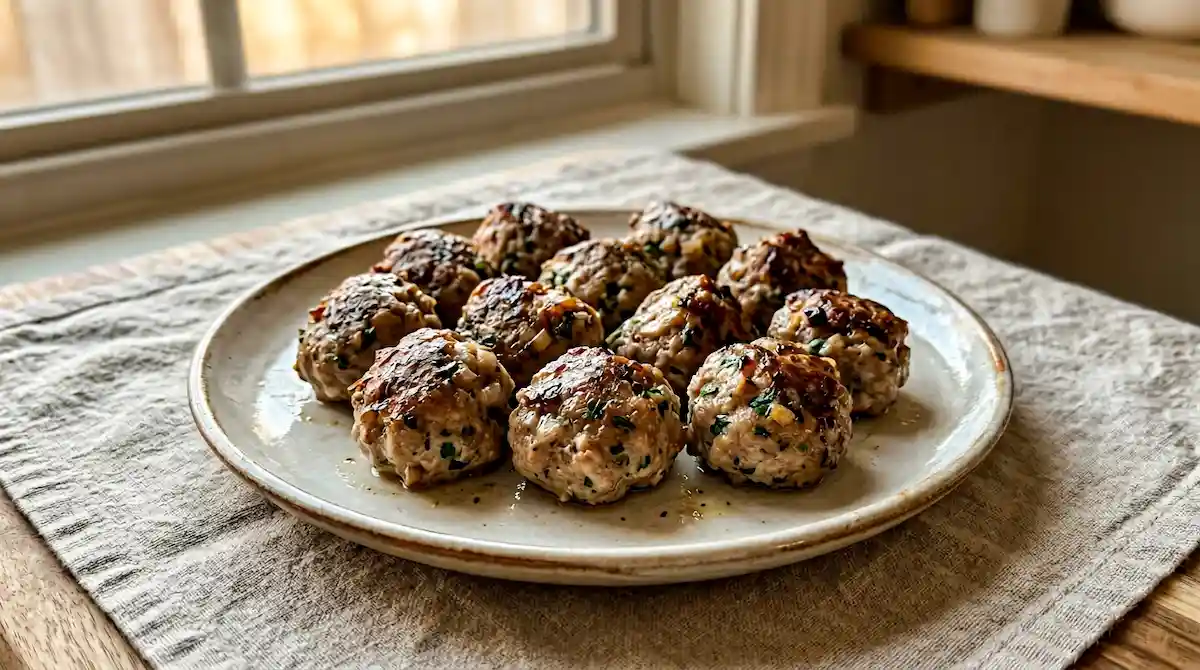
How to Make the Best Baked Turkey Meatballs in 4 Simple Steps
Looking for a healthier alternative to traditional beef meatballs that doesn’t sacrifice flavor or texture? Baked Turkey Meatballs deliver tender, juicy results with less fat and fewer calories while staying incredibly flavorful and satisfying in every bite.
These meatballs bake in the oven instead of frying, which reduces oil usage and creates consistent results without constant monitoring. Moreover, turkey provides lean protein that works beautifully with Italian seasonings, Mediterranean flavors, or Asian-inspired sauces, making these meatballs remarkably versatile.
In this comprehensive guide, I’ll show you exactly how to make restaurant-quality Baked Turkey Meatballs at home, from keeping them moist and tender to achieving perfect browning without frying.
Table of Contents
What is Baked Turkey Meatballs
Baked Turkey Meatballs are seasoned ground turkey shaped into balls and cooked in the oven until golden brown on the outside and cooked through on the inside. The baking method requires less oil than pan-frying and produces more consistent results than stovetop cooking.
Ground turkey serves as the base protein, typically combined with breadcrumbs, eggs, and seasonings to create tender, flavorful meatballs. The breadcrumbs and eggs act as binders that hold the mixture together while adding moisture to prevent dryness.
Traditional meatballs use ground beef or a combination of beef, pork, and veal. However, turkey offers a leaner alternative with significantly less saturated fat while still delivering satisfying texture and flavor when prepared correctly.
The baking process involves forming the mixture into uniform balls, placing them on a baking sheet, and cooking at high temperature until they reach an internal temperature of 165°F. The oven’s dry heat browns the exterior while cooking the inside evenly.
Baked Turkey Meatballs finish cooking in about 20 to 25 minutes, making them faster than simmering in sauce and less hands-on than pan-frying. The consistent oven heat ensures all meatballs cook at the same rate regardless of batch size.
Why You Will Love This Baked Turkey Meatballs
First and foremost, Baked Turkey Meatballs provide a significantly healthier option compared to traditional beef meatballs. Ground turkey contains less saturated fat and fewer calories while delivering high-quality protein that keeps you satisfied.
The hands-off baking method makes meal preparation infinitely easier. You simply shape the meatballs, arrange them on a pan, and let the oven do the work. No standing over a hot stove flipping meatballs or dealing with oil splatters.
Baked Turkey Meatballs also happen to be incredibly versatile for different meals and cuisines. Serve them with marinara over pasta, add them to soup, use them in sandwiches, or serve with various sauces from around the world.
The minimal cleanup appeals to anyone who dreads kitchen duty. You’ll wash the mixing bowl and the baking sheet, but you avoid greasy stovetops and multiple pans that traditional frying requires.
The make-ahead and freezer-friendly nature makes these meatballs perfect for meal prep. Cook a large batch on Sunday and use them throughout the week for quick dinners, or freeze them for future meals.
The consistent results build confidence in your cooking. Once you master the basic technique, you’ll achieve perfectly cooked meatballs every time without worrying about undercooking or burning.
Finally, Baked Turkey Meatballs work for various dietary approaches. They’re naturally gluten-free when using appropriate breadcrumbs, low-carb friendly, high in protein, and appropriate for those watching their fat intake.
Ingredients
Main Ingredients
| Ingredient | Amount | Notes |
|---|---|---|
| Ground turkey | 1.5 pounds | 93% lean works best |
| Breadcrumbs | 1/2 cup | Panko or regular both work |
| Large egg | 1 | Binds the mixture together |
| Parmesan cheese | 1/4 cup grated | Adds flavor and moisture |
| Garlic cloves | 3, minced | Fresh garlic essential |
| Fresh parsley | 1/4 cup chopped | Or 2 tablespoons dried |
| Salt | 1 teaspoon | Kosher salt recommended |
| Black pepper | 1/2 teaspoon | Freshly ground tastes better |
| Italian seasoning | 1 teaspoon | Or mix of basil, oregano, thyme |
| Onion powder | 1/2 teaspoon | Adds savory depth |
Optional Add-ins
| Ingredient | Amount | Notes |
|---|---|---|
| Milk | 2 tablespoons | Keeps meatballs extra moist |
| Worcestershire sauce | 1 tablespoon | Adds umami depth |
| Red pepper flakes | 1/4 teaspoon | For heat lovers |
| Fresh basil | 2 tablespoons chopped | Bright, fresh flavor |
The quality of your ground turkey significantly impacts the final result of Baked Turkey Meatballs. Choose 93% lean turkey rather than 99% lean, as some fat is necessary to keep the meatballs moist and flavorful. The extra-lean versions tend to produce dry, crumbly meatballs.
Fresh herbs taste dramatically better than dried in this recipe, though dried herbs work in a pinch. If using dried parsley, reduce the amount by half since dried herbs are more concentrated.
How to Make Baked Turkey Meatballs Step by Step
Step 1: Prepare the Mixture
Preheat your oven to 400°F and line a large baking sheet with parchment paper or lightly grease it with cooking spray. The parchment prevents sticking and makes cleanup easier.
In a large mixing bowl, combine the ground turkey, breadcrumbs, egg, Parmesan cheese, minced garlic, chopped parsley, salt, black pepper, Italian seasoning, and onion powder. If using optional ingredients like milk or Worcestershire sauce, add them now.
Use your hands or a large fork to mix everything together gently until just combined. Don’t overmix or compress the mixture too much, as this creates dense, tough meatballs. Mix only until you no longer see streaks of egg or dry patches of breadcrumbs.
The mixture should hold together when pressed but still feel light and slightly loose. If it seems too wet and doesn’t hold its shape, add a tablespoon or two more breadcrumbs. If it seems too dry and crumbly, add a tablespoon of milk or water.
Step 2: Shape the Meatballs
Wet your hands slightly with cold water to prevent sticking. Scoop about 2 tablespoons of the mixture and gently roll it between your palms to form a ball about 1.5 inches in diameter.
Place each formed meatball on the prepared baking sheet, leaving about an inch of space between them. This spacing allows heat to circulate and helps them brown evenly.
Try to make all the meatballs roughly the same size so they cook at the same rate. Using a cookie scoop or measuring spoon helps ensure consistency. This recipe should make approximately 20 to 24 meatballs.
Don’t pack the meat mixture too tightly when forming the balls. Gentle handling creates tender Baked Turkey Meatballs rather than dense, heavy ones.
Step 3: Bake Until Golden
Place the baking sheet in the preheated oven and bake for 20 to 25 minutes, until the meatballs turn golden brown on the outside and reach an internal temperature of 165°F.
Check the temperature by inserting an instant-read thermometer into the center of the largest meatball. The juices should run clear, not pink, when the meatballs are fully cooked.
If you want more browning on top, turn on the broiler for the last 2 to 3 minutes of cooking. Watch carefully during broiling to prevent burning.
The meatballs should feel firm when gently pressed and have developed golden-brown spots on the surface. They may release some liquid during baking, which is normal.
Step 4: Rest and Serve
Remove the baking sheet from the oven and let the Baked Turkey Meatballs rest for 5 minutes before serving. This brief rest allows the juices to redistribute throughout the meat, ensuring moist, tender meatballs.
If serving with sauce, you can simmer the baked meatballs in your chosen sauce for 10 to 15 minutes to infuse them with additional flavor. The meatballs will absorb some of the sauce while staying intact.
Transfer the meatballs to a serving dish or add them directly to pasta, soup, or sandwiches. They should be tender enough to cut with a fork but firm enough to hold their shape.
Serve immediately while hot, or cool and store them for later use. The meatballs maintain their texture beautifully even when reheated.
Storage and Make-Ahead Tips
Store leftover Baked Turkey Meatballs in an airtight container in the refrigerator for up to four days. Keep them in any sauce they were served with, or store them plain and add sauce when reheating.
To reheat, warm the meatballs in a saucepan with sauce over medium-low heat for about 10 minutes, or microwave them in 30-second intervals until heated through. You can also reheat them in a 350°F oven for 10 to 15 minutes.
For freezing, cool the cooked meatballs completely, then arrange them in a single layer on a baking sheet and freeze until solid. Transfer the frozen meatballs to a freezer bag with the air pressed out, and freeze for up to three months.
Thaw frozen meatballs overnight in the refrigerator, then reheat as described above. You can also cook frozen meatballs directly in simmering sauce, adding about 10 extra minutes to the heating time.
For make-ahead preparation, shape the raw meatballs up to 24 hours ahead and refrigerate them on the baking sheet covered with plastic wrap. Bake them straight from the refrigerator when ready, adding 2 to 3 minutes to the cooking time.
You can also freeze raw shaped meatballs. Freeze them on a baking sheet until solid, then transfer to a freezer bag. Bake from frozen, adding 5 to 7 minutes to the cooking time and checking the internal temperature.
The mixture itself can be prepared up to one day ahead and refrigerated before shaping. Let it come to room temperature for 15 minutes before forming into meatballs for easier handling.
Common Mistakes and How to Fix Them
One frequent error involves using extra-lean ground turkey. While it seems healthier, 99% lean turkey produces dry, crumbly meatballs because it lacks sufficient fat to keep them moist.
Use 93% lean ground turkey for the best balance of health and texture. The small amount of fat makes a dramatic difference in juiciness and flavor.
Another common mistake is overmixing the meat mixture. Vigorous mixing or kneading develops the protein too much, creating dense, tough meatballs instead of tender ones.
Mix gently just until the ingredients combine, then stop immediately. The mixture should look slightly rough, not smooth like a paste.
Many people also make the error of forming the meatballs too large. Oversized meatballs don’t cook evenly, with the outside overdone before the center reaches safe temperature.
Keep meatballs to about 1.5 inches in diameter. This size cooks through in the allotted time while developing nice browning on the outside.
Skipping the resting period after baking represents another pitfall. Cutting into meatballs immediately causes all the juices to run out, leaving dry meat on the plate.
Always rest the Baked Turkey Meatballs for 5 minutes after baking. Cover them loosely with foil if you’re worried about them cooling too much.
Using the wrong baking temperature creates problems too. Too low and the meatballs steam rather than brown. Too high and they burn outside before cooking through.
Bake at 400°F for the ideal combination of browning and even cooking. This temperature works consistently for standard-sized meatballs.
Finally, many cooks don’t check the internal temperature. Relying solely on visual cues can result in undercooked meatballs, which pose food safety risks with poultry.
Always use an instant-read thermometer to verify that the center reaches 165°F. This simple step ensures both safety and perfect doneness.
Variations
The basic Baked Turkey Meatballs recipe adapts beautifully to various flavor profiles. For Asian-inspired meatballs, replace Italian seasonings with fresh ginger, garlic, soy sauce, and sesame oil. Add chopped green onions and serve with sweet chili sauce.
This variation works wonderfully over rice or in lettuce wraps.
Greek-style turkey meatballs incorporate feta cheese, fresh dill, oregano, and lemon zest into the mixture. Serve with tzatziki sauce, pita bread, and a cucumber-tomato salad.
The Mediterranean flavors create a lighter, brighter take on traditional meatballs.
For Mexican-inspired albondigas, add cumin, chili powder, cilantro, and diced jalapeños to the mixture. Simmer the baked meatballs in tomato-chipotle sauce or add them to tortilla soup.
This variation pairs beautifully with rice, beans, and warm tortillas.
Swedish-style turkey meatballs season the mixture with allspice and nutmeg, then serve with a creamy sauce made from beef broth, cream, and lingonberry jam. The unexpected spices create authentic Scandinavian flavor.
Serve over egg noodles or mashed potatoes for a complete meal.
For keto-friendly Baked Turkey Meatballs, replace breadcrumbs with almond flour or crushed pork rinds. The alternative binders create similar texture while keeping the dish low-carb.
This variation works well for those following ketogenic or grain-free diets.
Buffalo turkey meatballs add buffalo sauce and blue cheese to the mixture, creating spicy, tangy meatballs perfect for game day. Serve with celery sticks and ranch dressing.
These work wonderfully as appetizers or on sub rolls for sandwiches.
Serving Suggestions
Baked Turkey Meatballs shine in countless serving applications. For classic Italian presentation, simmer them in marinara sauce and serve over spaghetti with freshly grated Parmesan cheese.
The combination creates a lighter version of traditional spaghetti and meatballs that still satisfies completely.
Create delicious meatball subs by nestling the meatballs in toasted hoagie rolls with marinara sauce and melted mozzarella cheese. The crispy bread and gooey cheese complement the tender meatballs perfectly.
Add some sautéed peppers and onions for extra flavor and texture.
Serve Baked Turkey Meatballs over creamy polenta or mashed cauliflower for a low-carb dinner option. The creamy base soaks up the sauce and provides comfort food satisfaction.
Top with fresh herbs and extra Parmesan for an elegant presentation.
Add the meatballs to soup for extra protein and substance. They work particularly well in minestrone, Italian wedding soup, or vegetable soup.
The meatballs cook directly in the simmering broth, absorbing flavor while adding heartiness to the soup.
Create grain bowls by serving the meatballs over quinoa or rice with roasted vegetables, leafy greens, and your favorite sauce. This build-your-own-bowl format makes meal prep easy and interesting.
Change up the vegetables and sauces throughout the week for variety.
For appetizers, serve the Baked Turkey Meatballs on toothpicks with various dipping sauces. The bite-sized portions make them perfect for parties and gatherings.
Offer marinara, honey mustard, barbecue sauce, or tzatziki for dipping options.
Make a meatball pizza by using the meatballs as a topping along with marinara, mozzarella, and your favorite pizza toppings. Slice the meatballs in half so they lay flat on the pizza.
This creative use transforms leftover meatballs into an entirely new meal.
Frequently Asked Questions
Can I use ground chicken instead of turkey?
Yes, ground chicken works identically to ground turkey in Baked Turkey Meatballs. Choose chicken that’s 93% lean for the same balance of moisture and health benefits. The flavor will be nearly identical, and the cooking time remains the same.
Why are my turkey meatballs dry?
Dry meatballs result from using extra-lean turkey, overmixing the mixture, or overcooking. Use 93% lean turkey, mix gently, add milk or Parmesan for moisture, and remove the meatballs from the oven as soon as they reach 165°F. The resting period also helps retain moisture.
Can I make these without breadcrumbs?
Yes, substitute crushed crackers, oats, almond flour, or crushed pork rinds for breadcrumbs. Each alternative creates slightly different texture, but all work as binders. Use the same amount as the breadcrumb measurement.
How do I know when the meatballs are done?
Use an instant-read thermometer to check that the internal temperature reaches 165°F. The meatballs should also feel firm when pressed gently, and any juices should run clear, not pink. Visual cues alone aren’t reliable for poultry.
Can I cook these in a slow cooker?
Yes, bake the meatballs first to brown them, then transfer to a slow cooker with your sauce. Cook on low for 2 to 3 hours or high for 1 to 2 hours. Cooking raw meatballs in the slow cooker works too, but they won’t develop the same browned exterior.
What’s the best way to freeze meatballs?
Freeze cooked and cooled meatballs in a single layer on a baking sheet until solid, then transfer to freezer bags. This prevents them from freezing together in one solid block. You can also freeze raw shaped meatballs using the same method.
Can I make mini meatballs?
Yes, form smaller meatballs using about 1 tablespoon of mixture each. Reduce the baking time to 12 to 15 minutes and check the internal temperature. Mini Baked Turkey Meatballs work wonderfully for appetizers or kids’ meals.
Do I need to flip the meatballs during baking?
No, the oven’s surrounding heat cooks the meatballs evenly without flipping. Turning them can cause them to lose their round shape or fall apart. Leave them undisturbed for the best results.
Can I add vegetables to the meatball mixture?
Yes, finely grated zucchini, carrots, or spinach add moisture and nutrition. Squeeze excess water from watery vegetables before adding them, or the mixture will become too wet. Start with 1/2 cup of grated vegetables and adjust the breadcrumbs if needed.
Making Baked Turkey Meatballs at home gives you a healthier, more convenient alternative to traditional beef meatballs without sacrificing flavor or satisfaction. The tender, juicy results work beautifully in countless meals from pasta to soup to sandwiches.
Once you master this straightforward technique, you’ll find yourself making turkey meatballs regularly for quick weeknight dinners and meal prep. The reliable results and versatility make this one of the most valuable recipes in your healthy cooking repertoire.
Give this recipe a try this week, and discover why Baked Turkey Meatballs have become a favorite for home cooks who want delicious, protein-packed meals that support their health goals.