
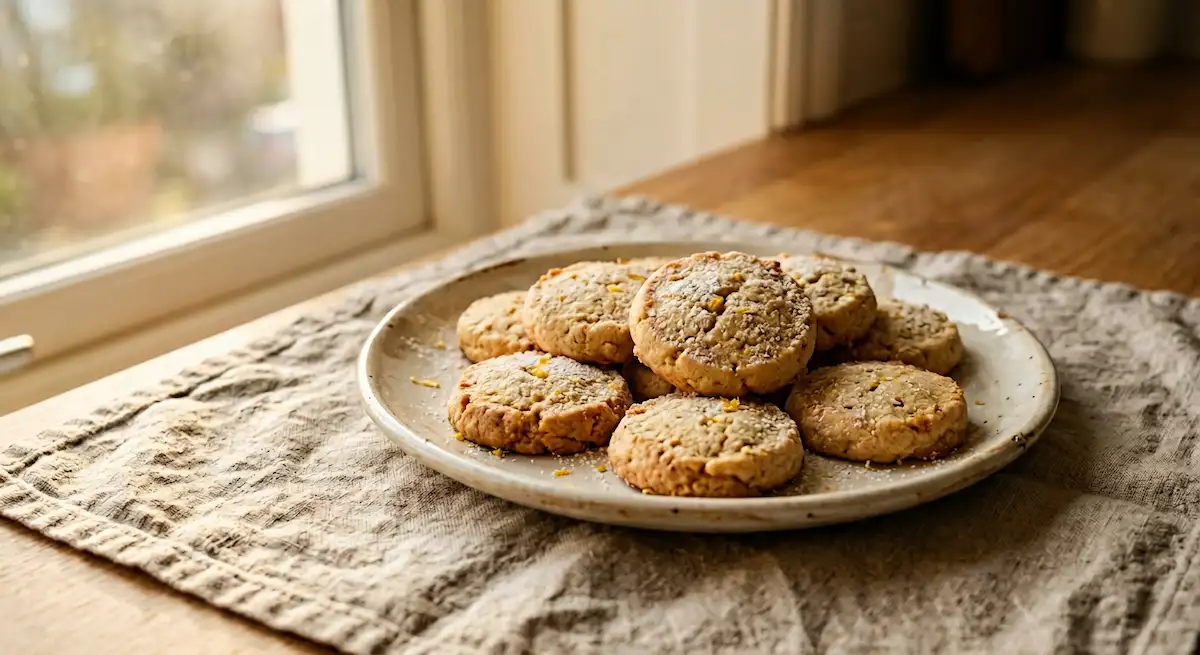
How to Make the Best Lemon Shortbread Cookies in 5 Simple Steps
Imagine biting into a buttery, tender cookie that melts on your tongue while bright lemon flavor dances across your palate. Lemon Shortbread Cookies deliver exactly that experience with their delicate crumb, rich butter flavor, and refreshing citrus notes that make them utterly irresistible.
These elegant cookies require just a handful of simple ingredients and come together quickly without any complicated techniques. Moreover, the combination of butter, sugar, flour, and fresh lemon creates a sophisticated treat that works beautifully for afternoon tea, holiday cookie platters, or any time you want something special.
In this comprehensive guide, I’ll show you exactly how to make bakery-quality Lemon Shortbread Cookies at home, from achieving that perfect sandy texture to infusing maximum lemon flavor into every bite.
Table of Contents
What is Lemon Shortbread Cookies
Lemon Shortbread Cookies are buttery, crumbly cookies made with flour, butter, sugar, and fresh lemon zest that create a tender, melt-in-your-mouth texture. The term “shortbread” refers to the high butter content that creates a “short” or crumbly texture rather than chewy.
Traditional shortbread originated in Scotland and contains just three ingredients: butter, sugar, and flour in a specific ratio. The lemon variation adds fresh lemon zest and sometimes juice to infuse the dough with bright citrus flavor that complements the rich butter.
The texture should be sandy and tender, breaking apart easily without being dry or crumbly to the point of falling apart. When you bite into a properly made shortbread cookie, it should almost dissolve on your tongue while delivering pure butter and lemon flavor.
Unlike many cookies that use eggs and leavening agents, Lemon Shortbread Cookies rely entirely on butter for their structure and texture. This creates a denser, more refined cookie that feels elegant despite its simple composition.
The cookies bake at moderate temperature until just set and barely golden around the edges. Overbaking creates hard, dry cookies rather than the tender texture that makes shortbread so special.
Why You Will Love This Lemon Shortbread Cookies
First and foremost, Lemon Shortbread Cookies deliver sophisticated flavor with remarkably simple preparation. You need just six ingredients and about 15 minutes of hands-on work to create cookies that taste like they came from an upscale bakery.
The bright lemon flavor makes these cookies feel lighter and more refreshing than traditional shortbread. The citrus cuts through the richness of the butter, creating a more balanced eating experience that doesn’t feel heavy or cloying.
Lemon Shortbread Cookies also happen to be incredibly versatile for different occasions. Serve them at elegant tea parties, package them as homemade gifts, add them to holiday cookie assortments, or enjoy them as an everyday treat with your afternoon coffee.
The make-ahead friendly nature simplifies entertaining and gift-giving. The dough can be prepared in advance and refrigerated or frozen, while baked cookies stay fresh for over a week in an airtight container.
The elegant presentation requires minimal effort. The simple round or rectangular shape looks beautiful on its own, though you can dress them up with lemon glaze, powdered sugar, or decorative edges for special occasions.
The reliable results build confidence in your baking. Once you master the basic technique, you’ll achieve perfect Lemon Shortbread Cookies every time without worrying about spreading, puffing, or other common cookie problems.
Finally, these cookies work wonderfully for those who prefer less-sweet treats. The sugar level in shortbread is moderate compared to many American cookies, allowing the butter and lemon flavors to shine without overwhelming sweetness.
Ingredients
Main Ingredients
| Ingredient | Amount | Notes |
|---|---|---|
| Unsalted butter | 1 cup (2 sticks) | Room temperature, not melted |
| Granulated sugar | 1/2 cup | Plus extra for sprinkling |
| All-purpose flour | 2 cups | Spoon and level for accuracy |
| Lemon zest | 2 tablespoons | From 2-3 lemons, packed |
| Salt | 1/4 teaspoon | Enhances all other flavors |
| Vanilla extract | 1 teaspoon | Optional but recommended |
Optional Add-ins
| Ingredient | Amount | Notes |
|---|---|---|
| Lemon juice | 1 tablespoon | Intensifies lemon flavor |
| Powdered sugar | 1 cup | For glaze or dusting |
| Cornstarch | 2 tablespoons | Replace 2 tablespoons flour for extra-tender texture |
The quality of your butter dramatically impacts the final flavor of Lemon Shortbread Cookies. Choose high-quality European-style butter with higher butterfat content for the richest taste. The butter should be soft enough to cream but still hold its shape.
Fresh lemon zest is absolutely essential for maximum flavor. The zest contains aromatic oils that bottled lemon juice or lemon extract cannot replicate. Use a microplane to remove only the yellow outer layer, avoiding the bitter white pith underneath.
How to Make Lemon Shortbread Cookies Step by Step
Step 1: Cream the Butter and Sugar
Bring the butter to room temperature, which takes about an hour on the counter. In a large mixing bowl, beat the softened butter and sugar together using an electric mixer on medium speed for about 3 minutes until light and fluffy.
The mixture should look pale and creamy, with the sugar dissolving into the butter. Scrape down the sides of the bowl occasionally to ensure even mixing.
Add the lemon zest, salt, and vanilla extract if using. Beat for another minute until the zest distributes evenly throughout the butter mixture. The butter should smell intensely of lemon at this stage.
If using lemon juice, add it now and mix just until incorporated. Don’t worry if the mixture looks slightly curdled, as the flour will bring it back together.
Step 2: Add the Flour
Add the flour to the butter mixture all at once. Use a wooden spoon or rubber spatula to stir the flour in gently, mixing just until the dough comes together and you no longer see streaks of flour.
Don’t overmix or the cookies will become tough. The dough should look crumbly at first, then gradually come together as you continue stirring. Stop mixing as soon as it forms a cohesive dough.
If the dough seems too crumbly and won’t hold together, add water one teaspoon at a time. If it seems too wet and sticky, add flour one tablespoon at a time. The dough should be soft but not sticky.
Turn the dough out onto a clean work surface and gently knead it two or three times to bring it together fully. Shape it into a disk or log depending on your preferred cookie shape.
Step 3: Chill the Dough
Wrap the shaped dough tightly in plastic wrap and refrigerate for at least 30 minutes, or up to 3 days. This chilling step is crucial for achieving the proper texture in Lemon Shortbread Cookies.
Cold dough is easier to slice or roll without becoming sticky or losing its shape. The chilling also allows the flour to hydrate fully and the flavors to meld together.
If you’ve shaped the dough into a log for slice-and-bake cookies, make sure it’s uniformly round by rolling it gently on the counter. This ensures even, circular cookies.
For rolled cookies, flatten the dough into a disk before wrapping. This makes it easier to roll out when you’re ready to cut shapes.
Step 4: Shape and Prepare for Baking
Preheat your oven to 325°F and line baking sheets with parchment paper. Remove the dough from the refrigerator.
For slice-and-bake cookies, use a sharp knife to cut the log into 1/4-inch thick rounds. Arrange them on the prepared baking sheets about an inch apart, as they don’t spread much.
For rolled cookies, roll the dough on a lightly floured surface to about 1/4 inch thickness. Use cookie cutters to cut shapes and transfer them to the baking sheets.
Sprinkle the tops of the cookies lightly with granulated sugar for a subtle sparkle and extra sweetness. You can also prick each cookie several times with a fork for traditional shortbread appearance.
Step 5: Bake and Cool
Bake the Lemon Shortbread Cookies for 15 to 18 minutes until they’re set and just barely starting to turn golden around the edges. The centers should still look pale, not brown.
The cookies will seem soft when you first remove them from the oven, which is normal. They firm up considerably as they cool.
Let the cookies cool on the baking sheet for 5 minutes before transferring them to a wire rack. This brief rest allows them to set without breaking.
Cool completely before storing or decorating. The cookies continue to crisp slightly as they cool, developing that perfect sandy texture.
Storage and Make-Ahead Tips
Store baked Lemon Shortbread Cookies in an airtight container at room temperature for up to two weeks. Layer them with parchment paper to prevent sticking, though these cookies rarely stick together due to their low moisture content.
For longer storage, freeze baked cookies for up to three months. Arrange them in a single layer in a freezer container with parchment between layers. Thaw at room temperature for about 30 minutes before serving.
The unbaked dough freezes beautifully for up to three months. Wrap it tightly in plastic wrap, then in aluminum foil or a freezer bag. Thaw overnight in the refrigerator before shaping and baking.
For slice-and-bake convenience, shape the dough into logs, wrap well, and freeze. Slice the frozen dough and bake directly from frozen, adding 2 to 3 minutes to the baking time.
Prepare the dough up to three days ahead and refrigerate it. This actually improves the flavor as the lemon oils continue infusing into the butter.
You can also bake the cookies up to one week ahead for parties or gift-giving. They actually taste better after a day or two as the flavors meld and the texture develops.
Common Mistakes and How to Fix Them
One frequent error involves using melted or too-soft butter. When butter is too warm, it creates greasy, spreading cookies rather than the tender, crumbly texture shortbread requires.
The butter should be soft enough to leave an impression when pressed but still hold its shape. If your butter is too soft, refrigerate it for 10 minutes before using.
Another common mistake is overmixing the dough after adding flour. Vigorous mixing develops gluten, which creates tough, hard cookies instead of tender ones.
Mix gently just until the flour incorporates, then stop immediately. The dough should look slightly rough, not smooth like bread dough.
Many people also make the error of overbaking shortbread. Because these cookies contain so much butter and no eggs, they brown quickly and become hard when overbaked.
Remove the cookies when they’re just set and barely golden at the edges. They should still look pale in the center. Remember they continue cooking slightly from residual heat.
Using old or bottled lemon juice instead of fresh zest creates another problem. Bottled juice lacks the aromatic oils that make Lemon Shortbread Cookies taste bright and fresh.
Always use freshly grated lemon zest from real lemons. The investment in fresh citrus makes an enormous difference in the final flavor.
Skipping the chilling step causes the cookies to spread and lose their shape during baking. Warm dough doesn’t hold its form in the oven.
Always refrigerate the dough for at least 30 minutes before baking. This simple step dramatically improves the texture and appearance.
Finally, many cooks store the cookies while they’re still warm. The residual heat creates condensation in the container, making the cookies soft and potentially moldy.
Cool the Lemon Shortbread Cookies completely before storing. They should feel room temperature to the touch with no warmth remaining.
Variations
The basic Lemon Shortbread Cookies recipe welcomes numerous delicious variations. For lavender lemon shortbread, add one tablespoon of culinary lavender to the butter and sugar mixture. The floral notes complement the lemon beautifully.
Strain out the lavender before adding flour, or leave it in for visual interest and texture.
Glazed lemon shortbread adds a sweet-tart finish. Mix powdered sugar with fresh lemon juice to create a thick glaze, then drizzle or spread it over cooled cookies.
The glaze adds extra lemon intensity and creates an elegant appearance for gift-giving.
For chocolate-dipped lemon shortbread, melt dark or white chocolate and dip half of each cooled cookie. The chocolate-lemon combination tastes sophisticated and looks impressive.
Let the chocolate set completely before storing or packaging.
Lemon poppy seed shortbread incorporates two tablespoons of poppy seeds into the dough for added texture and visual appeal. The tiny seeds create beautiful speckles throughout.
This variation offers a classic flavor combination with interesting texture.
Thyme lemon shortbread adds one tablespoon of fresh thyme leaves for an herbal twist. The savory note creates complex flavor that works beautifully with afternoon tea.
This unexpected variation impresses guests with its sophistication.
For Meyer lemon shortbread, use Meyer lemon zest instead of regular lemon. Meyer lemons taste sweeter and more floral, creating a different but equally delicious cookie.
This variation works particularly well during winter when Meyer lemons are in season.
Serving Suggestions
Lemon Shortbread Cookies pair beautifully with hot tea, particularly Earl Grey, chamomile, or green tea. The bright lemon flavor complements the tea without overwhelming it.
Arrange the cookies on a pretty plate alongside the tea service for an elegant afternoon tea presentation.
Serve them with fresh berries and whipped cream for a simple dessert. The buttery cookies provide textural contrast to the soft fruit and cream.
This combination feels light and refreshing, perfect for spring and summer entertaining.
Create ice cream sandwiches using Lemon Shortbread Cookies and lemon, vanilla, or raspberry sorbet. The cool ice cream contrasts beautifully with the crisp, buttery cookies.
This elegant dessert impresses guests while requiring minimal effort.
Package them in decorative tins or boxes for homemade gifts. Line the container with parchment or tissue paper and arrange the cookies in layers.
Add a ribbon and gift tag for presents that show you care enough to bake from scratch.
Serve alongside lemon curd and fresh fruit for a simple but impressive brunch dessert. The cookies provide a vehicle for the tangy curd while the fruit adds freshness.
This combination works wonderfully for spring and Easter brunches.
Pair Lemon Shortbread Cookies with coffee for a sophisticated breakfast or afternoon snack. The lemon brightens the coffee’s richness while the butter provides satisfying richness.
This European-style pairing elevates an ordinary coffee break.
Frequently Asked Questions
Can I use salted butter for Lemon Shortbread Cookies?
You can use salted butter, but reduce or omit the additional salt in the recipe. Salted butter contains varying amounts of salt depending on the brand, making it harder to control the final flavor. Unsalted butter gives you more control and generally tastes fresher.
Why are my cookies spreading too much?
Spreading occurs when the butter is too warm, the dough isn’t chilled enough, or the oven temperature is too low. Make sure to refrigerate the dough for at least 30 minutes and verify your oven temperature with an oven thermometer. Also ensure your butter was properly softened, not melted.
How do I know when the cookies are done?
The cookies are done when they’re set and just barely starting to turn golden around the edges. The centers should still look pale. They’ll seem soft when you first remove them but will firm up as they cool. Shortbread should never be deeply browned.
Can I make these cookies gluten-free?
Yes, substitute a gluten-free all-purpose flour blend that contains xanthan gum. The texture will be slightly different but still delicious. You may need to adjust the liquid slightly depending on your flour blend’s absorption rate.
How long do Lemon Shortbread Cookies stay fresh?
Lemon Shortbread Cookies stay fresh in an airtight container at room temperature for up to two weeks. The high butter content acts as a natural preservative. They actually taste better after a day or two as the flavors meld. For longer storage, freeze them for up to three months.
Can I use lemon extract instead of zest?
Lemon extract doesn’t provide the same fresh, bright flavor as lemon zest. The zest contains aromatic oils that extract cannot replicate. If you must use extract, add one teaspoon along with some lemon juice, but the flavor won’t be as vibrant.
Why is my dough too crumbly?
Crumbly dough usually means there’s not enough moisture or the butter was too cold when mixed. Add water one teaspoon at a time until the dough holds together. Make sure your butter is properly softened before starting. Gentle kneading can also help bring crumbly dough together.
Can I add other flavors to this recipe?
Yes, Lemon Shortbread Cookies work beautifully with additions like lavender, poppy seeds, fresh herbs, or almond extract. Keep additions to small amounts so they don’t overwhelm the delicate lemon-butter flavor. Start with one tablespoon of mix-ins and adjust to taste.
Do I need to use parchment paper?
Parchment paper prevents sticking and makes cleanup easier, but you can also use a silicone baking mat or lightly grease the baking sheet. Avoid dark-colored baking sheets, as they can cause the bottoms to brown too quickly before the cookies finish baking.
Making Lemon Shortbread Cookies at home fills your kitchen with the aroma of butter and fresh lemon while creating tender, elegant treats that rival any bakery. The simple ingredient list and straightforward technique make these cookies accessible to bakers of all skill levels.
Once you experience how easy and delicious homemade shortbread can be, you’ll find yourself baking these cookies regularly for tea parties, gifts, and everyday enjoyment. The sophisticated flavor and melt-in-your-mouth texture make them one of the most rewarding recipes in your baking repertoire.
Give this recipe a try this weekend, and discover why Lemon Shortbread Cookies have remained a beloved classic for generations. The perfect balance of buttery richness and bright citrus creates a cookie that’s truly special.