
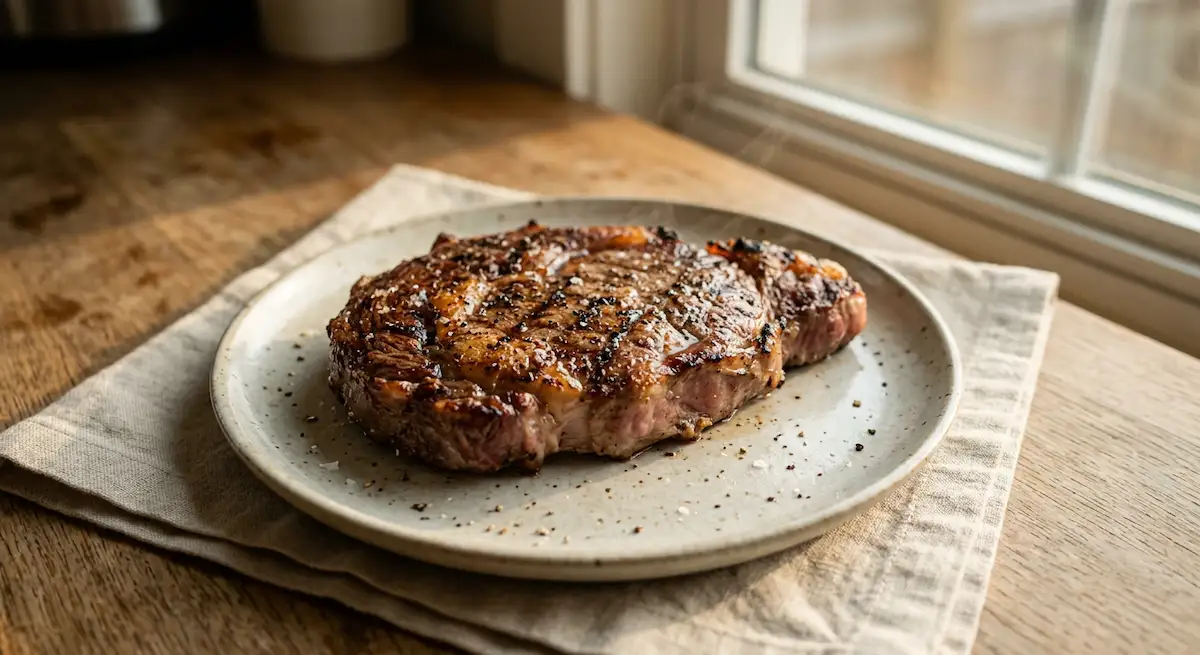
How to Make the Best Grilled Ribeye Steak in 4 Simple Steps
Picture slicing into a perfectly seared steak with a caramelized crust that gives way to tender, juicy meat cooked exactly to your preferred doneness. Grilled Ribeye Steak delivers that steakhouse experience right in your backyard when you master just a few essential techniques.
The ribeye’s abundant marbling creates incredible flavor and ensures the meat stays moist during grilling, while the high heat of the grill develops that coveted charred exterior. Moreover, this cut is remarkably forgiving compared to leaner steaks, making it perfect for both beginners and experienced grillers.
In this comprehensive guide, I’ll walk you through every step of grilling the perfect ribeye, from selecting the right cut to achieving that ideal medium-rare center with a beautifully seared crust.
Table of Contents
What is Grilled Ribeye Steak
Grilled Ribeye Steak is a bone-in or boneless cut from the rib section of beef that’s cooked over high heat on a grill until it develops a flavorful crust while the interior remains tender and juicy. The ribeye is prized for its abundant marbling, which refers to the white flecks of intramuscular fat that melt during cooking.
This marbling creates the rich, beefy flavor and buttery texture that make ribeye one of the most popular and expensive cuts. The fat bastes the meat from the inside as it cooks, preventing dryness and adding incredible flavor that leaner cuts cannot match.
The ribeye comes from the rib primal section, which runs from ribs six through twelve. Bone-in ribeyes are sometimes called cowboy steaks or tomahawk steaks when the bone is left long, while boneless versions are simply called ribeye steaks.
The ideal thickness for grilling ribeye is 1 to 1.5 inches, which allows you to develop a good crust without overcooking the interior. Thinner steaks cook too quickly and can easily become overdone, while thicker steaks require more careful temperature management.
Grilled Ribeye Steak typically cooks over direct high heat for several minutes per side, then may finish over indirect heat or rest to reach the perfect internal temperature. The high heat creates the Maillard reaction that browns the exterior and develops complex flavors.
Why You Will Love This Grilled Ribeye Steak
First and foremost, Grilled Ribeye Steak delivers restaurant-quality results with minimal ingredients and straightforward technique. You need just salt, pepper, and heat to create something truly spectacular that rivals the best steakhouses.
The abundant marbling makes ribeye remarkably forgiving compared to leaner cuts. The intramuscular fat prevents the meat from drying out even if you slightly overcook it, though of course proper technique produces the best results.
Grilled Ribeye Steak also happens to be incredibly impressive for entertaining. When you bring perfectly grilled steaks to the table, guests react with genuine appreciation and excitement. The dramatic presentation and incredible flavor make any meal feel special.
The versatility for different flavor profiles means you can keep it simple with just salt and pepper, or experiment with rubs, marinades, and compound butters. The basic grilling technique remains constant while the flavor possibilities multiply.
The quick cooking time makes this dish perfect for weeknight dinners despite its elegant appeal. From bringing the steak to room temperature to plating takes less than an hour, with most of that time being passive.
The high-protein, low-carb nature of ribeye fits various dietary approaches including keto, paleo, and low-carb diets. When paired with simple vegetable sides, it creates a nutritious meal that satisfies completely.
Finally, Grilled Ribeye Steak creates those wonderful outdoor cooking moments that bring people together. Standing around the grill with family or friends, anticipating the perfect steak, builds memories alongside the meal.
Ingredients
Main Ingredients
| Ingredient | Amount | Notes |
|---|---|---|
| Ribeye steaks | 2 (12-14 oz each) | 1 to 1.5 inches thick |
| Coarse salt | 2 teaspoons | Kosher or sea salt |
| Black pepper | 1 teaspoon | Freshly ground |
| Vegetable oil | 2 tablespoons | For coating steaks |
Optional Add-ins
| Ingredient | Amount | Notes |
|---|---|---|
| Garlic cloves | 4, smashed | For compound butter |
| Fresh herbs | 2 tablespoons | Rosemary or thyme |
| Butter | 4 tablespoons | For basting or compound butter |
| Garlic powder | 1 teaspoon | Additional seasoning |
The quality of your beef dramatically impacts the final result of Grilled Ribeye Steak. Look for USDA Choice or Prime grade with abundant marbling throughout. The fat should look white, not yellow, indicating younger, more tender beef.
Room temperature meat cooks more evenly than cold steak straight from the refrigerator. Remove the steaks from the fridge 30 to 60 minutes before grilling to take the chill off.
How to Make Grilled Ribeye Steak Step by Step
Step 1: Prepare and Season the Steaks
Remove the ribeye steaks from the refrigerator and pat them completely dry with paper towels. Moisture on the surface prevents proper searing and creates steam instead of the dry heat needed for a good crust.
Let the steaks sit at room temperature for 30 to 60 minutes. This allows the meat to cook more evenly from edge to center. Cold steak straight from the fridge develops an overcooked exterior before the center reaches temperature.
Brush both sides of each steak lightly with vegetable oil, then season generously with coarse salt and freshly ground black pepper. Press the seasonings into the meat so they adhere well.
Don’t be shy with the salt, as much of it will fall off during cooking. The coarse crystals create better crust development than fine salt. Season right before grilling for the best results.
Step 2: Preheat the Grill to High Heat
Preheat your gas grill to high heat or prepare a charcoal grill with a full chimney of coals. You want the grill grates screaming hot, around 450°F to 500°F or higher.
Clean the grill grates thoroughly with a wire brush to remove any residue from previous cooking. Dirty grates cause sticking and prevent proper sear marks.
Oil the grates by dipping a folded paper towel in vegetable oil and using tongs to rub it across the hot grates. This creates a non-stick surface and promotes better searing.
The grill is ready when you can hold your hand about 4 inches above the grates for only 2 to 3 seconds before the heat becomes uncomfortable. This indicates the proper high heat for searing Grilled Ribeye Steak.
Step 3: Grill the Steaks
Place the seasoned steaks on the hottest part of the grill at a 45-degree angle to the grates. This creates those coveted diamond-shaped grill marks. Don’t move the steaks once you place them.
Cook for 3 to 4 minutes without touching them. Resist the urge to flip early, as the steaks need time to develop a proper crust. They’ll release easily from the grates when ready.
Flip the steaks and cook for another 3 to 4 minutes on the second side. For medium-rare ribeye, aim for an internal temperature of 130°F to 135°F. Use an instant-read thermometer inserted into the thickest part of the steak.
If the steaks need more time but the exterior is getting too dark, move them to a cooler part of the grill or reduce the heat. The goal is reaching the proper internal temperature without burning the outside.
For thicker steaks, you may need to finish them over indirect heat. Move them to the cooler side of the grill, close the lid, and cook until they reach your target temperature.
Step 4: Rest and Serve
Remove the Grilled Ribeye Steak from the grill when it reaches about 5 degrees below your target temperature. The steaks will continue cooking from residual heat during the resting period.
Transfer the steaks to a cutting board or plate and tent them loosely with aluminum foil. Let them rest for 5 to 10 minutes before slicing or serving.
This crucial resting period allows the juices to redistribute throughout the meat. Cutting into the steak immediately causes all those flavorful juices to run out onto the plate, leaving you with drier meat.
Top with a pat of compound butter if desired, letting it melt over the hot steak. Slice against the grain if serving sliced, or present the whole steak on warmed plates.
Storage and Make-Ahead Tips
Store leftover Grilled Ribeye Steak wrapped tightly in aluminum foil or in an airtight container in the refrigerator for up to three days. The steak will continue to cook slightly during storage, so plan accordingly.
Reheat leftovers gently in a 250°F oven until just warmed through, about 10 to 15 minutes. Avoid microwaving, as this overcooks the meat and makes it tough. You can also slice cold leftover steak for salads or sandwiches.
For make-ahead preparation, season the steaks up to 24 hours in advance and refrigerate them uncovered on a wire rack. This dry-aging process concentrates flavor and improves the texture.
Bring the steaks to room temperature before grilling, which takes about an hour straight from the refrigerator. Never grill cold steak, as it cooks unevenly.
You can also prepare compound butter up to one week ahead. Roll it into a log in parchment paper and refrigerate, then slice medallions to top the hot steaks.
Avoid marinating ribeye for extended periods, as the abundant fat doesn’t benefit from marinades the way leaner cuts do. Simple salt and pepper work best for this well-marbled cut.
Common Mistakes and How to Fix Them
One frequent error involves not preheating the grill adequately. When the grill isn’t hot enough, steaks stick to the grates and don’t develop proper crust.
Always preheat for at least 10 to 15 minutes before adding the meat. The grates should be hot enough that water droplets sizzle and evaporate immediately.
Another common mistake is flipping the steaks too frequently. Constant flipping prevents proper sear development and can cause the meat to stick and tear.
Flip only once for traditional grill marks, or at most twice for even cooking. Each side needs several minutes of uninterrupted contact with the grates.
Many people also make the error of pressing down on the steaks with a spatula. This squeezes out the flavorful juices and creates flare-ups from the dripping fat.
Never press on the steaks. Let them cook undisturbed, and the natural rendering fat will baste the meat from within.
Using a fork to flip steaks represents another pitfall. Piercing the meat creates holes that allow juices to escape.
Always use tongs to flip and move the steaks. Tongs grip without piercing, keeping all those delicious juices inside.
Cutting into the steak to check doneness ruins the presentation and releases juices. Visual cues alone are unreliable for determining internal temperature.
Invest in a good instant-read thermometer and insert it into the thickest part of the steak. This provides accurate doneness without cutting.
Finally, many cooks skip the resting period and serve the Grilled Ribeye Steak immediately. This causes all the juices to run out when you cut into it.
Always rest the steaks for 5 to 10 minutes loosely covered. The wait is difficult but essential for juicy results.
Variations
The basic Grilled Ribeye Steak technique adapts beautifully to various flavor profiles. For garlic butter ribeye, mash softened butter with minced garlic, fresh herbs, and a pinch of salt. Top each hot steak with a medallion of the compound butter.
The butter melts into the meat, creating incredible richness and flavor.
Coffee-rubbed ribeye uses a dry rub of finely ground coffee, brown sugar, paprika, and black pepper. The coffee creates a dark, flavorful crust with subtle complexity.
This unexpected variation impresses guests while remaining easy to prepare.
For Asian-inspired ribeye, marinate the steaks briefly in soy sauce, sesame oil, ginger, and garlic. Grill as directed and slice thinly against the grain.
Serve with stir-fried vegetables and rice for a fusion approach.
Chimichurri ribeye tops the grilled steak with fresh chimichurri sauce made from parsley, oregano, garlic, red wine vinegar, and olive oil. The bright, herbaceous sauce cuts through the rich meat beautifully.
This Argentinian approach creates a lighter, fresher flavor profile.
Blue cheese crusted ribeye adds crumbled blue cheese to the steaks during the last minute of cooking. The cheese melts slightly while maintaining some texture.
This bold variation works wonderfully for blue cheese lovers.
For Montreal-style ribeye, coat the steaks in Montreal steak seasoning before grilling. This peppery, garlicky blend creates intense flavor.
The commercial spice blend makes seasoning effortless while delivering consistent results.
Serving Suggestions
Grilled Ribeye Steak pairs beautifully with classic steakhouse sides. Serve with baked potatoes loaded with butter, sour cream, chives, and bacon for a traditional presentation.
Add creamed spinach or sautéed mushrooms to complete the steakhouse experience at home.
For a lighter approach, serve the ribeye with grilled vegetables like asparagus, zucchini, and bell peppers. The vegetables cook on the grill alongside the steak.
This creates a complete meal with minimal cleanup and maximum flavor.
Slice the Grilled Ribeye Steak thinly and serve over a bed of mixed greens with blue cheese, cherry tomatoes, and balsamic vinaigrette for an elegant steak salad.
This presentation works wonderfully for summer entertaining or lighter meals.
Create steak frites by serving the ribeye with crispy French fries and garlic aioli. This French bistro classic feels both casual and sophisticated.
Add a simple green salad for a complete, balanced meal.
For surf and turf, pair the ribeye with grilled shrimp, lobster tail, or scallops. This luxurious combination creates the ultimate special occasion meal.
Serve with drawn butter and lemon wedges for the seafood.
Serve Grilled Ribeye Steak family-style on a large cutting board, sliced against the grain. Arrange the slices slightly overlapping and garnish with fresh herbs.
This casual presentation encourages sharing and creates a convivial atmosphere.
Frequently Asked Questions
What temperature should I cook ribeye to?
For medium-rare, cook Grilled Ribeye Steak to an internal temperature of 130°F to 135°F. Medium is 135°F to 145°F, and medium-well is 145°F to 155°F. Remove the steak from heat about 5 degrees below your target, as it continues cooking during rest.
How long should I grill a 1-inch ribeye?
A 1-inch thick ribeye typically needs 3 to 4 minutes per side over high heat for medium-rare. However, exact timing varies based on grill temperature and starting meat temperature. Always use a thermometer rather than relying solely on time.
Should I grill ribeye with the bone in or boneless?
Both work beautifully, though bone-in steaks often have more flavor and the bone helps retain moisture. Boneless steaks cook slightly faster and are easier to eat. Choose based on personal preference and availability.
Do I need to marinate ribeye steak?
No, ribeye’s abundant marbling provides plenty of flavor and moisture without marinating. Simple salt and pepper allow the beef flavor to shine. Marinades work better for leaner cuts that benefit from added moisture and flavor.
How do I know when my steak is done without cutting it?
Use an instant-read meat thermometer inserted into the thickest part of the steak. This provides accurate temperature without releasing juices. You can also use the touch test, comparing the steak’s firmness to different parts of your hand.
Why is my grilled ribeye tough?
Tough ribeye usually results from overcooking or not allowing the meat to rest. Cook to proper temperature and always rest for 5 to 10 minutes. Also ensure you slice against the grain, which shortens muscle fibers.
Can I cook ribeye on a gas grill?
Yes, gas grills work perfectly for Grilled Ribeye Steak. Preheat all burners to high, clean and oil the grates, and follow the same technique. Gas grills provide consistent heat that’s easier to control than charcoal.
How thick should ribeye be for grilling?
Aim for 1 to 1.5 inches thick. Thinner steaks cook too quickly and easily overcook, while thicker steaks require more careful temperature management. The 1 to 1.5 inch range provides the best balance for developing crust while cooking the interior properly.
Should I oil the steak or the grill grates?
Oil both. Brush the steaks lightly with oil to promote browning, and oil the grates to prevent sticking. Use high-heat oils like vegetable, canola, or avocado oil rather than olive oil, which can smoke at high temperatures.
Mastering Grilled Ribeye Steak transforms you into the backyard chef everyone requests for cookouts and celebrations. The combination of simple technique, quality ingredients, and proper timing creates restaurant-quality results that rival the best steakhouses.
Once you experience the satisfaction of perfectly grilled ribeye with its charred crust and juicy interior, you’ll find yourself firing up the grill regularly. The reliable technique and impressive results make this one of the most valuable skills in your cooking repertoire.
Give this method a try this weekend, and discover why Grilled Ribeye Steak remains the gold standard for outdoor cooking and special occasion meals.