
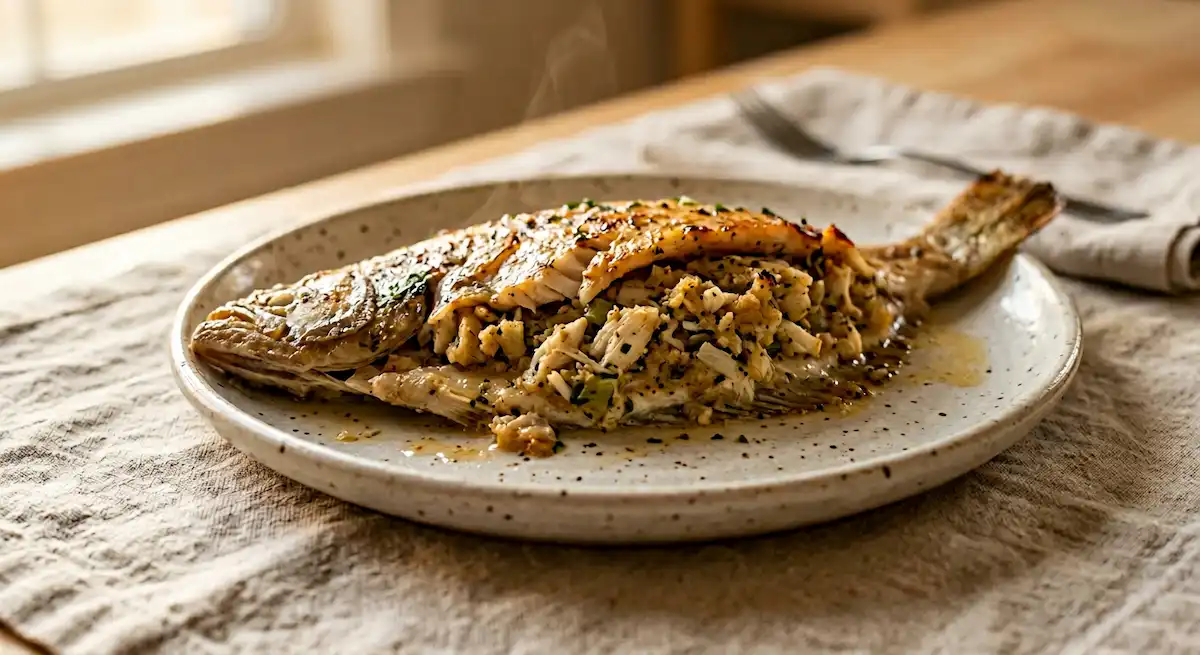
How to Make the Best Crab Stuffed Flounder in 5 Simple Steps
Ever wonder how restaurants create those elegant seafood dishes that look and taste like culinary masterpieces? Crab stuffed flounder is one of those impressive entrées that seems intimidating but actually comes together quite easily when you know the technique. This refined combination of delicate flounder fillets wrapped around a rich, buttery crab filling delivers restaurant-quality results that will have everyone at your dinner table convinced you’ve been secretly attending culinary school.
Moreover, crab stuffed flounder is surprisingly forgiving and faster than most people expect, making it perfect for special occasions without the stress. Throughout this comprehensive guide, you’ll discover exactly how to select, stuff, and bake perfect crab stuffed flounder with ideal texture, gorgeous presentation, and that luxurious flavor combination that makes this dish genuinely unforgettable.
Table of Contents
What is Crab Stuffed Flounder
Crab stuffed flounder is an elegant seafood dish consisting of thin flounder fillets rolled or folded around a savory crab meat filling, then baked until the fish is tender and flaky while the stuffing becomes golden and aromatic. The flounder’s mild, delicate flavor provides a perfect neutral canvas that allows the sweet lump crab meat and buttery seasonings to shine without overwhelming the palate.
Furthermore, this dish represents classic American coastal cuisine, particularly popular in Mid-Atlantic and Southern coastal regions where both flounder and crab are abundant. The preparation method showcases both seafood components at their best the flounder stays moist and tender through gentle baking, while the crab stuffing develops rich, complex flavors enhanced by butter, herbs, and breadcrumbs.
Additionally, crab stuffed flounder occupies that sweet spot between impressive and achievable. While it looks and tastes like something you’d order at an upscale seafood restaurant, the actual technique requires no advanced culinary skills. The combination of fresh seafood, simple seasonings, and proper baking creates a dish that consistently delivers wow-factor results.
Why You Will Love This Crab Stuffed Flounder
First and foremost, the flavor combination of crab stuffed flounder is absolutely exquisite. The sweet, delicate flounder complements rather than competes with the rich crab filling, creating harmony where each component enhances the other. The butter, lemon, and herbs tie everything together, resulting in sophisticated flavor that tastes complex despite the straightforward preparation.
Additionally, this dish is remarkably special-occasion worthy while remaining surprisingly simple to execute. When you serve crab stuffed flounder at a dinner party, guests assume you’ve spent hours in the kitchen, when in reality the hands-on work takes about 20 minutes. The impressive presentation and restaurant-quality taste make this perfect for anniversaries, holidays, or any time you want to create a memorable meal.
Another compelling reason to master this recipe is its nutritional excellence. Both flounder and crab are lean proteins packed with nutrients like omega-3 fatty acids, B vitamins, and minerals. Therefore, you can enjoy this indulgent-tasting dish knowing it’s genuinely nourishing your body with quality protein and healthy fats.
Moreover, the versatility is remarkable. Crab stuffed flounder works equally well as an elegant dinner entrée, a special lunch for guests, or even as part of a seafood feast with multiple courses. The refined appearance and flavor adapt beautifully to different occasions and serving styles.
Finally, this recipe is more economical than dining out for comparable quality. While fresh crab meat and flounder represent an investment, preparing crab stuffed flounder at home costs roughly half what you’d pay at a restaurant, and you control the quality of every ingredient.
Ingredients
Creating delicious crab stuffed flounder requires quality seafood and simple pantry ingredients that work together to create something truly special. Freshness matters enormously here.
For the Flounder
| Ingredient | Amount | Notes |
|---|---|---|
| Flounder fillets | 4 large (6-8 oz each) | Fresh, thin fillets work best; sole substitutes well |
| Salt | ½ teaspoon | For seasoning fish |
| Black pepper | ¼ teaspoon | Freshly ground preferred |
| Lemon juice | 2 tablespoons | Brightens fish flavor |
| White wine | ¼ cup | For baking liquid; adds subtle acidity |
For the Crab Stuffing
| Ingredient | Amount | Notes |
|---|---|---|
| Lump crab meat | 8 ounces | Fresh or pasteurized; pick through for shells |
| Unsalted butter | 4 tablespoons melted | Divided use for richness |
| Panko breadcrumbs | ½ cup | Creates lighter texture than regular crumbs |
| Mayonnaise | 2 tablespoons | Adds moisture and binding |
| Dijon mustard | 1 teaspoon | Subtle tang and depth |
| Fresh parsley | 2 tablespoons chopped | Adds freshness and color |
| Green onions | 2 tablespoons sliced | Mild onion flavor |
| Old Bay seasoning | ½ teaspoon | Classic seafood seasoning |
| Lemon zest | 1 teaspoon | Aromatic citrus notes |
| Worcestershire sauce | ½ teaspoon | Umami depth |
Optional Garnishes
| Ingredient | Amount | Notes |
|---|---|---|
| Fresh lemon wedges | For serving | Essential finishing touch |
| Fresh parsley | For garnish | Adds color and freshness |
| Paprika | For dusting | Adds color to finished dish |
The flounder fillets form the foundation of crab stuffed flounder, and quality makes all the difference. Look for fresh, thin fillets that are pliable enough to roll without breaking. The fish should smell clean and ocean-fresh, never fishy or ammonia-like. If flounder isn’t available, sole or tilapia work as acceptable substitutes.
Meanwhile, the lump crab meat provides that essential sweet, delicate flavor that makes this dish special. Always pick through crab carefully to remove any shell fragments even small pieces can ruin the eating experience. Fresh lump crab from your seafood counter tastes best, though high-quality pasteurized crab in containers works excellently and is often more convenient.
How to Make Crab Stuffed Flounder Step by Step
Creating perfectly cooked crab stuffed flounder involves gentle handling and proper technique. Follow these detailed steps for consistently excellent results.
Step 1: Prepare the Crab Stuffing
Preheat your oven to 375°F and lightly butter a 9×13-inch baking dish. In a medium mixing bowl, carefully pick through the crab meat to remove any shell fragments or cartilage pieces. Add the panko breadcrumbs, mayonnaise, Dijon mustard, 2 tablespoons of the melted butter, chopped parsley, green onions, Old Bay seasoning, lemon zest, and Worcestershire sauce.
Using a fork, gently fold everything together just until combined. The key is preserving those lovely lump crab pieces rather than breaking them into shreds. Mix only until the ingredients hold together the stuffing should look somewhat loose and chunky rather than dense and pasty. Set this mixture aside while you prepare the flounder.
The stuffing can be made up to 4 hours in advance and refrigerated covered. This actually helps the flavors meld beautifully. Just bring it to room temperature for 15 minutes before stuffing the fish.
Step 2: Prepare the Flounder Fillets
Pat the flounder fillets completely dry with paper towels this is crucial for proper seasoning adherence and preventing excess moisture in the baked dish. Lay the fillets on a clean work surface with the darker side (which was the skin side) facing up. Season each fillet lightly with salt, pepper, and a squeeze of fresh lemon juice.
Examine each fillet and determine which end is thicker. You’ll want to place the stuffing on the thicker end because it rolls more easily and creates a more uniform finished product. If your fillets are particularly large, you can cut them in half lengthwise to create more manageable portions.
Handle the delicate fish gently throughout this process. Flounder fillets are quite thin and can tear easily, so work carefully and deliberately rather than rushing.
Step 3: Stuff and Roll the Flounder
Divide the crab stuffing into 4 equal portions. Place one portion of stuffing on the thicker end of each fillet, spreading it in a small mound about 1 inch from the edge. Don’t overstuff or the filling will squeeze out during rolling less is more here.
Starting from the stuffed end, carefully roll the fillet around the crab mixture, creating a neat spiral. The thin end of the fillet should overlap slightly on top. Place each rolled fillet seam-side down in your prepared baking dish, spacing them about an inch apart. This seam-side down placement helps the rolls hold their shape during baking.
If a fillet tears slightly, don’t panic just continue rolling and place that spot on the bottom. Minor tears won’t affect the final result. Brush the tops of the rolled crab stuffed flounder with the remaining 2 tablespoons of melted butter for gorgeous golden color and rich flavor.
Step 4: Add Liquid and Bake
Pour the white wine around (not over) the stuffed flounder rolls in the baking dish. This creates steam during baking that keeps the fish moist while adding subtle flavor. The liquid should come about ¼ inch up the sides of the rolls without covering them.
Cover the baking dish tightly with aluminum foil. This trapped steam is essential for keeping the delicate fish tender. Place the covered dish in your preheated oven and bake for 20 minutes. The foil prevents the tops from browning too quickly while ensuring gentle, even cooking.
After 20 minutes, remove the foil carefully (watch for hot steam). Return the uncovered dish to the oven and bake for an additional 5 to 8 minutes, until the tops are lightly golden and the fish flakes easily when tested with a fork. The internal temperature should reach 145°F for safe consumption.
Step 5: Rest and Serve
Remove the crab stuffed flounder from the oven and let the dish rest for 3 to 5 minutes before serving. This brief rest allows the fish to finish cooking from residual heat and makes the rolls easier to transfer without falling apart. The stuffing also firms up slightly, helping everything hold together beautifully.
Using a fish spatula or wide, thin spatula, carefully transfer each roll to a serving plate. Spoon a bit of the pan liquid over each portion for extra moisture and flavor. Garnish with fresh lemon wedges and a sprinkle of chopped parsley for restaurant-quality presentation.
Storage and Make-Ahead Tips
Cooked crab stuffed flounder stores reasonably well in the refrigerator for up to 2 days, though seafood always tastes best the day it’s prepared. Cool the rolls completely, then store in an airtight container. Reheat gently in a 300°F oven for 10 to 12 minutes, covered with foil to prevent drying.
For make-ahead convenience, you can prepare the crab stuffing up to 1 day in advance. Store it covered in the refrigerator, then bring to room temperature before using. This strategy spreads out your prep work and reduces last-minute stress when entertaining.
Furthermore, you can stuff and roll the flounder up to 4 hours ahead of baking. Arrange the prepared rolls in the baking dish, cover tightly with plastic wrap, and refrigerate. When ready to cook, let the dish sit at room temperature for 15 minutes, then add the wine and bake as directed.
However, avoid freezing crab stuffed flounder either before or after cooking. Both the delicate fish and the crab filling suffer textural changes during freezing and thawing that significantly diminish quality. This dish truly deserves to be enjoyed fresh for optimal flavor and texture.
Additionally, if you have leftover stuffing without enough fish, you can bake it separately in small ramekins at 375°F for 15 minutes for delicious crab cakes or use it to stuff mushrooms or tomatoes.
Common Mistakes and How to Fix Them
One of the most frequent errors when making crab stuffed flounder is overstuffing the fillets. Excess filling causes the rolls to burst open during cooking and creates messy presentation. Use modest portions about ¼ cup of stuffing per fillet and resist the urge to add more even if you have extra stuffing.
Another common mistake involves rolling the fish too tightly, which squeezes out the filling and can cause the delicate fillet to tear. Roll gently and loosely, just snug enough to hold together. The fish will firm up during baking, and a slightly loose roll cooks more evenly than one that’s compressed.
Moreover, many people overbake the flounder, resulting in dry, rubbery fish instead of tender, flaky texture. Flounder cooks quickly usually 25 to 28 minutes total at 375°F. Check for doneness at 25 minutes by inserting a fork into the thickest part. If it flakes easily and looks opaque, it’s done.
Furthermore, skipping the foil-covered baking phase dries out the fish. The initial covered baking creates steam that gently cooks the fish while keeping it moist. Only remove the foil for the final 5 to 8 minutes to lightly brown the tops.
Finally, using fillets that are too thick prevents proper rolling. Crab stuffed flounder requires thin, pliable fillets—ideally about ¼ to ½ inch thick. Thicker fillets won’t roll without breaking. If your fillets are thick, you can butterfly them or ask your fishmonger to provide thin-cut fillets.
Variations
The classic crab stuffed flounder recipe welcomes creative variations that showcase different flavor profiles. For a Creole-inspired version, add Cajun seasoning to the stuffing along with diced bell peppers and a dash of hot sauce. This creates spicier, more robust flavors perfect for those who love bold seasonings.
If you prefer Italian influences, replace the Old Bay with Italian herbs, add sun-dried tomatoes to the stuffing, and top with a sprinkle of Parmesan cheese before the final uncovered baking. This Mediterranean twist brings different but equally delicious flavors to the table.
For a lighter, more delicate version, omit the mayonnaise and increase the melted butter slightly. Add fresh dill instead of parsley and a touch of white wine to the stuffing itself. This creates an elegant, refined flavor profile that highlights the seafood even more prominently.
Additionally, create a shrimp and crab stuffing by using half crab meat and half finely chopped cooked shrimp. This “surf and surf” combination adds textural variety and stretches expensive crab meat further while maintaining luxurious flavor.
For a budget-friendly adaptation, substitute half the crab with finely chopped sautéed mushrooms or finely diced cooked shrimp. While not identical to all-crab versions, these variations still create delicious crab stuffed flounder at lower cost.
Another elegant variation tops each roll with a light hollandaise or lemon butter sauce after baking. This extra richness elevates the dish to special-occasion status and adds gorgeous visual appeal.
Serving Suggestions
Crab stuffed flounder shines as an elegant main course when plated with classic seafood accompaniments. Serve alongside garlic butter green beans, roasted asparagus, or sautéed spinach for vegetables that complement without overwhelming the delicate fish. Add wild rice pilaf or creamy mashed potatoes for a complete, restaurant-quality dinner.
For a lighter approach, pair these stuffed rolls with a simple mixed green salad dressed with lemon vinaigrette. The crisp, acidic salad provides refreshing contrast to the rich crab stuffing while keeping the meal from feeling too heavy.
Moreover, create an impressive seafood feast by serving crab stuffed flounder as part of a multi-course dinner. Start with oysters or shrimp cocktail, follow with the stuffed flounder as the main course, and finish with a light lemon dessert. This progression showcases seafood in various preparations throughout the meal.
Additionally, these elegant rolls work beautifully for special occasion dinners. Plate each portion individually with a lemon wedge, fresh herbs, and a drizzle of the pan juices for presentation that rivals any fine dining restaurant. The visual appeal matches the impressive flavor.
For wine pairing, serve crab stuffed flounder with a crisp white wine like Chardonnay, Sauvignon Blanc, or Pinot Grigio. The wine’s acidity and fruit notes complement the sweet crab and butter flavors beautifully without overpowering the delicate fish.
Furthermore, garnish the serving platter with fresh lemon slices and herbs for a stunning presentation that makes the dish look as spectacular as it tastes. This attention to visual detail elevates a home-cooked meal into something truly special.
Frequently Asked Questions
Can I use frozen flounder for crab stuffed flounder?
Fresh flounder works best, but thawed frozen fillets are acceptable if that’s what’s available. Thaw completely in the refrigerator overnight, then pat extremely dry before using. Frozen fish releases more moisture, so extra drying is crucial for preventing watery results.
What fish can I substitute for flounder?
Sole, tilapia, or thin cod fillets work well as substitutes for crab stuffed flounder. Choose any mild, white fish with thin, pliable fillets that roll easily. Avoid thick, firm fish like halibut or swordfish, which won’t roll without breaking.
Can I make crab stuffed flounder without wine?
Absolutely! Replace the white wine with chicken or vegetable broth, or simply use water with a squeeze of lemon juice. The liquid creates steam for moist cooking the wine adds subtle flavor but isn’t essential for success.
How do I know when crab stuffed flounder is done?
The fish should flake easily when tested with a fork and look opaque throughout. An instant-read thermometer inserted into the thickest part should read 145°F. The stuffing should be hot throughout and lightly golden on top.
Can I use imitation crab for the stuffing?
While real crab meat creates superior flavor, imitation crab (surimi) works as a budget-friendly alternative. Chop it finely and reduce the salt since imitation crab contains more sodium. The texture and flavor won’t be as luxurious, but it’s an acceptable substitution.
Why did my flounder rolls fall apart?
Falling apart typically results from overfilling, rolling too tightly, or using fillets that are too thick or damaged. Use modest portions of stuffing, roll gently, choose quality fillets, and always place seam-side down in the baking dish for best structural integrity.
Can I prepare this dish in advance?
You can stuff and roll the flounder up to 4 hours ahead, then refrigerate covered until ready to bake. Add about 5 minutes to the covered baking time if starting from cold. However, for absolute best results, bake within 1 hour of stuffing.
What size baking dish do I need?
A 9×13-inch baking dish works perfectly for 4 stuffed flounder rolls with adequate spacing. If making more servings, use a larger dish or two smaller dishes to ensure rolls don’t crowd together, which would prevent even cooking and browning.
Mastering crab stuffed flounder adds an impressive, restaurant-quality dish to your cooking repertoire that never fails to impress guests and family alike. The combination of delicate flounder and rich crab stuffing creates elegant flavors that belie the straightforward preparation technique.
This refined seafood entrée proves that special-occasion cooking doesn’t require culinary school training or intimidating techniques. With quality ingredients, careful handling, and proper baking, you create sophisticated results that rival any upscale restaurant at a fraction of the cost.
So grab some fresh flounder and lump crab, follow these proven techniques, and discover just how easy it is to create crab stuffed flounder that makes every dinner feel like a celebration. Once you experience the tender fish, rich stuffing, and beautiful presentation this dish delivers, it will become your go-to recipe whenever you want to create something truly memorable.