
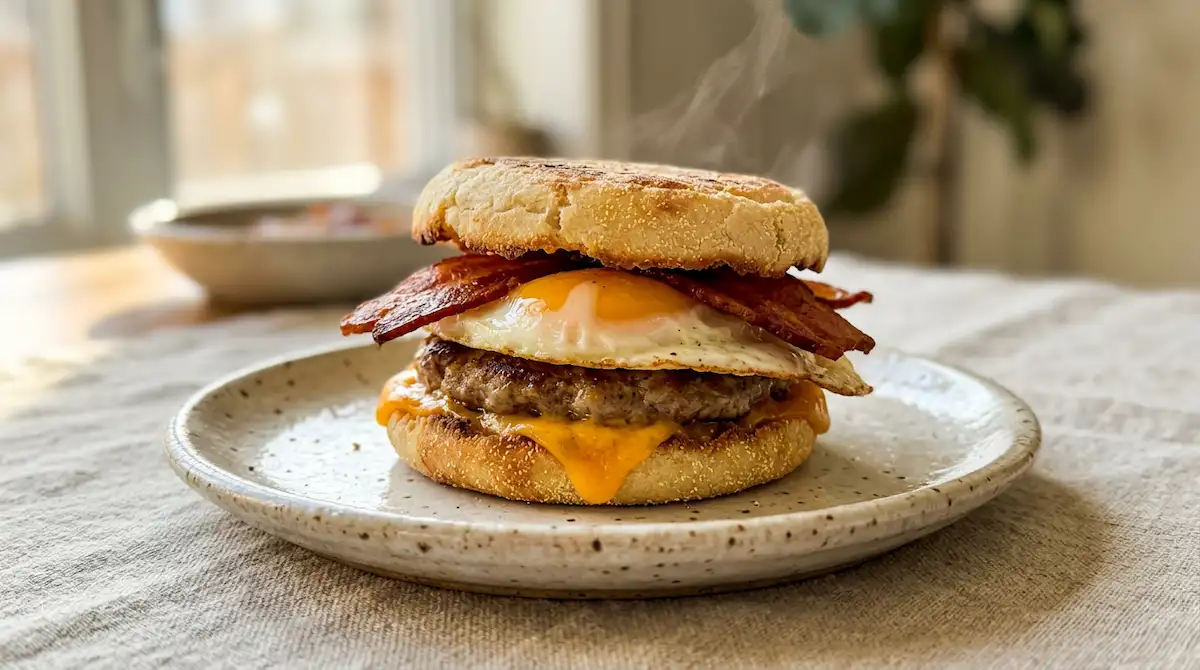
How to Make the Best English Muffin Breakfast Sandwich in 3 Easy Steps
What makes a breakfast sandwich truly crave-worthy? For millions of people rushing through their mornings, the answer is an English muffin breakfast sandwich that perfect combination of toasted nooks and crannies, fluffy scrambled or fried egg, melted cheese, and savory breakfast meat all stacked into one handheld meal. This beloved breakfast staple delivers satisfaction and sustenance whether you’re eating at your kitchen table or grabbing it on your way out the door.
Moreover, homemade English muffin breakfast sandwiches taste infinitely better than fast-food versions while costing a fraction of the price and giving you complete control over ingredients and quality. Throughout this comprehensive guide, you’ll discover exactly how to create restaurant-quality English muffin breakfast sandwiches with ideal proportions, perfect textures, and that addictive combination of flavors that makes this simple breakfast feel genuinely special every single time.
Table of Contents
What is English Muffin Breakfast Sandwich
An English muffin breakfast sandwich is a handheld breakfast consisting of a toasted English muffin filled with cooked eggs, cheese, and typically breakfast meat such as bacon, sausage, or ham. The English muffin’s signature nooks and crannies create perfect pockets that catch melted cheese and hold all the fillings securely, making it ideal for eating on the go without the mess that other bread types create.
Furthermore, this breakfast format has become an American morning staple, popularized by fast-food chains but perfected in home kitchens where you control freshness and quality. The beauty lies in the engineering the compact size fits perfectly in one hand, the toasted muffin provides structural integrity that prevents sogginess, and the layered components create distinct flavors that complement rather than compete.
Additionally, the English muffin breakfast sandwich represents the ultimate customizable breakfast platform. Unlike fixed menu items, your homemade version welcomes any cheese variety, egg preparation style, protein choice, or vegetable addition you prefer. This flexibility means one basic technique serves countless flavor combinations.
Why You Will Love This English Muffin Breakfast Sandwich
First and foremost, the convenience of an English muffin breakfast sandwich is unbeatable for busy mornings. Everything you need for a complete breakfast protein, carbohydrates, dairy, and optionally vegetables comes together in one portable package that you can eat with one hand while commuting, working, or getting kids ready for school.
Additionally, the cost savings compared to restaurant or fast-food versions are substantial. A homemade sandwich costs roughly one-third what you’d pay at a drive-through, yet tastes better because you use fresh eggs, quality cheese, and real butter. Therefore, making these at home saves hundreds of dollars annually for anyone who regularly buys breakfast sandwiches.
Another compelling reason to master this recipe is the superior nutritional profile of homemade versions. You control the sodium levels, choose lean proteins, add vegetables, and avoid the preservatives and additives common in commercial breakfast sandwiches. This makes English muffin breakfast sandwiches genuinely nourishing rather than just convenient.
Moreover, these sandwiches are remarkably freezer-friendly and perfect for meal prep. Make a batch on Sunday, freeze individually, and you have grab-and-go breakfasts for two weeks. Simply microwave for 90 seconds and you’re out the door with a hot, satisfying breakfast that required zero morning effort.
Finally, the familiar comfort of an English muffin breakfast sandwich makes mornings feel easier and more enjoyable. That first bite of warm, toasted muffin with gooey melted cheese and fluffy eggs provides satisfaction that helps you start your day feeling cared for and ready to tackle whatever comes next.
Ingredients
Creating a delicious English muffin breakfast sandwich requires simple, quality ingredients that combine to create something greater than their individual parts. Freshness matters here.
Main Ingredients
| Ingredient | Amount | Notes |
|---|---|---|
| English muffins | 1 per sandwich | Fork-split for best texture |
| Large eggs | 1-2 per sandwich | Fresh eggs create fluffiest results |
| Cheese slices | 1 per sandwich | American, cheddar, or Swiss all work |
| Breakfast meat | 1-2 pieces per sandwich | Bacon, sausage patty, or ham |
| Butter | 1 tablespoon | For toasting muffins |
| Salt | Pinch | For seasoning eggs |
| Black pepper | Pinch | Enhances egg flavor |
Optional Additions
| Ingredient | Amount | Notes |
|---|---|---|
| Baby spinach | Small handful | Adds nutrients and freshness |
| Sliced tomato | 1-2 slices | Provides juicy contrast |
| Avocado | ¼ sliced | Creamy richness |
| Hot sauce | To taste | For heat lovers |
| Sriracha mayo | 1 tablespoon | Spicy, creamy condiment |
| Caramelized onions | 2 tablespoons | Sweet, savory depth |
The English muffins form the foundation of your English muffin breakfast sandwich, and quality makes a noticeable difference. Choose muffins with prominent nooks and crannies rather than smooth, dense varieties. Fork-splitting rather than knife-cutting creates the signature texture that toasts beautifully and holds fillings without getting soggy.
Meanwhile, fresh eggs are non-negotiable for the fluffiest, most flavorful results. The egg provides essential protein and creates that satisfying, tender texture that makes these sandwiches so comforting. Whether you prefer fried, scrambled, or folded eggs, starting with quality makes all the difference.
How to Make English Muffin Breakfast Sandwich Step by Step
Creating perfectly assembled English muffin breakfast sandwiches involves proper timing and strategic layering. Follow these detailed steps for consistently excellent results.
Step 1: Cook the Protein and Prep the Muffin
Start by cooking your chosen breakfast meat according to your preference. For bacon, cook strips in a skillet over medium heat until crispy, about 4 to 5 minutes per side. For sausage patties, cook in the same skillet over medium heat for 3 to 4 minutes per side until browned and cooked through to 160°F internal temperature. For ham, simply warm it in the skillet for about 1 minute per side.
While the meat cooks, fork-split your English muffin by inserting a fork around the perimeter and gently pulling the halves apart. This creates more texture than cutting with a knife. Toast the split muffin halves in a toaster or toaster oven until golden brown, about 2 to 3 minutes. Alternatively, butter the cut sides and toast them face-down in a skillet for 2 minutes until golden.
Once toasted, butter the warm muffin halves lightly if you didn’t already butter them before toasting. Set them aside on your assembly plate while you cook the eggs. The residual heat from the muffins will help melt the cheese later.
Step 2: Cook the Eggs to Perfection
For the ideal English muffin breakfast sandwich egg, you want it shaped to fit the round muffin perfectly. Use an egg ring or a cleaned tuna can with both ends removed as a mold. Heat a nonstick skillet over medium-low heat and place the ring in the pan. Spray the inside of the ring with cooking spray to prevent sticking.
Crack one or two eggs into the ring, depending on how substantial you want your sandwich. Break the yolk if you prefer a fully cooked egg without runny center. Season with a pinch of salt and pepper. Cover the pan with a lid and cook for 3 to 4 minutes for a fully set egg with slightly runny yolk, or 5 to 6 minutes for completely cooked through.
Alternatively, scramble the eggs by whisking them with a splash of milk, then cooking in a buttered skillet over medium-low heat, stirring gently until soft curds form. For scrambled eggs, shape them into a rough circle in the pan that matches your muffin size. Either method works beautifully choose based on your texture preference.
Step 3: Assemble and Serve
Place a slice of cheese on the bottom half of your toasted English muffin while it’s still warm. The residual heat will start melting the cheese slightly. Next, add your cooked breakfast meat on top of the cheese. Then, carefully slide the cooked egg out of the ring and place it on top of the meat.
If you’re adding vegetables like spinach or tomato, layer them on top of the egg. Top with the other muffin half and press down gently to compact everything slightly. The heat from all the components will finish melting the cheese, creating that essential gooey element.
Serve your English muffin breakfast sandwich immediately while everything is hot and the cheese is melted. If you’re making multiple sandwiches, keep finished ones warm in a 200°F oven while you assemble the rest. Wrap in parchment paper or foil for easier eating and to keep everything contained.
Storage and Make-Ahead Tips
Homemade English muffin breakfast sandwiches excel at make-ahead meal prep, making them perfect for busy weekday mornings. To prepare for the freezer, assemble fully cooked sandwiches and let them cool completely to room temperature. Wrap each sandwich individually in parchment paper, then again in aluminum foil to prevent freezer burn.
Store wrapped sandwiches in a freezer bag or container for up to 2 months. Label with the date and contents so you can identify them easily. When ready to eat, remove the foil but keep the parchment wrapper. Microwave on high for 60 to 90 seconds for refrigerated sandwiches, or 90 seconds to 2 minutes for frozen ones, until heated through.
Furthermore, you can prep individual components ahead of time for quicker morning assembly. Cook a batch of sausage patties or bacon on Sunday and refrigerate for up to 4 days. Pre-scramble eggs and refrigerate in a covered container for up to 2 days. Toast muffins just before assembling for best texture, though you can toast them up to 1 day ahead if necessary.
For make-ahead breakfast sandwiches that you’ll eat within 2 to 3 days, assemble them completely and refrigerate in an airtight container. Reheat in the microwave for 60 seconds, or unwrap and warm in a 350°F oven for 10 minutes for crisper muffins.
Additionally, you can prepare English muffin breakfast sandwiches using batch cooking techniques. Cook a full pound of bacon or eight sausage patties at once, scramble a dozen eggs, and assemble eight sandwiches in about 30 minutes. This efficient approach gives you breakfast ready for more than a week with one focused cooking session.
Common Mistakes and How to Fix Them
One of the most frequent errors when making an English muffin breakfast sandwich is overcooking the eggs, which creates dry, rubbery texture instead of tender, fluffy results. Cook eggs over medium-low heat rather than high heat, and remove them from the pan while they still look slightly underdone they’ll continue cooking from residual heat.
Another common mistake involves assembling the sandwich with cold components. When you stack cold cheese and room-temperature eggs on a toasted muffin, nothing melts together and the sandwich tastes disjointed. Always assemble while everything is hot, placing cheese directly on the warm muffin so it starts melting immediately.
Moreover, many people use too much filling, creating sandwiches that fall apart when you try to eat them. Stick to one or two eggs, one slice of cheese, and one or two pieces of breakfast meat. More than this creates an unstable tower that’s impossible to eat gracefully.
Furthermore, cutting English muffins with a knife instead of fork-splitting eliminates the texture that makes them special. The smooth cut surface doesn’t toast as well or create those essential nooks and crannies that hold cheese and catch egg. Always fork-split by piercing the perimeter and pulling gently apart.
Finally, skipping the toasting step or under-toasting the muffins results in soggy sandwiches. The toasted surface creates a barrier that prevents egg moisture from making the bread wet and gross. Toast until golden brown this structural step is essential, not optional.
Variations
The basic English muffin breakfast sandwich recipe welcomes endless creative variations that keep breakfast interesting. For a vegetarian version, replace the meat with sautéed mushrooms, roasted red peppers, or a veggie sausage patty. Add spinach and tomato for extra nutrients and you have a complete meatless breakfast.
If you prefer a spicy kick, create a Southwest-inspired sandwich with pepper jack cheese, scrambled eggs mixed with diced jalapeños, and chipotle mayo. Top with avocado and salsa for a breakfast that wakes up your taste buds alongside your body.
For a gourmet twist, make an English muffin breakfast sandwich with smoked salmon instead of traditional meat. Use cream cheese in place of regular cheese, add capers, red onion, and fresh dill for an elegant breakfast that feels special enough for weekend brunch.
Additionally, try a pizza-inspired version with mozzarella cheese, marinara sauce, and Italian sausage. Add a basil leaf and a sprinkle of Parmesan for a breakfast that tastes like your favorite comfort food in sandwich form.
For a healthier option, use whole wheat English muffins, egg whites only, turkey bacon or chicken sausage, and add extra vegetables like spinach, mushrooms, and tomatoes. This lighter version delivers plenty of protein and fiber while keeping calories and fat reasonable.
Another popular variation creates a sweet-savory combination with maple-flavored sausage, sharp cheddar cheese, and a drizzle of maple syrup. This Canadian-inspired breakfast delivers that addictive sweet-salty contrast that makes every bite interesting.
Serving Suggestions
The classic English muffin breakfast sandwich needs nothing more than itself to create a complete meal, but several accompaniments enhance the experience. Serve with a small bowl of fresh fruit berries, melon, or citrus segments to add natural sweetness and vitamin C that balances the savory sandwich.
For a heartier breakfast, pair your sandwich with crispy hash browns or breakfast potatoes. The contrast between the soft sandwich and crunchy potatoes creates textural variety that makes the meal more satisfying and interesting.
Moreover, serve English muffin breakfast sandwiches at brunch gatherings as part of a breakfast sandwich bar. Set out toasted muffins, various cooked proteins, different cheese options, and vegetable toppings. Let guests build their own custom sandwiches, creating an interactive meal that ensures everyone gets exactly what they want.
Additionally, cut sandwiches in half diagonally for easier eating and more elegant presentation. This also allows you to see the beautiful layers of ingredients, making the sandwich more appealing visually.
For on-the-go eating, wrap your English muffin breakfast sandwich in parchment paper or foil. This keeps everything contained, prevents messy drips, and makes the sandwich easy to eat one-handed during commutes or while multitasking.
Furthermore, serve these sandwiches with your favorite hot beverage coffee, tea, or hot chocolate. The warm drink complements the savory sandwich perfectly and creates that comforting breakfast ritual that helps ease you into your day.
Frequently Asked Questions
Can I make English muffin breakfast sandwiches the night before?
Yes! Assemble completely cooked sandwiches, wrap individually, and refrigerate overnight. Reheat in the microwave for 60 seconds in the morning. For best texture, toast the muffins fresh in the morning rather than the night before, though refrigerating fully assembled sandwiches works acceptably.
What’s the best cheese for English muffin breakfast sandwiches?
American cheese melts smoothly and creates that classic taste, but cheddar adds sharper flavor, Swiss provides nutty notes, and pepper jack adds heat. Choose based on your preference all melt well and taste delicious in breakfast sandwiches.
How do I prevent my English muffin breakfast sandwich from getting soggy?
Toast the muffins until golden brown to create a moisture barrier. Assemble with hot components so cheese melts properly. If adding tomatoes or other wet ingredients, pat them dry first and place them in the middle of the sandwich rather than directly on the muffin.
Can I use egg whites only for a healthier sandwich?
Absolutely! Egg whites reduce calories and eliminate cholesterol while maintaining protein content. Use 2 to 3 egg whites per sandwich and cook the same way. The texture will be slightly different but still delicious and satisfying.
What’s the best way to reheat frozen breakfast sandwiches?
Remove foil but keep parchment wrapper. Microwave for 90 seconds to 2 minutes, checking at 90 seconds. For crispier results, microwave for 60 seconds, then finish in a 350°F oven or toaster oven for 5 minutes. This combination gives you hot filling with crispy muffin.
How long do homemade English muffin breakfast sandwiches last?
Refrigerate assembled sandwiches for 2 to 3 days or freeze for up to 2 months. The quality remains excellent throughout these periods, making them perfect for weekly meal prep. Label frozen sandwiches with dates to track freshness.
Can I make these sandwiches without meat?
Definitely! Create vegetarian versions with extra eggs, cheese, and vegetables like mushrooms, peppers, spinach, or avocado. Black bean patties or veggie sausages also work beautifully as protein sources in meatless English muffin breakfast sandwiches.
What size English muffin works best?
Standard-sized English muffins (about 2 ounces each) work perfectly for most breakfast sandwiches. Larger versions accommodate more filling but can be difficult to eat. Stick with regular size for ideal bread-to-filling ratio and easy handling.
Mastering the English muffin breakfast sandwich transforms your morning routine from rushed and stressful to organized and satisfying. These portable powerhouses deliver complete nutrition, genuine satisfaction, and convenience that makes healthy eating accessible even on your busiest days.
The beauty lies in the simplicity—a few quality ingredients, straightforward technique, and minimal time create breakfast that rivals anything you’d buy while costing less and tasting better. Whether you make them fresh each morning or prep a week’s worth on Sunday, these versatile sandwiches adapt to your schedule and preferences.
So grab some English muffins, cook up your favorite proteins, and discover just how easy it is to create English muffin breakfast sandwiches that make you actually look forward to your alarm going off. Once you experience the superior taste and convenience of homemade, you’ll never wait in a drive-through line for breakfast again.