
Italian Penicillin Soup: The Cozy, Healing Bowl Your Kitchen Needs
Table of Contents
Italian Penicillin Soup: The Cozy, Healing Bowl Your Kitchen Needs
There’s a reason your grandmother never reached for the medicine cabinet first. She reached for the stockpot. Italian penicillin soup is that kind of remedy a slow-simmered, deeply nourishing bowl built on bone broth, fresh herbs, tender vegetables, and tiny pasta that somehow makes everything feel a little more manageable. Whether you’re fighting off a cold, recovering from a rough week, or simply craving something that wraps around you like a warm blanket, this is the recipe you need in your rotation.
I’ve made this soup dozens of times. Tweaked it, stripped it down, built it back up. What I’m sharing here is the version that always gets the pot scraped clean.
What Exactly Is Italian Penicillin Soup?
You’ve probably heard of Jewish penicillin classic chicken soup, known for its cold-fighting magic. Italian penicillin soup follows the same philosophy but takes a sharp turn through an Italian herb garden on its way to your bowl.
The base is a rich chicken broth, often made from scratch with roasted bones. From there, you layer in aromatics like garlic, onion, and celery. Fresh rosemary, thyme, and a parmesan rind give it a savory depth that standard chicken noodle soup simply cannot touch. Small pasta shapes like ditalini or orzo soak up the broth, and leafy greens such as escarole or kale add color and nutrition.
It’s comfort food with backbone. Not fussy. Not complicated. Just honest cooking that happens to be extraordinarily good for you. The garlic acts as a natural antimicrobial. The broth delivers collagen and minerals. The herbs carry anti-inflammatory compounds. And the whole thing goes down easy when your appetite is fragile.
That’s the beauty of it. It heals and it satisfies in equal measure.
Everything You Need for Italian Penicillin Soup
Let me walk through the ingredient list. Nothing exotic here most of this is probably already in your kitchen or a quick grocery run away.
| Ingredient | Amount |
|---|---|
| Bone-in, skin-on chicken thighs | 2 lbs |
| Olive oil | 3 tablespoons |
| Yellow onion, diced | 1 large |
| Celery stalks, sliced | 4 |
| Carrots, peeled and diced | 3 medium |
| Garlic cloves, minced | 6 |
| Fresh rosemary | 2 sprigs |
| Fresh thyme | 4 sprigs |
| Bay leaves | 2 |
| Parmesan rind | 1 piece (about 3 inches) |
| Chicken broth (low sodium) | 8 cups |
| Ditalini or orzo pasta | 1 cup |
| Escarole or lacinato kale, chopped | 4 cups |
| Lemon juice | 2 tablespoons |
| Red pepper flakes | ½ teaspoon |
| Salt and black pepper | To taste |
| Freshly grated Parmigiano-Reggiano | For serving |
A note on the parmesan rind: do not skip this. It melts slowly into the broth and adds a savory, umami-rich flavor that you simply cannot replicate with anything else. If you don’t have one saved in your freezer, ask at the deli counter. They’ll usually hand one over for pennies.
How to Make Italian Penicillin Soup Step by Step
1. Sear the chicken.
Heat olive oil in a large Dutch oven over medium-high heat. Season the chicken thighs generously with salt and pepper, then place them skin-side down. Let them cook undisturbed for about five minutes until the skin is golden and crisp. Flip and sear the other side for three minutes. Remove the chicken and set it on a plate. That rendered fat in the pot? Pure gold. Leave every drop.
2. Build the aromatic base.
Drop the heat to medium. Add the onion, celery, and carrots. Stir them into the chicken fat and cook for about six minutes until the onion turns translucent and the edges of the vegetables start to soften. Add the garlic and red pepper flakes. Stir for one minute just until the garlic becomes fragrant, not brown.
3. Add the broth and herbs.
Pour in the chicken broth. Toss in the rosemary sprigs, thyme sprigs, bay leaves, and the parmesan rind. Nestle the seared chicken thighs back into the pot. Bring everything to a gentle boil, then reduce the heat to low. Cover and let it simmer for thirty minutes.
4. Shred the chicken.
Pull the chicken thighs out with tongs. They’ll be fall-apart tender. Remove the skin and bones, shred the meat with two forks, and set it aside. Fish out the herb sprigs, bay leaves, and whatever remains of the parmesan rind.
5. Cook the pasta and greens.
Bring the broth back to a simmer. Add the ditalini and cook for about eight minutes, stirring occasionally so it doesn’t stick to the bottom. When the pasta is nearly al dente, stir in the chopped escarole or kale. The greens will wilt within two or three minutes.
6. Finish and serve.
Return the shredded chicken to the pot. Squeeze in the lemon juice this brightens everything and cuts through the richness beautifully. Taste the broth and adjust salt and pepper. Ladle into deep bowls and top with freshly grated Parmigiano-Reggiano.
That first spoonful will tell you everything. Rich, herby, slightly peppery, with a gentle citrus lift at the end.
Storing and Reheating Your Soup
This soup keeps remarkably well, which makes it perfect for meal prep or for delivering to a sick friend.
Store it in airtight containers in the refrigerator for up to four days. The pasta will absorb broth as it sits that’s normal. When you reheat, add a splash of chicken broth or water to loosen it back up. Warm it gently on the stovetop over medium-low heat rather than blasting it in the microwave. Stovetop reheating preserves the texture of the vegetables and pasta far better.
For freezing, I recommend storing the soup without the pasta. Cook fresh pasta when you thaw and reheat. Frozen soup without pasta holds beautifully for up to three months. Just thaw overnight in the fridge and warm on the stove.
Common Mistakes and How to Fix Them
Oversalting the broth. This happens fast if you use regular (not low-sodium) broth combined with the parmesan rind, which is naturally salty. Always start with low-sodium broth and season at the end.
Mushy pasta. If you cook the pasta too long or let it sit in hot broth for an extended period, it turns to mush. Cook the ditalini just until al dente it will continue softening in the residual heat. If you’re making a big batch, cook the pasta separately and add it to individual bowls.
Bland flavor. Nine times out of ten, bland soup needs acid, not more salt. That lemon juice at the end is essential. It pulls all the flavors into focus. Don’t skip it.
Wilted greens losing color. Add the escarole or kale at the very end. Two to three minutes of simmering is all they need. Overcooking turns them army green and strips away their slight bitterness, which actually adds complexity to the soup.
Variations Worth Trying
The core recipe is fantastic as written, but italian penicillin soup is also incredibly forgiving when you want to adapt it.
Swap the chicken thighs for a whole rotisserie chicken if you’re short on time. Shred the meat, toss it in at the end, and use store-bought bone broth as your base. You’ll lose some depth from the searing step, but you’ll gain back a solid thirty minutes.
Prefer a spicier version? Add a diced Calabrian chili or increase the red pepper flakes to a full teaspoon. The heat works beautifully against the rich, fatty broth.
For a heartier bowl, stir in a can of drained cannellini beans during the last five minutes of cooking. They add creaminess and protein without changing the character of the soup.
Going gluten-free? Skip the pasta entirely and add a diced Yukon Gold potato instead. It breaks down slightly and gives the broth a silky body.
Vegetarians can build a version using rich vegetable stock, extra garlic, and white beans in place of the chicken. It won’t be identical, but it’s still deeply satisfying.
The Final Bowl: What to Expect
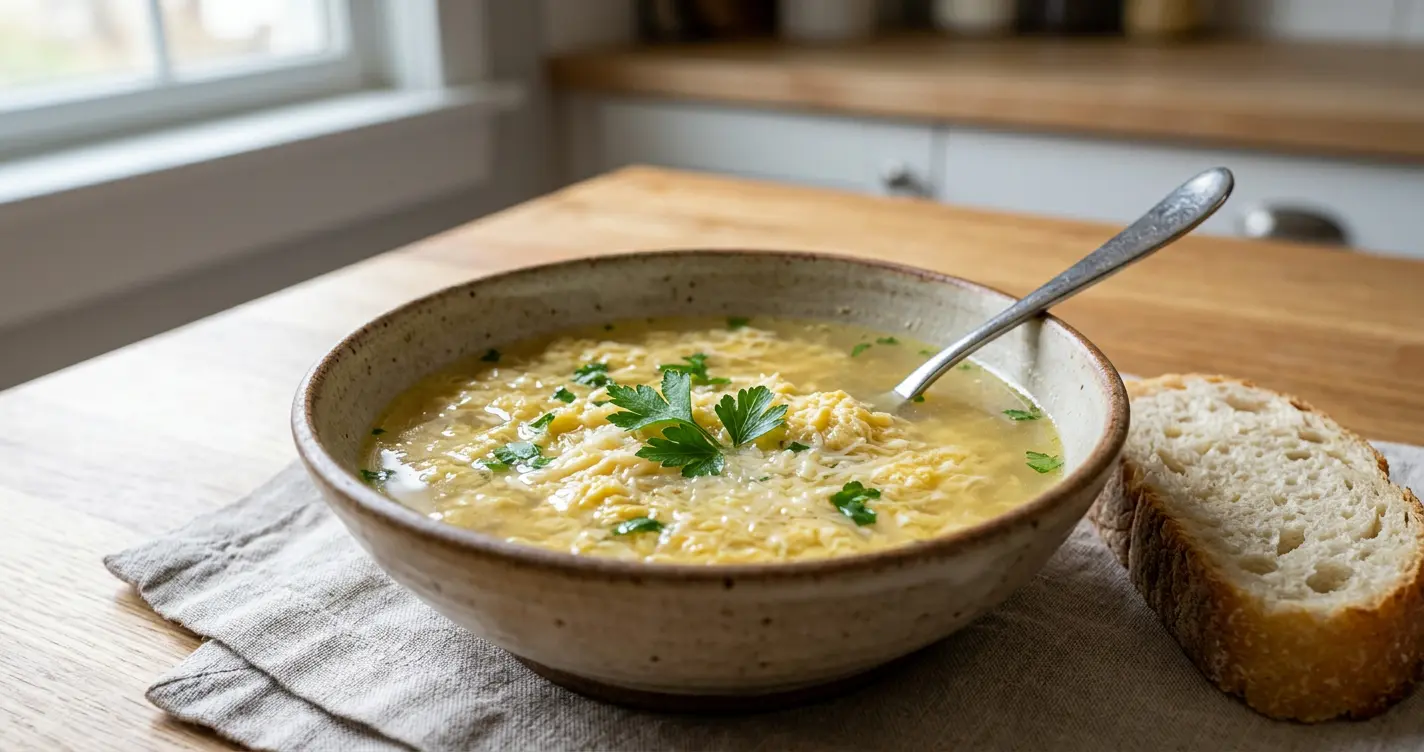
Picture this. A wide, warmed bowl filled with golden broth that catches the light. Tender shreds of chicken tangled with small tubes of pasta. Dark ribbons of escarole peeking through. A snowfall of freshly grated parmesan melting slowly on top. Steam carrying rosemary and garlic straight to you before the spoon even reaches your mouth.
Italian penicillin soup is not just food. It’s a gesture. The kind of cooking that says, “Sit down. I’ve got you.”
Serve it with crusty bread and good olive oil for dipping. Or eat it alone, standing at the stove, straight from the pot. No judgment here.
Frequently Asked Questions
What makes italian penicillin soup different from regular chicken soup?
Italian penicillin soup uses Italian herbs like rosemary and thyme, a parmesan rind for umami depth, and greens such as escarole. These additions create a richer, more complex flavor compared to traditional chicken noodle soup.
Can I make this soup ahead of time?
Absolutely. It actually tastes better the next day after the flavors meld. Just store the pasta separately or add extra broth when reheating to compensate for absorption.
What pasta shape works best?
Ditalini is the classic choice because its small tubular shape holds broth inside each piece. Orzo, acini di pepe, and small shells also work well.
Is this soup actually good for colds?
Yes. The bone broth provides hydration and minerals. Garlic has natural antimicrobial properties. The steam helps clear nasal congestion. And the warmth is genuinely soothing when you feel terrible. Science backs up what grandmothers have known forever.
Can I use chicken breast instead of thighs?
You can, but thighs deliver more flavor and stay moist during simmering. Breast meat can turn dry and stringy if overcooked. If you prefer breast, reduce the simmering time to about twenty minutes and shred carefully.
Do I really need the parmesan rind?
You don’t strictly need it, but you’ll notice a difference without it. The rind adds a salty, nutty richness to the broth that ties every other ingredient together. It’s a small addition with an outsized impact.