
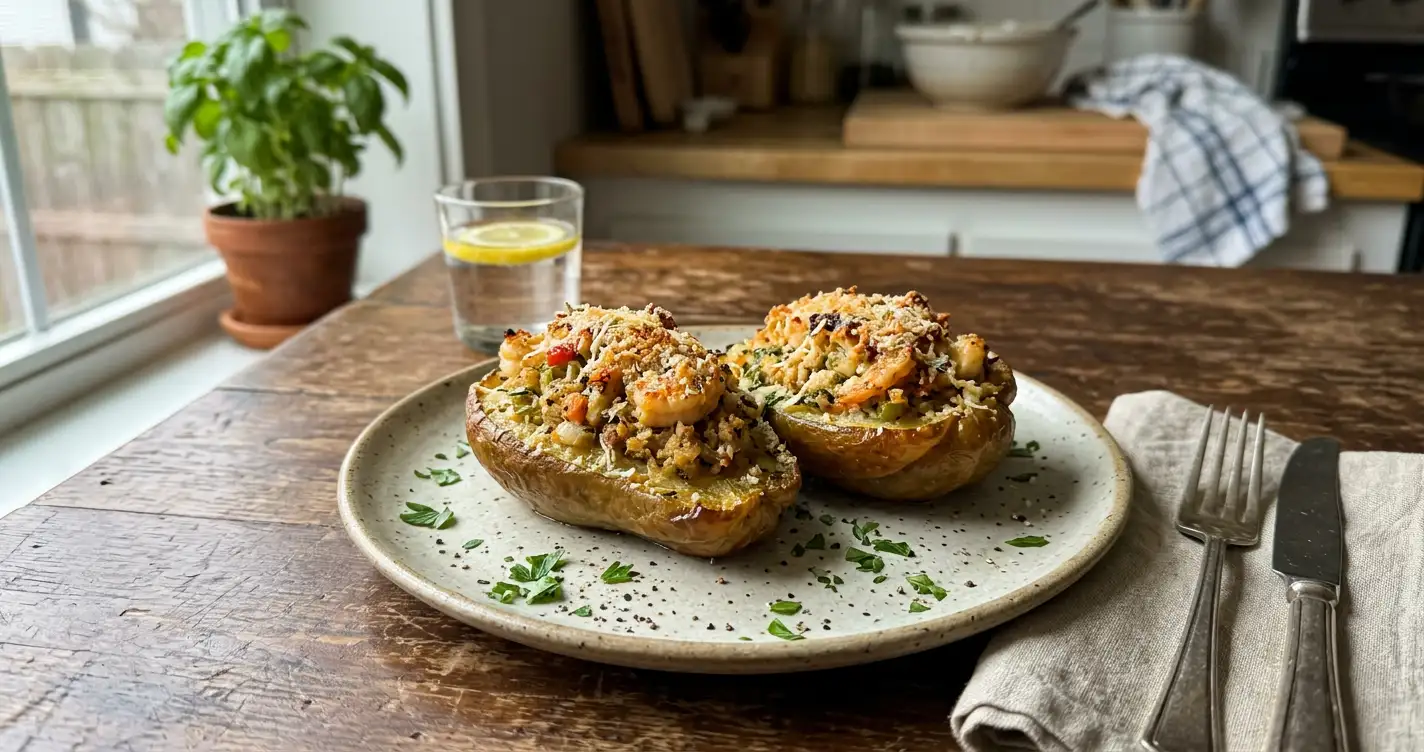
Stuffed Mirliton: A Cozy Southern Favorite You’ll Want to Make Again
Table of Contents
Stuffed Mirliton: A Cozy Southern Favorite You’ll Want to Make Again
The first time you try stuffed mirliton, it doesn’t feel like a side dish people forget on the plate. It feels like the thing everyone quietly hopes there’s more of. The squash turns tender, the filling comes out rich and savory, and the top gets just enough color to make every bite a little better than the last.
What makes this recipe so lovable is how grounded it feels. No fuss. No complicated technique. Just a good, honest dish built from soft mirliton, a flavorful filling, and a little patience. If you’ve never cooked with mirliton before, this is a very good place to start.
What Is Stuffed Mirliton?
Stuffed mirliton is a classic dish made with mirliton squash, also known as chayote. The squash is cooked until tender, cut in half, and hollowed out. The inside is then mixed with a savory filling, spooned back into the shells, and baked until hot and lightly golden.
In Louisiana kitchens, this recipe often shows up around holidays, family gatherings, and big Sunday meals. It has that same comforting quality as dressing or a good seafood casserole, but the mirliton keeps it lighter and softer.
If you’ve never tasted mirliton, the flavor is mild and clean. It doesn’t fight for attention. Instead, it takes on the flavor of the ingredients around it, which is exactly why it works so well here. Once seasoned with onion, celery, bell pepper, garlic, shrimp, and breadcrumbs, it turns into something warm, balanced, and deeply satisfying.
Ingredients You’ll Need
This recipe keeps things simple, and that’s part of the charm. Each ingredient has a job. The squash gives the dish shape. The vegetables build flavor. The shrimp adds sweetness and body. Breadcrumbs bring everything together.
| Ingredient | Amount |
|---|---|
| Mirlitons | 4 medium |
| Shrimp, peeled and chopped | 1 pound |
| Butter | 4 tablespoons |
| Onion, finely chopped | 1 medium |
| Celery, finely chopped | 2 stalks |
| Green bell pepper, finely chopped | 1 |
| Garlic, minced | 3 cloves |
| Breadcrumbs | 1 to 1 1/2 cups |
| Parmesan or grated hard cheese | 1/4 cup |
| Egg, beaten | 1 |
| Fresh parsley, chopped | 2 tablespoons |
| Salt | to taste |
| Black pepper | to taste |
| Cajun or Creole seasoning | 1 to 2 teaspoons |
| Lemon juice | 1 tablespoon |
Try to choose firm mirlitons without soft spots. Medium ones are usually easier to handle than very large ones. For the shrimp, chopped raw shrimp gives the best texture and flavor, but if cooked shrimp is what you have, it can still work. Just add it later so it doesn’t turn rubbery.
The breadcrumb amount can vary slightly depending on how much moisture your squash holds. That’s normal. Some mirlitons are drier than others, so trust the look and feel of the filling more than the number alone.
How to Make Stuffed Mirliton Step by Step
- Boil the mirlitons until just tender.
Wash them well and place them whole in a pot of salted water. Boil for about 35 to 45 minutes, depending on size. You want them soft enough to scoop, but not so soft that they collapse. - Cool and hollow them out.
Once they’re cool enough to handle, slice them in half lengthwise. Remove the seed if needed, then scoop out most of the flesh with a spoon, leaving enough around the edges to form a sturdy shell. Set the shells aside and chop the scooped flesh. - Drain the chopped flesh well.
This matters more than people think. Mirliton holds a lot of water, and too much moisture can ruin the filling. Put the chopped flesh in a colander and let it drain. If it still seems wet, press it gently with paper towels or a clean kitchen towel. - Cook the vegetables in butter.
In a large skillet, melt the butter over medium heat. Add the onion, celery, and bell pepper. Cook until soft and fragrant, about 6 to 8 minutes. Add the garlic and stir for another 30 seconds. - Add the shrimp and seasonings.
Mix in the chopped shrimp, salt, black pepper, and Cajun or Creole seasoning. Cook just until the shrimp turn opaque. Add the lemon juice, then stir in the drained mirliton flesh. Let it cook a few minutes so any extra moisture can evaporate. - Finish the filling.
Take the pan off the heat. Stir in the parsley, egg, cheese, and 1 cup of breadcrumbs. Mix until everything comes together. The filling should be moist, but not wet. If it feels too loose, add more breadcrumbs a little at a time. - Stuff the shells.
Arrange the shells in a greased baking dish. Spoon in the filling generously, mounding it slightly on top. Add a little extra cheese or breadcrumb on top if you like a crisp finish. - Bake until golden.
Bake at 375°F for 25 to 30 minutes. The tops should be lightly browned and the filling hot all the way through. Let the dish rest for 5 to 10 minutes before serving.
That short resting time helps more than you’d expect. The filling settles, the flavors come together, and it’s easier to serve neatly.
Storage and Reheating
This recipe keeps very well, which makes it useful for holiday meals or busy weeknights when you want something ready to go.
Store leftovers in the refrigerator in an airtight container for up to 3 days. If you’re keeping the whole dish in the baking pan, cover it tightly with foil or wrap.
To reheat, place it in a 350°F oven for about 15 to 20 minutes, covered loosely at first so the top doesn’t get too dark. Remove the cover near the end if you want the topping crisp again.
You can also freeze it. Wrap individual portions or the full assembled dish tightly and freeze for up to 2 months. Thaw overnight in the fridge before reheating. If freezing before baking, assemble it fully, wrap it well, and bake after thawing.
Common Pitfalls and Easy Fixes
The most common problem is watery filling. That usually happens when the scooped mirliton flesh isn’t drained enough. If your mixture looks loose in the skillet, let it cook a little longer before adding breadcrumbs.
Another issue is blandness. Mirliton is naturally mild, so the filling needs confident seasoning. Taste before stuffing the shells. If it tastes flat in the pan, it won’t magically improve in the oven.
If the shells tear or collapse, the squash was likely overcooked. Next time, check earlier and remove it as soon as it turns tender.
Dry filling is another easy one to fix. If the mixture looks too stiff, stir in a little melted butter or a splash of broth. You want it soft and rich, not packed and dry.
And if the top doesn’t brown enough, a minute or two under the broiler at the end will do the job. Just watch it carefully.
Variations You Can Try
Once you know the base method, this dish is easy to adapt.
Shrimp is traditional, but crab is excellent if you want something sweeter and softer. Sausage gives it a deeper, smokier flavor. Ground beef or turkey makes it more budget-friendly and hearty.
For a meatless version, use sautéed mushrooms, more herbs, onions, celery, and bell pepper, plus a little extra cheese for richness. Some cooks add rice to stretch the filling. Others use crushed crackers instead of breadcrumbs for a slightly different texture.
You can also play with the seasoning. A dash of hot sauce, green onions, or a little extra garlic can shift the flavor without changing the whole recipe. The idea is to keep the filling savory, balanced, and moist.
How to Serve It
Serve this dish hot, straight from the oven, when the top is crisp and the inside is still soft and fragrant. It pairs beautifully with roasted chicken, baked fish, grilled meats, or a holiday spread with other Southern sides.
It also works as a light main dish with a fresh salad and bread on the side. The filling is rich enough to feel complete, but the squash keeps the whole plate from feeling too heavy.
The best part is the contrast. You get that soft shell, the savory filling, the herbs, the gentle sweetness from the shrimp, and the crisp top all in one bite. It’s the sort of food that feels comforting without being boring.
FAQ
What is stuffed mirliton made of?
It’s made with mirliton squash that has been hollowed out and filled with a savory mixture, often including shrimp, onion, celery, bell pepper, breadcrumbs, herbs, and seasoning.
Is mirliton the same as chayote?
Yes. Mirliton is another name for chayote squash, especially in Louisiana cooking.
Can I make this dish ahead of time?
Yes. You can prepare and stuff the shells a day ahead, then keep them refrigerated until baking time.
How do I keep the filling from getting watery?
Drain the chopped squash well and cook off extra moisture before adding breadcrumbs.
Can I freeze it?
Yes. It freezes well either before or after baking, as long as it’s wrapped tightly.
What can I use instead of shrimp?
Crab, sausage, ground meat, or mushrooms all work well.