
How to Make the Best Cold Sesame Noodles in 4 Easy Steps
What happens when you combine silky noodles, a rich peanut-sesame sauce, and fresh vegetables into one bowl? You get cold sesame noodles, a dish that’s equally perfect for rushed weeknight dinners and leisurely weekend lunches. This Chinese-inspired recipe delivers bold flavors with minimal effort, requiring just 20 minutes from start to finish. Whether you’re meal prepping for the week ahead or searching for a refreshing alternative to heavy pasta dishes, cold sesame noodles satisfy every craving. Throughout this guide, you’ll discover exactly how to create restaurant-quality noodles at home, plus expert tips, creative variations, and troubleshooting advice that ensures perfect results every single time.
Table of Contents
What is Cold Sesame Noodles
Cold sesame noodles are a classic Chinese dish featuring chilled wheat noodles tossed in a creamy, nutty sauce made primarily from sesame paste, peanut butter, soy sauce, and rice vinegar. Unlike hot noodle dishes, these noodles are served at room temperature or cold, making them incredibly refreshing during warm weather. The sauce clings beautifully to each strand, creating a harmonious balance of savory, slightly sweet, and tangy flavors.
Moreover, this dish has roots in Chinese street food culture, where vendors would prepare large batches and serve them throughout the day. The beauty of cold sesame noodles lies in their versatility you can enjoy them as a standalone meal, pack them for lunch, or serve them as a side dish at potlucks and picnics. Because the noodles are served cold, the flavors actually develop and intensify as they sit, which means leftovers often taste even better the next day.
Additionally, the texture plays a crucial role in this dish. The noodles should be perfectly cooked tender but still slightly chewy and thoroughly chilled before tossing with the sauce. Fresh vegetables like cucumber, carrots, and scallions add crunch and brightness, while toasted sesame seeds provide a nutty finish. The combination of textures and temperatures makes every bite interesting and satisfying.
Why You Will Love This Cold Sesame Noodles
First and foremost, the flavor profile is absolutely addictive. The sauce combines rich sesame paste with creamy peanut butter, creating a luxurious coating that’s both comforting and exciting. Meanwhile, the rice vinegar adds tanginess that cuts through the richness, while a touch of honey or sugar provides subtle sweetness. The result is a perfectly balanced sauce that makes you want to lick the bowl clean.
Furthermore, the convenience factor cannot be overstated. Cold sesame noodles require no elaborate cooking techniques or hard-to-find ingredients. You simply boil noodles, whisk together a sauce, and toss everything together. Because the dish is served cold, you can prepare it hours in advance without worrying about timing or keeping food warm. This makes it ideal for busy schedules, meal prep, and entertaining.
Another reason to love this recipe is its adaptability. You can easily customize cold sesame noodles to match your dietary preferences or whatever ingredients you have on hand. Swap regular noodles for gluten-free versions, add grilled chicken or tofu for protein, or load up on extra vegetables for a lighter meal. The base recipe is forgiving and welcomes experimentation.
In addition, these noodles travel exceptionally well. Pack them in a container for lunch, and they’ll taste just as good hours later as they did when you first made them. Unlike hot dishes that get soggy or lose their appeal, cold sesame noodles maintain their texture and flavor throughout the day. This makes them a favorite among people who bring lunch to work or school.
Finally, the recipe is incredibly budget-friendly. Most ingredients are pantry staples, and the dish stretches easily to feed a crowd. A single batch costs just a few dollars to make but delivers flavors that rival expensive restaurant versions.
Ingredients
Below, you’ll find everything you need to create authentic cold sesame noodles with that signature creamy, nutty sauce and perfect texture.
Main Ingredients
| Ingredient | Amount | Notes |
|---|---|---|
| Chinese wheat noodles or spaghetti | 12 ounces | Lo mein or soba noodles work well too |
| Creamy peanut butter | ⅓ cup | Natural or regular; almond butter substitutes fine |
| Toasted sesame oil | 3 tablespoons | Essential for authentic flavor; don’t skip |
| Soy sauce | 3 tablespoons | Low-sodium preferred for better control |
| Rice vinegar | 2 tablespoons | Adds necessary tanginess to balance richness |
| Honey or sugar | 1 tablespoon | Balances savory and tangy elements |
| Fresh ginger | 1 tablespoon minced | Adds warmth and depth; use paste if needed |
| Garlic | 2 cloves minced | Fresh tastes best; jarred works in a pinch |
| Warm water | 2-4 tablespoons | Thins sauce to perfect consistency |
| Cucumber | 1 medium julienned | Adds refreshing crunch and brightness |
| Scallions | 3 stalks sliced | For color, flavor, and mild onion bite |
| Toasted sesame seeds | 2 tablespoons | Garnish that adds nutty crunch |
Optional Add-ins
| Ingredient | Amount | Notes |
|---|---|---|
| Chili oil or sriracha | 1-2 teaspoons | For heat; adjust to preference |
| Shredded carrots | ½ cup | Adds color and subtle sweetness |
| Red bell pepper | ½ cup julienned | Provides crunch and vibrant color |
| Cooked chicken breast | 1 cup shredded | Makes it a complete protein-rich meal |
| Firm tofu | 8 ounces cubed | Vegetarian protein option |
| Cilantro | ¼ cup chopped | Fresh herb brightness; divisive but delicious |
The magic of cold sesame noodles starts with the sauce ingredients. Toasted sesame oil provides the distinctive nutty aroma that defines this dish, while peanut butter creates the creamy base that coats every noodle strand. Meanwhile, the combination of soy sauce and rice vinegar delivers that classic Chinese balance of salty and tangy. Fresh ginger and garlic add aromatic depth that elevates the entire dish from simple to spectacular.
How to Make Cold Sesame Noodles Step by Step
Creating perfect cold sesame noodles requires attention to a few key details, but the actual process is remarkably straightforward. Follow these steps carefully for restaurant-quality results.
Step 1: Cook and Chill the Noodles
Bring a large pot of salted water to a rolling boil over high heat. Add your noodles and cook according to the package directions, typically 8 to 10 minutes for fresh Chinese wheat noodles or regular spaghetti. Stir occasionally to prevent sticking. You want the noodles to be tender but still have a slight chew overcooking creates mushy noodles that won’t hold the sauce properly.
Once the noodles reach the perfect texture, drain them in a colander and immediately rinse under cold running water. This step is crucial because it stops the cooking process and washes away excess starch that would otherwise make the noodles gummy. Continue rinsing until the noodles feel completely cool to the touch. Then, toss them with a teaspoon of sesame oil to prevent clumping while you prepare the sauce.
Step 2: Prepare the Sesame Sauce
In a medium mixing bowl, combine the peanut butter, toasted sesame oil, soy sauce, rice vinegar, honey, minced ginger, and minced garlic. Whisk everything together vigorously until the mixture becomes smooth and well incorporated. At first, the sauce will seem thick and clumpy, but don’t worry this is completely normal.
Next, gradually add warm water one tablespoon at a time, whisking continuously. The warm water helps emulsify the peanut butter and sesame oil, creating a silky, pourable sauce. Add just enough water to reach a consistency that’s thick enough to coat the noodles but thin enough to pour easily. Typically, you’ll need about 3 tablespoons, though this varies depending on the thickness of your peanut butter. Taste the sauce and adjust the seasoning if needed add more soy sauce for saltiness, vinegar for tang, or honey for sweetness.
Step 3: Prepare the Vegetables and Combine
While your noodles cool, prepare the fresh vegetables. Julienne the cucumber into thin matchsticks, removing the seeds if they seem particularly watery. Slice the scallions on a diagonal into thin pieces, using both the white and green parts. If you’re adding carrots or bell peppers, julienne them as well to match the cucumber’s size and shape.
Transfer the chilled noodles to a large serving bowl. Pour the sesame sauce over the noodles and use tongs or two large forks to toss everything together thoroughly. Make sure every strand gets coated with the creamy sauce. Then, add the julienned vegetables and toss again gently to distribute them evenly throughout the noodles. The vegetables should be mixed in but still visible, providing pops of color and texture.
Step 4: Garnish and Serve
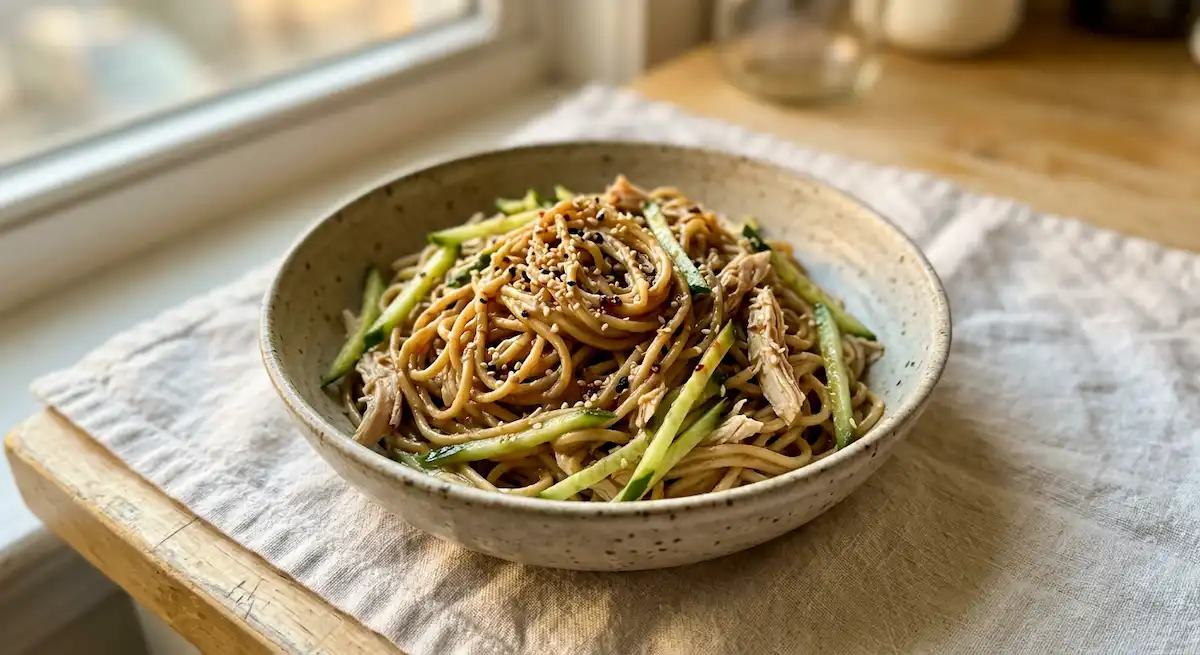
Sprinkle toasted sesame seeds generously over the top of the cold sesame noodles. If you’re using chili oil or fresh cilantro, add those now as well. Give everything one final gentle toss to incorporate the garnishes. At this point, you can serve the noodles immediately, or refrigerate them for 30 minutes to an hour to let the flavors meld even more deeply.
When ready to serve, divide the noodles among bowls or plates. The dish should look vibrant and inviting, with the creamy tan sauce coating the noodles and colorful vegetables peeking through. Serve with chopsticks or forks, and watch as everyone comes back for seconds.
Storage and Make-Ahead Tips
One of the best things about cold sesame noodles is how well they store and travel. Transfer any leftovers to an airtight container and refrigerate for up to 4 days. The noodles will absorb some of the sauce as they sit, so you might want to prepare a little extra sauce to refresh them before serving. Simply whisk together a small amount of peanut butter, sesame oil, and warm water, then toss it with the cold noodles.
For meal prep, you can prepare all the components separately and assemble them when ready to eat. Cook the noodles, rinse and chill them, then store them in one container with a light coating of sesame oil. Keep the sauce in a separate jar in the refrigerator, and prep your vegetables in another container. When you’re ready for lunch or dinner, simply toss everything together. This method keeps the vegetables extra crisp and prevents the noodles from absorbing too much sauce.
Additionally, cold sesame noodles are perfect for potlucks and picnics because they don’t require reheating. Prepare them the night before, store them in the refrigerator, and transport them in a cooler. They’ll stay fresh and delicious for several hours at cool room temperature, though they taste best when kept chilled until serving time.
However, avoid freezing this dish. The texture of the noodles deteriorates significantly when frozen and thawed, becoming mushy and unappetizing. The sauce also separates and becomes grainy. Stick to refrigeration for best results.
Common Mistakes and How to Fix Them
One of the most frequent errors people make with cold sesame noodles is using the wrong type of noodles. While almost any noodle works in a pinch, thin angel hair pasta or rice noodles don’t hold the sauce as well as thicker wheat noodles. Choose spaghetti, linguine, lo mein, or udon for the best texture and sauce adherence.
Another common mistake is not rinsing the noodles thoroughly after cooking. Skipping this step or rinsing too briefly leaves excess starch on the noodles, which makes them sticky and clumpy. Always rinse until the water runs clear and the noodles feel smooth and slippery.
Moreover, many home cooks make the sauce too thick or too thin. If your sauce is too thick, it won’t coat the noodles evenly and will sit in clumps. Conversely, if it’s too thin, it will pool at the bottom of the bowl instead of clinging to each strand. The solution is adding warm water gradually until you reach the perfect pourable-but-coating consistency. Think of it like heavy cream it should flow smoothly but still have body.
Furthermore, serving the noodles while they’re still warm is a mistake that diminishes the dish’s appeal. Cold sesame noodles need to be thoroughly chilled for the flavors to come together properly. The contrast between the cold noodles and the rich sauce is part of what makes this dish so refreshing. If you’re short on time, spread the noodles on a baking sheet and place them in the refrigerator for 10 minutes to cool them quickly.
Finally, don’t forget to season as you go. Taste the sauce before adding it to the noodles, and adjust the seasonings to match your preferences. Some brands of soy sauce are saltier than others, and some peanut butters are sweeter. Trust your palate and make adjustments accordingly.
Variations
The basic cold sesame noodles recipe is wonderfully adaptable to different tastes and dietary needs. For a spicy version, add 1 to 2 tablespoons of chili crisp or chili oil to the sauce. This creates a Sichuan-inspired dish with numbing heat and complex flavor. You can also add a pinch of Sichuan peppercorns for that characteristic tingly sensation.
If you prefer a Thai-inspired twist, substitute lime juice for the rice vinegar and add a tablespoon of fish sauce to the base sauce. Garnish with fresh Thai basil, mint, and crushed peanuts instead of sesame seeds. This variation brings bright, herbaceous notes that completely transform the dish while maintaining the creamy noodle concept.
For a protein-packed meal, add grilled chicken, shrimp, or beef. Marinate your protein in a mixture of soy sauce, ginger, and garlic before cooking, then slice it thinly and toss it with the noodles. Alternatively, pan-fry cubed tofu until golden and crispy, then add it as a vegetarian protein option. The protein makes cold sesame noodles substantial enough to serve as a complete dinner.
Additionally, you can create a lighter, veggie-forward version by increasing the ratio of vegetables to noodles. Add shredded cabbage, snap peas, edamame, and bean sprouts for extra crunch and nutrition. This version feels more like a noodle salad and works beautifully as a side dish at barbecues.
For those following a gluten-free diet, use rice noodles or certified gluten-free pasta, and substitute tamari for regular soy sauce. The flavor and texture remain excellent, though rice noodles tend to be more delicate and require gentler tossing.
Serving Suggestions
Cold sesame noodles shine as a standalone meal, but they also work beautifully as part of a larger spread. Serve them alongside potstickers, spring rolls, or steamed dumplings for a complete Asian-inspired feast. The contrasting temperatures and textures make each dish more interesting and satisfying.
For a light summer dinner, pair the noodles with grilled vegetables or a fresh cucumber salad dressed with rice vinegar and chili flakes. The smoky char from the grilled vegetables complements the nutty richness of the noodles, while the cucumber salad echoes the refreshing quality of the dish.
If you’re hosting a potluck, cold sesame noodles are always a crowd-pleaser. They’re easy to transport, require no last-minute preparation, and appeal to a wide range of palates. Present them in a large shallow bowl garnished generously with sesame seeds and scallions for visual appeal.
Moreover, these noodles make an excellent packed lunch. Portion them into individual containers, and add a protein and some extra vegetables for a balanced meal. They taste just as good at room temperature as they do cold, so you don’t need access to a microwave.
For a fun twist, serve cold sesame noodles in lettuce cups. Take large butter lettuce or romaine leaves, fill them with a portion of noodles, and top with extra vegetables and herbs. This creates a fresh, interactive eating experience that’s perfect for casual gatherings.
Frequently Asked Questions
Can I make cold sesame noodles without peanut butter?
Absolutely! If you have a peanut allergy or simply prefer not to use peanut butter, substitute tahini (sesame paste) for a more traditional flavor. Increase the amount of toasted sesame oil slightly to compensate for tahini’s thinner consistency. Almond butter or cashew butter also work well as alternatives.
What type of noodles work best for cold sesame noodles?
Fresh Chinese wheat noodles are ideal, but dried spaghetti, linguine, or lo mein noodles work excellently. Soba noodles provide a nutty flavor that complements the sauce beautifully. Choose noodles that are thick enough to hold the sauce but not so thick that they become heavy.
How do I prevent the noodles from sticking together?
The key is thorough rinsing with cold water immediately after cooking, followed by tossing with a small amount of sesame oil. This creates a thin coating that prevents the noodles from clumping as they cool. If they do stick together, rinse them briefly under cold water and toss again.
Can I make cold sesame noodles ahead of time?
Yes, cold sesame noodles are perfect for making ahead. In fact, they often taste better after sitting for a few hours because the flavors have time to meld. Prepare them up to 24 hours in advance and store them covered in the refrigerator until serving time.
Why is my sesame sauce too thick?
Peanut butter brands vary in thickness, which affects the final sauce consistency. Simply add more warm water, one tablespoon at a time, whisking thoroughly between additions until the sauce reaches a pourable consistency. The sauce should coat a spoon but still flow easily.
Are cold sesame noodles healthy?
Cold sesame noodles contain healthy fats from sesame oil and peanut butter, plus fresh vegetables that provide fiber and vitamins. However, they are relatively high in calories and sodium. For a lighter version, reduce the amount of peanut butter, use low-sodium soy sauce, and increase the vegetable-to-noodle ratio.
Can I serve cold sesame noodles warm?
While traditionally served cold, you can certainly enjoy these noodles warm if you prefer. Simply toss the warm noodles directly with the sauce after draining, without the cold water rinse. The texture and flavor profile will be different but still delicious.
Making cold sesame noodles at home transforms a simple bowl of pasta into something extraordinary. With just a handful of ingredients and 20 minutes of your time, you can create a dish that rivals anything you’d order at a restaurant. The creamy, nutty sauce clings to every strand, while fresh vegetables add brightness and crunch that keeps each bite interesting. Whether you’re meal prepping for the week, looking for a quick dinner solution, or planning a potluck contribution, this recipe delivers consistent, crowd-pleasing results. So grab your noodles, whisk up that sauce, and discover why cold sesame noodles have remained a beloved classic for generations.