
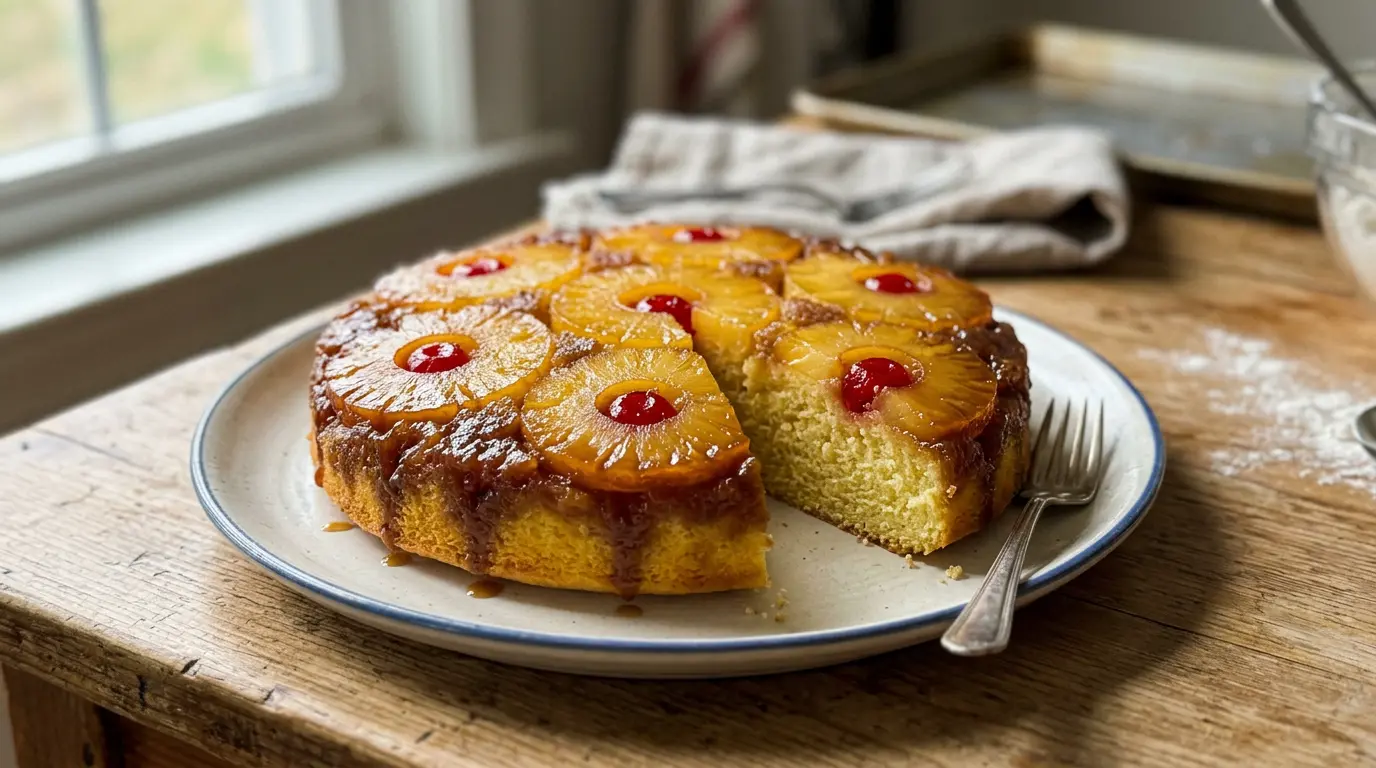
How to Make Pineapple Upside Down Cake Easy 7-Step Perfection
There’s something deeply satisfying about turning a cake out of the pan and seeing that glossy fruit topping reveal itself in one piece. A great Pineapple Upside Down Cake has that exact kind of magic. It looks impressive, yet the method is surprisingly approachable, and moreover, the flavor always feels nostalgic in the best way.
I’ve baked this cake many times, and I can tell you this: the difference between a decent version and one you’ll proudly serve comes down to a few simple details. The caramel layer needs the right balance, the pineapple needs to be dried well, and the cake batter should stay tender rather than heavy. Therefore, once you understand those small moves, this recipe becomes reliable instead of intimidating.
In this guide, I’ll walk you through exactly what Pineapple Upside Down Cake is, why people love it, the best ingredients to use, a clear step-by-step method, storage tips, common mistakes, and a few variations you can try without losing the classic charm.
Table of Contents
What is Pineapple Upside Down Cake
Pineapple Upside Down Cake is a classic dessert baked with fruit and a brown sugar-butter topping at the bottom of the pan, with cake batter poured over it. After baking, you invert the cake so the caramelized pineapple layer ends up on top.
That upside-down finish is what makes the dessert so memorable. As the cake bakes, the butter and brown sugar melt together and create a rich topping around the pineapple. As a result, you get a tender cake underneath and a glossy, sweet fruit layer on top.
Most traditional versions also include maraschino cherries placed in the centers of the pineapple rings. However, you can make Pineapple Upside Down Cake with or without them depending on your preference. I’ve tested both, and the cake tastes great either way, though the cherries do add that familiar old-school look and a little extra sweetness.
This cake became popular because it looks festive without requiring complicated decorating. In addition, it holds onto moisture well, which makes it a dependable dessert for gatherings, holidays, and casual family dinners.
Why You Will Love This Pineapple Upside Down Cake
It delivers classic flavor every time
A good Pineapple Upside Down Cake balances buttery richness, caramel sweetness, and bright pineapple flavor. Because those elements work so well together, the cake tastes comforting and fresh at the same time.
It looks special without extra effort
You don’t need frosting, fancy layers, or decorating tools. Instead, the topping creates its own finished look when you flip the cake. Therefore, it feels impressive while still staying very manageable for home bakers.
The texture stays tender and moist
This is one of the reasons I return to Pineapple Upside Down Cake so often. The fruit topping helps keep the cake soft, and a well-mixed batter stays light rather than dense.
It’s beginner-friendly
If you can melt butter, mix batter, and follow a few key timing cues, you can make this cake. Moreover, the ingredient list is familiar and uncomplicated, which makes the process less stressful.
It works for many occasions
This cake feels right at a weekend dinner, a potluck, a birthday, or a holiday table. On the other hand, it’s also simple enough to bake just because you want something homemade and comforting.
Ingredients
A great Pineapple Upside Down Cake depends on two parts working together: the caramelized topping and the tender vanilla cake. Therefore, it helps to keep the ingredients organized.
Main Ingredients
| Ingredient | Amount | Notes |
|---|---|---|
| Unsalted butter | 1/2 cup total | Divide for topping and batter |
| Brown sugar | 3/4 cup | Creates the caramel-style topping |
| Pineapple rings | 7 to 8 slices | Drain well so the topping sets properly |
| Maraschino cherries | 7 to 8 | Optional, but classic |
| All-purpose flour | 1 1/2 cups | Spoon and level for accuracy |
| Baking powder | 1 1/2 teaspoons | Helps the cake rise evenly |
| Salt | 1/4 teaspoon | Balances sweetness |
| Granulated sugar | 2/3 cup | Sweetens the cake batter |
| Large eggs | 2 | Bring to room temperature if possible |
| Milk | 1/2 cup | Whole milk gives the best richness |
| Vanilla extract | 1 1/2 teaspoons | Adds warmth and depth |
| Pineapple juice | 1/4 cup | Use from the can for extra flavor |
Optional Add-ins
| Ingredient | Amount | Notes |
|---|---|---|
| Ground cinnamon | 1/4 teaspoon | Adds subtle warmth |
| Sour cream | 2 tablespoons | Makes the crumb extra tender |
| Dark rum extract | 1/4 teaspoon | Nice for a richer tropical note |
| Chopped pecans | 2 tablespoons | Add around the fruit for crunch |
The pineapple and brown sugar topping gives Pineapple Upside Down Cake its signature finish, so don’t rush that part. I also strongly recommend draining the pineapple very well because extra moisture can make the topping slide instead of set. In addition, a little pineapple juice in the batter boosts flavor without making the cake heavy.
How to Make Pineapple Upside Down Cake Step by Step
A reliable Pineapple Upside Down Cake comes from doing the little things right. The good news is that none of them are difficult.
Step 1: Prepare the pan and oven
Preheat your oven to 350°F. Grease a 9-inch round cake pan lightly, especially around the sides. Then melt 1/4 cup of the butter and pour it into the bottom of the pan. Sprinkle the brown sugar evenly over the butter so it forms a smooth base.
Step 2: Arrange the pineapple topping
Pat the pineapple rings dry with paper towels, then place them over the brown sugar mixture. Add a cherry to the center of each ring if you’re using them. If you have extra pineapple pieces, tuck them into open spaces. Most importantly, keep the arrangement even so the finished Pineapple Upside Down Cake looks balanced after you flip it.
Step 3: Mix the dry ingredients
In a medium bowl, whisk together the flour, baking powder, and salt. If you want a hint of warm spice, add the cinnamon here. This step helps the leavening distribute evenly, and therefore, the cake rises more consistently.
Step 4: Cream the butter and sugar
In a separate bowl, beat the remaining 1/4 cup butter with the granulated sugar until the mixture looks lighter and smoother. Add the eggs one at a time, then mix in the vanilla. Because this step builds structure, don’t rush it. A properly creamed base helps the cake stay soft and tender.
Step 5: Add the milk and dry ingredients
Add the flour mixture to the butter mixture in stages, alternating with the milk and pineapple juice. Start and end with the dry ingredients. Mix just until combined. However, do not overmix, or the crumb can turn tough instead of tender.
Step 6: Spread the batter carefully
Spoon the batter over the arranged pineapple topping and spread it gently into an even layer. Take your time here so you don’t disturb the fruit. A smooth top helps the Pineapple Upside Down Cake bake evenly from edge to center.
Step 7: Bake, cool briefly, and invert
Bake for about 38 to 45 minutes, or until the top turns golden and a toothpick inserted into the cake portion comes out clean. Let the cake rest for 10 minutes, then run a knife around the edge. Place a plate over the pan and flip confidently in one motion. Finally, lift the pan slowly and let the topping settle into place.
Storage and Make-Ahead Tips
A freshly baked Pineapple Upside Down Cake tastes wonderful the day you make it, but it also keeps surprisingly well if you store it properly.
Store at room temperature briefly
If your kitchen is cool and you plan to serve the cake within several hours, you can keep it loosely covered at room temperature. Because the topping contains fruit, I prefer not to leave it out longer than that.
Refrigerate for longer freshness
Cover the cake well and refrigerate it for up to 3 days. The texture stays good, and moreover, the topping holds up nicely. Before serving, let the cake sit at room temperature for a bit so the crumb softens again.
Reheat individual slices gently
If you like this dessert slightly warm, heat slices in short bursts until just warmed through. That little bit of warmth softens the topping and makes the flavors feel fuller.
Make parts ahead
You can measure the dry ingredients in advance and even prepare the topping ingredients ahead of time. However, I recommend mixing the batter right before baking for the best rise. If you want to streamline the process, simply get everything ready before you start.
Common Mistakes and How to Fix Them
Even though Pineapple Upside Down Cake is straightforward, a few mistakes can affect the final result. Fortunately, they’re easy to avoid once you know what to watch for.
Mistake 1: Not draining the pineapple well
Wet pineapple releases extra moisture into the topping. As a result, the sugar layer can become runny instead of glossy. Pat the slices dry before arranging them in the pan.
Mistake 2: Using too much topping
More sugar and butter might sound better, but too much creates a greasy layer that can slip when you invert the cake. Stick with measured amounts so the topping stays rich but controlled.
Mistake 3: Overmixing the batter
This is one of the fastest ways to make Pineapple Upside Down Cake dense. Mix only until the flour disappears. Therefore, the crumb stays soft and tender.
Mistake 4: Letting the cake cool too long in the pan
If you wait too long, the topping can start to stick as it cools. On the other hand, flipping too soon can make the cake fragile. Ten minutes is the sweet spot in my experience.
Mistake 5: Flipping timidly
You need one confident motion. If you hesitate, the cake can shift. Set your serving plate firmly on top, hold both pan and plate securely, and turn them over together.
Mistake 6: Baking in the wrong pan size
A pan that’s too small may overflow, while a pan that’s too large can leave the cake too thin. A standard 9-inch round pan works best for most Pineapple Upside Down Cake recipes like this one.
Variations
Classic Pineapple Upside Down Cake is hard to beat, but a few thoughtful changes can give you a fresh version without losing its character.
Cherry-free version
Skip the maraschino cherries if you prefer a cleaner pineapple flavor. The cake still looks beautiful, and some people actually like it better this way because the sweetness feels more balanced.
Pineapple chunk version
Instead of rings, use pineapple chunks or tidbits arranged across the pan. This creates a more rustic look, and moreover, every slice gets plenty of fruit.
Coconut version
Add a few tablespoons of shredded coconut to the topping or batter. This gives the cake a tropical feel that pairs naturally with pineapple.
Spice-kissed version
A little cinnamon or nutmeg in the batter adds warmth and depth. However, use a light hand because you still want the pineapple flavor to stay front and center.
Rum-flavored version
Add a touch of rum extract or a teaspoon of dark rum to the batter if you want a richer, more grown-up flavor. It complements Pineapple Upside Down Cake especially well for holiday meals.
Sheet pan-inspired version
If you need to feed more people, you can adapt the idea to a larger pan, though you’ll need to adjust the batter amount and baking time. I still prefer the round cake for the most classic presentation.
Serving Suggestions
One of the best things about Pineapple Upside Down Cake is how easy it is to serve. It doesn’t need much help, yet a few small touches can make it feel even more special.
Serve it slightly warm
This is my favorite way to enjoy it. When the cake is a little warm, the topping softens and the butter-brown sugar flavor becomes more pronounced.
Pair it with whipped cream
A spoonful of lightly sweetened whipped cream balances the caramelized fruit beautifully. Because the cake is already rich, keep the cream simple.
Add a scoop of vanilla ice cream
If you want a more dessert-forward presentation, vanilla ice cream works wonderfully. The cold creaminess contrasts with the warm fruit topping, and as a result, each bite feels extra satisfying.
Serve with coffee or tea
The sweetness of Pineapple Upside Down Cake pairs nicely with coffee, black tea, or even a mild herbal tea after dinner. The contrast keeps the dessert from feeling too heavy.
Cut clean slices with a sharp knife
Wipe the knife between cuts if you want neat portions. This small step helps preserve the topping so each slice looks polished when served.
Frequently Asked Questions
Can I make Pineapple Upside Down Cake with fresh pineapple?
Yes, but canned pineapple rings are easier and more consistent for this specific cake. Fresh pineapple can work well if you slice it evenly and remove excess moisture first.
Why did my Pineapple Upside Down Cake stick to the pan?
This usually happens when the cake cools too long before flipping or when the pan wasn’t prepared well. Grease the sides, use the right amount of butter in the base, and invert after about 10 minutes.
Can I make Pineapple Upside Down Cake ahead of time?
Yes. You can bake it a day ahead and store it covered in the refrigerator. Then let it come closer to room temperature before serving, or warm slices gently.
What kind of pan works best?
A 9-inch round cake pan works best for a classic Pineapple Upside Down Cake. I prefer a solid metal pan because it bakes evenly and releases the cake more reliably than some other options.
Do I have to use cherries?
No, you don’t. Cherries are traditional, but the cake tastes excellent without them. If you want the classic look, though, they’re a nice touch.
How do I know when the cake is done?
Look for a golden top and test the cake portion with a toothpick. If it comes out clean or with a few soft crumbs, the cake is ready. In addition, the center should spring back lightly when touched.
Can I freeze leftovers?
Yes. Wrap slices well and freeze them for up to 2 months. Thaw in the refrigerator, then warm gently before serving for the best texture.
Why is my topping too runny?
The most common cause is excess moisture from the pineapple. Pat the fruit dry well, and don’t overload the pan with extra butter or sugar.
A homemade Pineapple Upside Down Cake has a charm that never really goes out of style. It’s buttery, fruity, tender, and just dramatic enough when you flip it onto the plate. Once you make it a couple of times, the process feels easy and dependable, and that’s exactly why I keep returning to it. If you take care with the topping, mix the batter gently, and flip with confidence, your Pineapple Upside Down Cake will come out beautifully and taste every bit as comforting as you hoped.