
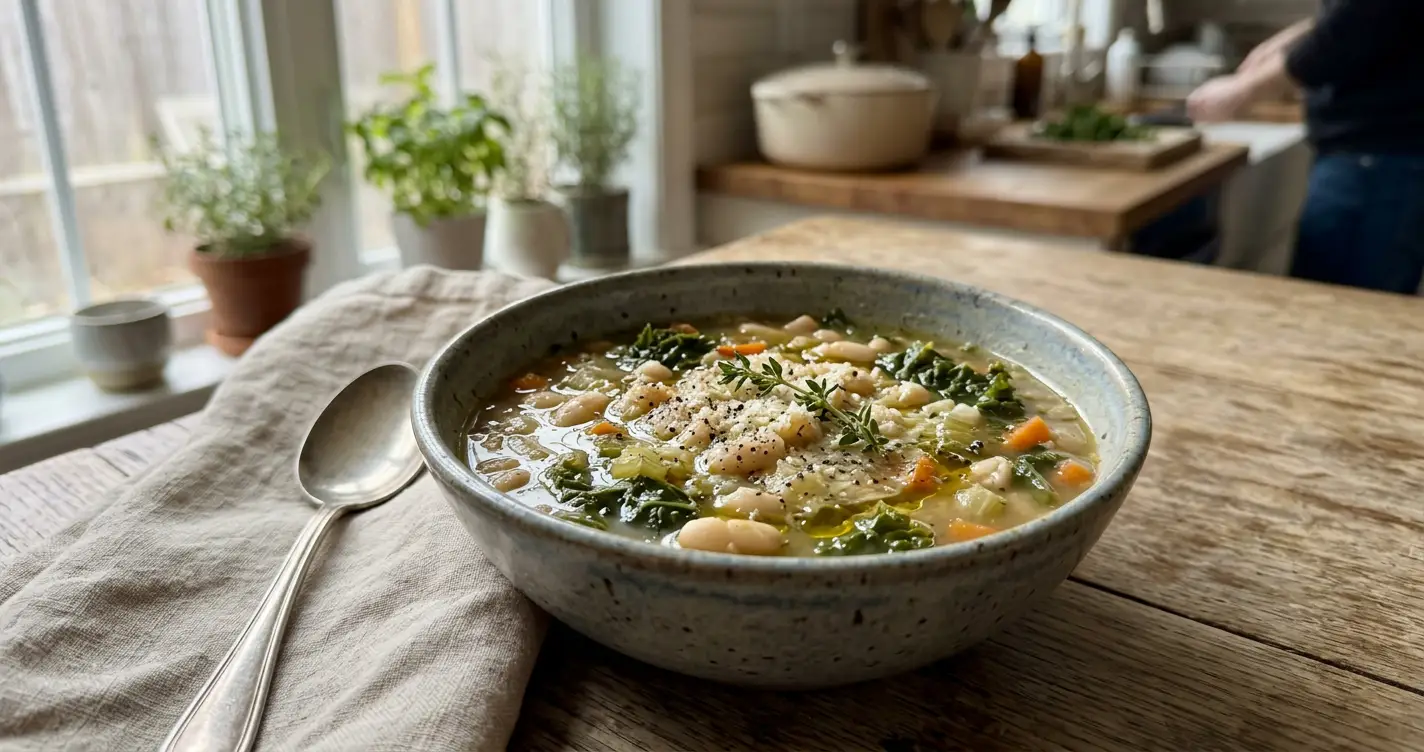
White Bean and Kale Soup Healthy in 5 Easy Steps
When the weather turns cold or you need something nourishing that won’t derail your health goals, White Bean and Kale Soup delivers exactly what your body craves. This hearty, comforting bowl combines creamy white beans with tender kale in a flavorful broth that tastes like you’ve simmered it all day, yet it comes together in less than an hour.
The best part? This soup packs serious nutrition without sacrificing flavor. Each spoonful delivers protein, fiber, vitamins, and minerals that keep you satisfied for hours. Moreover, the entire recipe happens in one pot, making cleanup as simple as the cooking process itself.
In this comprehensive guide, I’ll show you how to make restaurant-quality White Bean and Kale Soup that rivals anything you’d order at a farm-to-table café, plus tips for customizing it to your taste preferences and dietary needs.
Table of Contents
What is White Bean and Kale Soup
White Bean and Kale Soup is a nutritious, plant-forward dish featuring cannellini or navy beans combined with fresh kale in a savory vegetable broth. This Tuscan-inspired soup belongs to a category of rustic Italian soups called “zuppa,” which traditionally combine humble ingredients into deeply satisfying meals.
The beans provide the soup’s creamy body and substantial texture. When simmered properly, some beans break down slightly, naturally thickening the broth without requiring cream or flour. This creates a velvety consistency that makes the soup feel indulgent despite being entirely plant-based.
Kale adds vibrant color, earthy flavor, and impressive nutritional value. The hearty greens hold up beautifully during cooking, softening just enough while maintaining pleasant texture. Unlike delicate spinach that wilts into nothing, kale maintains presence in the finished soup.
The aromatic base typically includes onions, garlic, and carrots sautéed in olive oil. These vegetables create layers of flavor that transform simple ingredients into something complex and satisfying. Herbs like rosemary or thyme add Mediterranean character that ties everything together.
White Bean and Kale Soup fits multiple dietary patterns effortlessly. It’s naturally vegan and vegetarian, high in fiber and protein, low in fat, and gluten-free when made with appropriate broth. This versatility makes it perfect for feeding groups with different dietary needs.
Why You Will Love This White Bean and Kale Soup
First and foremost, White Bean and Kale Soup offers incredible nutrition in a genuinely delicious package. Each serving provides substantial protein from the beans, vitamins A and K from the kale, and fiber that supports digestive health and keeps you feeling full.
The soup delivers this nutritional powerhouse without tasting like diet food. The rich, savory broth and creamy beans create comfort-food satisfaction that rivals much heavier soups. You won’t feel like you’re sacrificing flavor for health benefits.
The one-pot preparation makes this soup perfect for busy weeknights. You build layers of flavor in a single Dutch oven or large pot, eliminating the need for multiple pans and extensive cleanup. From start to finish, you’ll spend about forty minutes in the kitchen.
White Bean and Kale Soup also happens to be incredibly budget-friendly. Dried or canned beans cost pennies per serving, kale remains affordable year-round, and the other ingredients are kitchen staples. You can feed a family of four for less than the cost of a single takeout meal.
The make-ahead friendly nature means this soup actually improves after a day in the refrigerator. The flavors meld and deepen, making it ideal for meal prep. Prepare a big batch on Sunday and enjoy healthy lunches or quick dinners throughout the week.
This soup works beautifully across seasons too. It provides warming comfort during cold months, yet the bright flavors and vegetables make it appropriate even in warmer weather. The versatility ensures you’ll reach for this recipe year-round.
Finally, White Bean and Kale Soup satisfies both vegans and omnivores alike. Even devoted meat-eaters appreciate the hearty, satisfying quality that doesn’t leave them searching for something more. You can serve it as a complete meal without anyone feeling shortchanged.
Ingredients
Main Ingredients
| Ingredient | Amount | Notes |
|---|---|---|
| Olive oil | 2 tablespoons | Extra virgin for best flavor |
| Yellow onion | 1 medium, diced | White onion works too |
| Carrots | 2 medium, diced | Adds natural sweetness |
| Celery | 2 stalks, diced | Essential for aromatic base |
| Garlic cloves | 4, minced | Fresh garlic only, not jarred |
| Dried rosemary | 1 teaspoon | Or 1 tablespoon fresh, chopped |
| Dried thyme | 1/2 teaspoon | Or 1 teaspoon fresh, chopped |
| Cannellini beans | 3 cans (15 oz each) | Drain and rinse, or use 4 cups cooked |
| Vegetable broth | 6 cups | Low-sodium preferred for control |
| Kale | 1 bunch (6-8 cups) | Remove tough stems, chop leaves |
| Lemon juice | 2 tablespoons | Fresh squeezed brightens flavors |
| Salt | To taste | Start with 1 teaspoon, adjust |
| Black pepper | 1/2 teaspoon | Freshly ground tastes better |
| Red pepper flakes | 1/4 teaspoon | Optional, for gentle heat |
Optional Additions
| Ingredient | Amount | Notes |
|---|---|---|
| Parmesan rind | 1 piece | Adds umami depth while simmering |
| Bay leaf | 1 | Remove before serving |
| Sun-dried tomatoes | 1/4 cup, chopped | Adds tangy sweetness |
The quality of your beans and broth makes a significant difference in White Bean and Kale Soup. Canned beans offer convenience, but cooking dried beans from scratch creates superior texture and allows you to control sodium levels. If using canned, choose brands without added salt or preservatives when possible.
How to Make White Bean and Kale Soup Step by Step
Step 1: Prepare Your Ingredients
Start by gathering and prepping all your ingredients before you begin cooking. Dice the onion, carrots, and celery into uniform pieces about one-quarter inch in size. This ensures even cooking and creates pleasant texture in the finished soup.
Mince the garlic cloves finely, keeping them separate from the other vegetables since they’ll be added later to prevent burning. Remove the tough stems from the kale by holding each leaf and stripping the leafy parts away from the center rib.
Chop the kale leaves into bite-sized pieces, roughly one to two inches. If using canned beans, drain them in a colander and rinse thoroughly under cold water to remove excess sodium and the thick liquid they’re packed in.
This prep work takes about ten minutes but streamlines the cooking process significantly. Having everything ready means you won’t rush or burn ingredients while scrambling to chop the next component.
Step 2: Build the Aromatic Base
Heat the olive oil in a large Dutch oven or heavy-bottomed pot over medium heat. Once the oil shimmers, add the diced onion, carrots, and celery. This combination is called a soffritto in Italian cooking and forms the flavor foundation of countless dishes.
Cook these vegetables for about eight to ten minutes, stirring occasionally, until they soften and the onion becomes translucent. The carrots should show some give when pierced with a fork, though they don’t need to be completely tender yet.
Add the minced garlic, dried rosemary, and thyme to the pot. Stir constantly for about one minute until the garlic becomes fragrant but not browned. Burned garlic tastes bitter and will ruin the entire batch, so watch carefully during this step.
The kitchen should smell incredible at this point, with aromatic herbs and vegetables releasing their essential oils. This aromatic base creates depth that makes White Bean and Kale Soup taste complex despite its simple ingredient list.
Step 3: Add Beans and Broth
Pour the drained and rinsed beans into the pot, stirring to coat them with the aromatic vegetables and oil. Let them cook for about two minutes, allowing them to absorb some of the flavors from the base.
Add the vegetable broth, stirring to combine everything thoroughly. If using a Parmesan rind or bay leaf, add it now. These optional ingredients contribute subtle background flavors that elevate the soup without dominating.
Increase the heat to high and bring the soup to a boil. Once boiling, reduce the heat to medium-low and let it simmer gently for about fifteen minutes. This simmering time allows the beans to soften further and some to break down, naturally thickening the broth.
For an even creamier texture, use a potato masher or the back of a wooden spoon to smash some beans against the side of the pot. This releases their starchy interiors into the broth, creating a velvety consistency without adding any dairy.
Step 4: Add Kale and Finish
Add the chopped kale to the pot in batches if necessary, stirring it into the hot liquid. The kale will seem like an enormous amount at first, but it wilts down dramatically within a few minutes of contact with the hot soup.
Stir the kale gently to submerge it in the broth. Let the soup simmer for another eight to ten minutes until the kale becomes tender but still maintains its vibrant color. Overcooking kale turns it drab olive-green and mushy, so watch the timing.
Stir in the fresh lemon juice, which brightens all the flavors and adds necessary acidity to balance the earthy beans and kale. Taste the soup and season with salt and black pepper as needed, keeping in mind that different broths contain varying sodium levels.
If you like a bit of heat, add the red pepper flakes during this final stage. The White Bean and Kale Soup should taste balanced, with savory depth, gentle sweetness from the vegetables, and brightness from the lemon.
Step 5: Serve and Enjoy
Remove the Parmesan rind and bay leaf if you used them. Ladle the hot soup into bowls, making sure each serving gets a good mix of beans, vegetables, and kale.
The soup should have a slightly creamy consistency from the broken-down beans, with intact beans providing textural interest. The kale should be tender but not mushy, maintaining its structure throughout the bowl.
Serve the White Bean and Kale Soup immediately while hot, or let it cool slightly if you prefer less piping-hot food. The flavors will be excellent right away, though they continue to develop as the soup sits.
For the best experience, serve in pre-warmed bowls that keep the soup hot throughout the meal. This simple touch makes a noticeable difference in enjoyment, especially during cold weather.
Storage and Make-Ahead Tips
White Bean and Kale Soup stores exceptionally well, making it ideal for meal prep and batch cooking. Let the soup cool completely at room temperature before transferring to storage containers. Rapid cooling prevents bacterial growth and maintains food safety.
Store the cooled soup in airtight containers in the refrigerator for up to five days. The flavors actually improve after a day or two as the ingredients continue melding together. The kale may darken slightly, but this doesn’t affect taste or safety.
To reheat, warm the desired portion in a saucepan over medium heat, stirring occasionally until heated through. You may need to add a splash of water or broth, as the beans absorb liquid during storage and the soup thickens considerably.
Microwave reheating works too, though stovetop provides more even heating. Heat in one-minute intervals, stirring between each, until the soup reaches your preferred temperature.
White Bean and Kale Soup freezes beautifully for up to three months. Portion it into freezer-safe containers, leaving about one inch of headspace for expansion during freezing. Label containers with the date and contents for easy identification.
Thaw frozen soup overnight in the refrigerator, then reheat on the stovetop. If you’re in a hurry, you can reheat from frozen over low heat, stirring frequently to prevent scorching on the bottom.
For make-ahead meal prep, prepare the soup through step three, stopping before adding the kale. Cool and refrigerate this bean and vegetable base for up to three days. When ready to serve, reheat the base, add fresh kale, and proceed with the final steps.
This method ensures the kale stays vibrant green and maintains optimal texture. Kale that sits in the soup for multiple days becomes softer and darker, which some people prefer while others find less appealing.
Common Mistakes and How to Fix Them
One frequent error involves not rinsing canned beans thoroughly. The thick liquid in the can contains excess sodium and starches that can make the soup taste tinny or create an unpleasant slimy texture.
Always drain canned beans completely and rinse them under cold running water for at least thirty seconds. This simple step dramatically improves the final flavor and texture of White Bean and Kale Soup.
Another common mistake is adding the kale too early in the cooking process. When kale simmers for too long, it loses its vibrant color and becomes mushy. The leaves turn an unappealing olive-drab and lack the pleasant tender-crisp texture that properly cooked kale provides.
Add the kale only during the final ten minutes of cooking. This timing ensures it becomes tender while maintaining color and structure.
Many cooks also make the error of under-seasoning the soup. Beans absorb significant amounts of salt, and if your broth is low-sodium, the soup can taste flat without adequate seasoning.
Taste the soup before serving and add salt gradually until the flavors brighten and come alive. You’ll be surprised how much salt it might need. However, add it in small increments to avoid over-salting.
Using insufficient aromatics creates another problem. When you skimp on onions, carrots, celery, or garlic, the soup tastes one-dimensional and boring despite the healthy ingredients.
Follow the recipe proportions for the aromatic vegetables, as they create the flavor foundation that makes White Bean and Kale Soup taste restaurant-quality rather than merely acceptable.
Skipping the lemon juice represents a critical omission. The acidity brightens all the flavors and balances the earthy beans and kale. Without it, the soup tastes heavy and monotonous.
Always finish with fresh lemon juice just before serving. The bright citrus note transforms the entire dish from good to exceptional.
Finally, some people overcook the soup, turning the beans to complete mush. While some broken-down beans create desirable creaminess, you want most beans to remain intact for textural interest.
Simmer gently rather than boiling vigorously, and check the beans after fifteen minutes. They should be tender but still hold their shape when stirred.
Variations
The basic White Bean and Kale Soup welcomes numerous delicious variations while maintaining its healthy character. For a heartier version with more protein, add cooked Italian sausage or diced chicken. Brown the meat first, remove it from the pot, then proceed with the recipe and stir the cooked meat back in during the final steps.
This addition transforms the soup into an even more substantial meal that satisfies the biggest appetites. Turkey sausage offers a leaner option that still contributes great flavor.
For a vegan version with extra umami depth, add nutritional yeast and miso paste. Stir two tablespoons of nutritional yeast and one tablespoon of white miso into the finished soup for a savory, almost cheesy quality without any dairy.
This variation also boosts the B-vitamin content, making an already nutritious soup even more beneficial.
Tuscan white bean soup incorporates diced tomatoes along with the broth. Add one can of diced tomatoes when you add the broth for a slightly different flavor profile with more acidity and sweetness.
The tomatoes create a more complex broth that some people prefer over the simpler version. This variation pairs particularly well with a Parmesan rind simmered in the soup.
For a creamy version without dairy, blend one cup of the cooked beans with one cup of the broth until smooth, then stir this puree back into the soup. This creates an even creamier texture that rivals soups made with heavy cream.
The bean puree adds body and richness while keeping the soup entirely plant-based and low in fat.
Spicy white bean and kale soup adds more heat through additional red pepper flakes, fresh jalapeños, or a dash of hot sauce. The gentle heat complements the earthy flavors beautifully and creates a warming quality perfect for cold days.
Start with small amounts and adjust to your heat tolerance, as you can always add more but can’t remove it once incorporated.
For an Italian sausage and white bean soup variation with extra vegetables, add diced zucchini, bell peppers, or fennel along with the carrots and celery. These additions create more textural variety and increase the vegetable content even further.
Serving Suggestions
White Bean and Kale Soup shines as a complete meal on its own, but thoughtful accompaniments enhance the experience. Serve it with crusty whole-grain bread for dipping and soaking up every drop of the flavorful broth.
A simple baguette toasted with a brush of olive oil and rubbed garlic creates an easy but impressive side. The crispy bread provides textural contrast to the soft beans and tender kale.
For a heartier meal, pair the soup with a simple green salad dressed in lemon vinaigrette. The bright, crisp salad balances the warm, comforting soup and adds even more vegetables to the meal.
Arugula, mixed greens, or romaine all work beautifully. Keep the dressing simple so it doesn’t compete with the soup’s flavors.
Top individual servings with a drizzle of high-quality extra virgin olive oil and a sprinkle of freshly grated Parmesan cheese if you’re not keeping the soup vegan. These finishing touches add richness and visual appeal.
Fresh herbs like parsley or basil also make excellent garnishes that contribute bright flavor and attractive color contrast.
For a complete Italian-inspired meal, serve White Bean and Kale Soup as a first course followed by a lighter main dish like grilled fish or roasted chicken. This traditional Italian meal structure works beautifully for dinner parties.
The soup fills everyone up just enough while leaving room for the main course and perhaps a light dessert.
The soup also works wonderfully for casual gatherings when served from a large pot or slow cooker as part of a soup bar. Set out various toppings like grated cheese, red pepper flakes, fresh herbs, and croutons so guests can customize their bowls.
This interactive serving style adds fun to the meal and ensures everyone gets exactly what they want.
Frequently Asked Questions
Can I use different types of beans in White Bean and Kale Soup?
Yes, though the specific type affects the final texture. Cannellini beans create the creamiest result and are traditional, but navy beans, great northern beans, or butter beans all work well. Avoid kidney beans or black beans, as their stronger flavors and firmer textures don’t suit this particular soup as well.
Do I have to use kale, or can I substitute other greens?
You can substitute Swiss chard, collard greens, or spinach for the kale. Chard works most similarly to kale, while collards are heartier and need slightly longer cooking. Spinach wilts much more and should be added in the final two minutes. However, kale provides the best texture and nutritional profile for White Bean and Kale Soup.
Can I make this soup in a slow cooker?
Yes, though you should still sauté the aromatics first for better flavor. Transfer the sautéed vegetables to the slow cooker, add beans and broth, and cook on low for six to eight hours. Add the kale during the final thirty minutes, then finish with lemon juice before serving.
Is White Bean and Kale Soup gluten-free?
The soup itself contains no gluten-containing ingredients. However, always verify that your vegetable broth is certified gluten-free, as some brands use wheat-based thickeners or flavorings. When you control all ingredients, White Bean and Kale Soup is naturally gluten-free.
How can I make the soup thicker?
Mash more beans against the side of the pot to release their starches, or remove one cup of soup and blend it until smooth before stirring it back in. You can also simmer the soup uncovered for an additional ten minutes to reduce the liquid and concentrate the flavors.
Can I use dried beans instead of canned?
Absolutely, and many people prefer the texture of beans cooked from scratch. Soak one and a half cups of dried beans overnight, drain, then cook them in fresh water until tender before using in the recipe. This takes more time but offers better texture and lower sodium.
Why does my soup taste bland?
Bland soup usually results from insufficient seasoning or aromatics. Make sure you use the full amounts of onion, garlic, and herbs listed. More importantly, taste the soup before serving and add salt gradually until the flavors brighten. The lemon juice is also crucial for balancing the earthy flavors.
How long does White Bean and Kale Soup last in the refrigerator?
Store the soup properly in airtight containers for up to five days in the refrigerator. The flavors improve over the first two days as ingredients continue melding. Beyond five days, the quality declines and food safety becomes a concern, so freeze portions if you need longer storage.
Can I add pasta to this soup?
Yes, small pasta shapes like ditalini or orzo work wonderfully in White Bean and Kale Soup. Cook the pasta separately according to package directions, then add it to individual bowls before ladling the soup over it. This prevents the pasta from absorbing all the broth during storage.
Making White Bean and Kale Soup proves that healthy eating doesn’t require sacrificing flavor or satisfaction. This nourishing bowl delivers everything you want from comfort food while supporting your wellness goals with impressive nutritional benefits.
Once you experience how simple and rewarding this soup is to prepare, you’ll find yourself making it regularly throughout the year. The one-pot convenience, budget-friendly ingredients, and make-ahead friendly nature remove all barriers to enjoying wholesome, homemade meals.
Give this recipe a try this week, and you’ll discover why White Bean and Kale Soup has sustained people for generations. The humble combination of beans, greens, and aromatics creates something far greater than the sum of its parts, proving that the simplest foods often bring the most lasting satisfaction.