
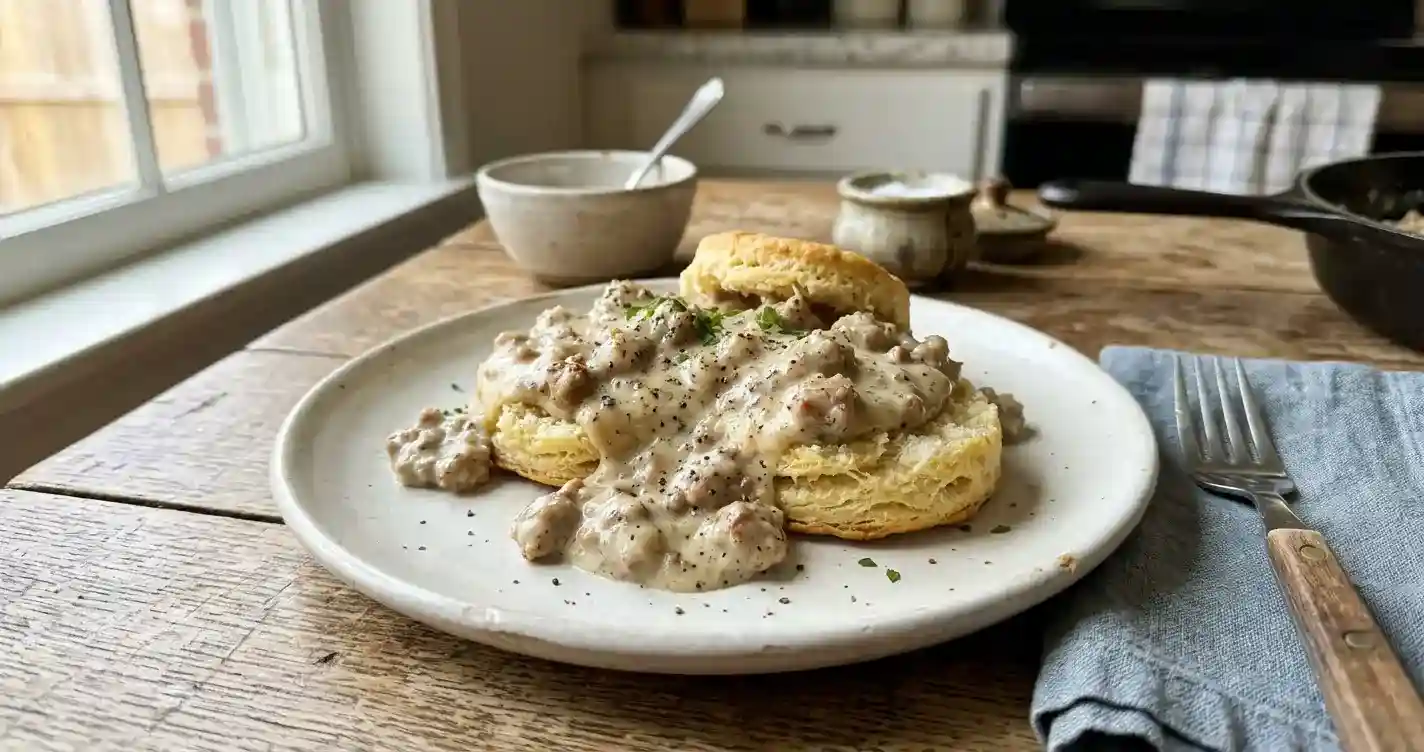
How to Make the Best Sausage Gravy and Biscuits in 4 Simple Steps
There’s nothing quite like waking up to the smell of savory sausage sizzling in a cast iron skillet, knowing that creamy gravy and flaky biscuits are just minutes away. Sausage Gravy and Biscuits represents the pinnacle of Southern comfort food a hearty, satisfying breakfast that warms you from the inside out and keeps you full until lunchtime.
This classic dish combines perfectly seasoned breakfast sausage in a rich, peppery cream gravy ladled generously over tender, buttery biscuits. Moreover, the entire meal comes together in about thirty minutes, making it perfect for weekend mornings when you want something special without spending hours in the kitchen.
In this comprehensive guide, I’ll show you exactly how to make restaurant-quality Sausage Gravy and Biscuits at home, from achieving the perfect gravy consistency to baking biscuits that are crispy on the outside and impossibly fluffy inside.
Table of Contents
What is Sausage Gravy and Biscuits
Sausage Gravy and Biscuits is a traditional Southern American breakfast consisting of flaky buttermilk biscuits topped with creamy white gravy made from breakfast sausage, flour, milk, and black pepper. The dish originated in the Southern Appalachian region where resourceful cooks created filling meals from simple, affordable ingredients.
The gravy belongs to the white gravy family, also called country gravy or sawmill gravy. Cooks make it by browning breakfast sausage, using the rendered fat to create a roux with flour, then adding milk to create a thick, creamy sauce heavily seasoned with black pepper.
The biscuits provide the foundation for this dish. Traditional Southern biscuits use cold butter or shortening cut into flour, creating layers of flaky pastry that are tender inside with slightly crispy golden-brown tops and bottoms. When you split them open, steam should escape and the interior should pull apart in soft, fluffy layers.
The combination creates a complete breakfast that delivers protein from the sausage, carbohydrates from the biscuits, and dairy from the milk-based gravy. The rich, savory flavors and substantial portion size make this a weekend breakfast favorite rather than a rushed weekday meal.
Sausage Gravy and Biscuits has become iconic in Southern cuisine and has spread throughout the United States as a beloved comfort food. You’ll find it on diner menus, at brunch restaurants, and on breakfast tables across the country, particularly on lazy weekend mornings.
Why You Will Love This Sausage Gravy and Biscuits
First and foremost, Sausage Gravy and Biscuits delivers incredible comfort and satisfaction in every bite. The creamy, peppery gravy combined with flaky biscuits creates the ultimate comfort food experience that feels like a warm hug on a plate.
The recipe uses simple, affordable ingredients you probably already have in your kitchen. Flour, milk, butter, and breakfast sausage cost less than most breakfast options yet create a meal that feels indulgent and special. This budget-friendly aspect makes it perfect for feeding a crowd without breaking the bank.
The hearty nature of Sausage Gravy and Biscuits keeps you satisfied for hours. Unlike sugary breakfast cereals or pastries that leave you hungry an hour later, this substantial meal provides lasting energy through a balanced combination of protein, carbohydrates, and fats.
The versatility for different occasions makes this recipe valuable year-round. Serve it for weekend family breakfasts, holiday brunches, overnight guest breakfasts, or even breakfast-for-dinner when you want something comforting. The classic appeal works for any gathering.
Making Sausage Gravy and Biscuits from scratch impresses guests while requiring only basic cooking skills. The individual components are straightforward, and once you master the techniques, you can make this dish confidently whenever the craving strikes.
The customizable nature means you can adjust the recipe to your preferences. Make the gravy thicker or thinner, spicier or milder, and add various seasonings to create your perfect version. The basic method remains constant while the possibilities multiply.
Finally, the nostalgic quality connects many people to childhood memories and family traditions. Even if you didn’t grow up eating this dish, it creates new comfort food memories that you’ll want to repeat again and again.
Ingredients
For the Biscuits
| Ingredient | Amount | Notes |
|---|---|---|
| All-purpose flour | 2 cups | Spoon and level for accuracy |
| Baking powder | 1 tablespoon | Check freshness for proper rise |
| Salt | 1 teaspoon | Enhances flavor throughout |
| Cold unsalted butter | 6 tablespoons | Cut into small cubes |
| Buttermilk | 3/4 cup | Essential for tender texture |
For the Sausage Gravy
| Ingredient | Amount | Notes |
|---|---|---|
| Breakfast sausage | 1 pound | Regular or spicy based on preference |
| All-purpose flour | 1/3 cup | Creates the roux for thickening |
| Whole milk | 2 1/2 cups | Warm milk prevents lumps |
| Black pepper | 1 teaspoon | Freshly ground tastes best |
| Salt | 1/2 teaspoon | Adjust to taste |
| Garlic powder | 1/4 teaspoon | Optional but adds depth |
Optional Add-ins
| Ingredient | Amount | Notes |
|---|---|---|
| Red pepper flakes | 1/4 teaspoon | For extra heat |
| Fresh sage | 1 tablespoon chopped | Adds herbaceous note |
| Cayenne pepper | Pinch | Boosts spice level |
The quality of your sausage significantly impacts the final flavor of Sausage Gravy and Biscuits. Choose breakfast sausage with good seasoning and at least 20% fat content, as the rendered fat creates the base for your gravy. Lean sausage doesn’t produce enough fat for proper roux development.
Cold butter is absolutely essential for flaky biscuits. The cold fat creates steam pockets during baking that produce those desirable layers. Cut the butter into small cubes and keep it refrigerated until the moment you need it.
How to Make Sausage Gravy and Biscuits Step by Step
Step 1: Make the Biscuit Dough
Preheat your oven to 450°F and line a baking sheet with parchment paper. In a large bowl, whisk together the flour, baking powder, and salt until evenly combined.
Add the cold butter cubes to the flour mixture. Use a pastry cutter, two forks, or your fingertips to cut the butter into the flour until the mixture resembles coarse crumbs with pea-sized butter pieces throughout. Work quickly to prevent the butter from warming up.
Make a well in the center of the flour mixture and pour in the buttermilk. Stir gently with a fork just until the dough comes together. The dough should look shaggy and slightly sticky, not smooth. Overmixing creates tough biscuits, so stop mixing as soon as you no longer see dry flour.
Turn the dough out onto a lightly floured surface and gently pat it into a rectangle about one inch thick. Fold the dough in half, pat it out again, and repeat this folding process two more times. This creates layers in your biscuits.
Pat the dough to three-quarters inch thickness and cut out biscuits using a round cutter, pressing straight down without twisting. Place the biscuits on the prepared baking sheet with sides touching for soft edges, or spaced apart for crispy edges. Bake for 12 to 15 minutes until golden brown on top.
Step 2: Brown the Sausage
While the biscuits bake, heat a large cast iron skillet or heavy-bottomed pan over medium-high heat. Add the breakfast sausage and break it up with a wooden spoon or spatula into small crumbles.
Cook the sausage for 8 to 10 minutes, stirring occasionally, until it browns completely with no pink remaining. The sausage should develop some crispy, caramelized bits on the edges, which add tremendous flavor to the gravy.
Don’t drain the fat from the pan. The rendered sausage fat becomes the foundation of your gravy, providing both flavor and the necessary fat for creating the roux. You should have about 3 to 4 tablespoons of fat in the pan.
If your sausage is very lean and produces less than 3 tablespoons of fat, add a tablespoon or two of butter to make up the difference. If it produces significantly more than 4 tablespoons, drain off the excess while leaving the sausage in the pan.
Step 3: Make the Gravy
Reduce the heat to medium and sprinkle the flour evenly over the cooked sausage. Stir constantly for 2 to 3 minutes, coating all the sausage pieces with flour and cooking the raw flour taste out of the roux.
The mixture will look dry and pasty at this stage. Keep stirring to prevent burning, scraping the bottom of the pan to incorporate any browned bits stuck there. These fond bits add incredible depth to your Sausage Gravy and Biscuits.
Gradually pour in the milk while stirring constantly. Add it in three or four additions rather than all at once, stirring until smooth after each addition. This gradual incorporation prevents lumps from forming.
Increase the heat slightly and bring the gravy to a gentle simmer. Cook for 5 to 7 minutes, stirring frequently, until the gravy thickens to your desired consistency. It should coat the back of a spoon but still pour easily.
Season the gravy with black pepper, salt, and garlic powder if using. Taste and adjust the seasoning as needed. The gravy should taste peppery and savory with a creamy, rich texture.
Step 4: Assemble and Serve
Split the warm biscuits in half horizontally using a fork rather than a knife. The fork creates a rougher surface with more nooks and crannies that catch the gravy beautifully.
Place two biscuit halves on each serving plate, cut sides facing up. Ladle the hot sausage gravy generously over the biscuits, making sure each serving gets plenty of sausage pieces.
The gravy should be piping hot and freshly made for the best texture and flavor. If it thickens too much while standing, thin it with a splash of milk and rewarm gently before serving.
Serve the Sausage Gravy and Biscuits immediately while the biscuits are still warm and the gravy is hot. The combination of hot gravy meeting warm, fluffy biscuits creates the perfect comfort food experience.
Storage and Make-Ahead Tips
Store leftover sausage gravy in an airtight container in the refrigerator for up to three days. The gravy will thicken considerably as it cools, which is completely normal.
Reheat the gravy in a saucepan over medium-low heat, adding milk a few tablespoons at a time and stirring constantly until it reaches your desired consistency. Never microwave gravy without stirring, as it heats unevenly and can develop hot spots.
Biscuits are best eaten the day you make them, but you can store leftovers in an airtight container at room temperature for up to two days. Reheat them in a 350°F oven for 5 to 7 minutes to restore some of the original texture.
For make-ahead preparation, prepare the biscuit dough and cut out the biscuits the night before. Place them on the baking sheet, cover tightly with plastic wrap, and refrigerate overnight. Bake them straight from the refrigerator in the morning, adding 2 to 3 minutes to the baking time.
You can also freeze unbaked biscuits for up to three months. Freeze them on a baking sheet until solid, then transfer to a freezer bag. Bake from frozen, adding 5 to 7 minutes to the regular baking time.
The sausage gravy freezes reasonably well for up to two months. Cool it completely, portion into freezer-safe containers, and freeze. Thaw overnight in the refrigerator, then reheat gently with additional milk to restore the proper consistency.
Prepare the gravy base without the milk up to one day ahead. Brown the sausage and make the roux, then refrigerate. The next morning, reheat the sausage and roux, then proceed with adding the milk and finishing the gravy.
Common Mistakes and How to Fix Them
One frequent error involves using warm or room temperature butter for the biscuits. Warm butter blends too thoroughly into the flour, eliminating the pockets of fat that create flaky layers.
Always keep your butter cold and work quickly when cutting it into the flour. If your kitchen is warm, refrigerate the flour mixture after cutting in the butter for 10 minutes before adding the buttermilk.
Another common mistake is overmixing the biscuit dough. Vigorous mixing or kneading develops gluten, which creates tough, dense biscuits rather than tender, flaky ones.
Stir the dough just until it comes together, and handle it gently when patting it out. The dough should look slightly rough and shaggy, not smooth like bread dough.
Many people also make the error of twisting the biscuit cutter when cutting out biscuits. This twisting motion seals the edges and prevents the biscuits from rising properly.
Press the cutter straight down, then pull straight up without twisting. Dip the cutter in flour between cuts to prevent sticking.
Not cooking the flour long enough in the sausage gravy creates another problem. Undercooked flour tastes raw and pasty, ruining the gravy’s flavor despite perfect texture.
Cook the flour and sausage mixture for at least 2 to 3 minutes, stirring constantly, until the raw flour smell disappears. The mixture should smell toasty and cooked.
Adding cold milk to the hot roux causes lumps that are difficult to smooth out. The temperature shock creates instant clumps that resist breaking apart.
Warm your milk slightly before adding it to the roux, or at least bring it to room temperature. Add it gradually while stirring constantly for the smoothest Sausage Gravy and Biscuits gravy.
Making the gravy too thick or too thin represents another common issue. Gravy that’s too thick becomes gloppy and paste-like, while thin gravy slides off the biscuits without coating them.
Adjust the consistency by adding more milk to thin it or simmering longer to thicken it. The gravy should coat the back of a spoon but still pour easily.
Finally, many cooks serve the Sausage Gravy and Biscuits after both components have cooled. Cold biscuits and lukewarm gravy lack the comforting quality that makes this dish special.
Time your biscuit baking and gravy making so both finish around the same time. Serve immediately while everything is hot for the best experience.
Variations
The classic Sausage Gravy and Biscuits recipe adapts beautifully to various flavor profiles. For spicy sausage gravy, use hot breakfast sausage and add red pepper flakes or cayenne to the gravy. The heat wakes up your taste buds and adds excitement to the traditional version.
This variation works particularly well for those who enjoy bold, assertive flavors with their breakfast.
Chorizo gravy substitutes Mexican chorizo for breakfast sausage, creating a completely different flavor profile with paprika, cumin, and chili spices. The bright red color and bold seasoning transform this into a Southwestern breakfast.
Serve with a fried egg on top and some salsa on the side for a fusion creation.
For mushroom sausage gravy, sauté sliced mushrooms along with the sausage before making the roux. The earthy mushrooms add umami depth and create a more complex gravy.
Use a mixture of button and cremini mushrooms for the best flavor and texture.
Turkey sausage gravy offers a lighter alternative using turkey breakfast sausage instead of pork. You’ll need to add extra butter or oil since turkey sausage produces less fat, but the result is significantly lower in calories and saturated fat.
The flavor remains delicious while accommodating those who prefer poultry over pork.
Vegetarian mushroom gravy omits the sausage entirely, using a combination of sautéed mushrooms, vegetable broth, and butter to create the gravy base. Add smoked paprika and liquid smoke for that traditional breakfast sausage flavor without the meat.
This version works wonderfully for vegetarian guests or Meatless Monday breakfasts.
Cheddar biscuits add shredded sharp cheddar cheese to the biscuit dough for extra richness and flavor. The cheese creates pockets of gooey goodness throughout the biscuits and pairs beautifully with the savory gravy.
Use about three-quarters cup of shredded cheese folded into the dough just before patting it out.
Sweet potato biscuits replace half the all-purpose flour with mashed sweet potato, creating tender orange-hued biscuits with subtle sweetness. The sweet potato adds moisture and nutrients while creating an interesting contrast with the savory gravy.
Serving Suggestions
Sausage Gravy and Biscuits shines as a complete breakfast on its own, but thoughtful accompaniments enhance the meal. Serve it with scrambled or fried eggs on the side to add protein and create a more balanced breakfast plate.
The runny yolk from a fried egg mixes beautifully with the gravy, creating an even richer sauce.
Fresh fruit provides a refreshing contrast to the rich, savory gravy. Serve sliced strawberries, melon, or a fruit salad alongside the biscuits to add vitamins and lighten the overall meal.
The natural sweetness and acidity of fresh fruit cleanse your palate between bites of the creamy gravy.
For a complete Southern breakfast spread, serve Sausage Gravy and Biscuits with hash browns or home fries, grits, and fresh orange juice. This creates a traditional country breakfast that feeds a crowd and satisfies the biggest appetites.
The various textures and temperatures make the meal interesting from first bite to last.
Coffee represents the classic beverage pairing for this breakfast. The bitter, robust coffee balances the rich, creamy gravy perfectly and helps cut through the heaviness.
Brew a strong pot of dark roast coffee and serve it hot alongside your biscuits and gravy.
For brunch gatherings, set up a biscuit and gravy bar where guests can customize their plates. Offer different biscuit varieties, multiple gravy options, and various toppings like cheese, hot sauce, and fresh herbs.
This interactive approach makes serving easier and ensures everyone gets exactly what they want.
Sausage Gravy and Biscuits also works wonderfully for breakfast-for-dinner. Serve it with a simple green salad to add vegetables and create a complete evening meal that feels comforting and nostalgic.
The unexpected timing makes weeknight dinners more fun and breaks up the usual routine.
Frequently Asked Questions
Can I make Sausage Gravy and Biscuits ahead of time?
You can make components ahead, but they taste best when assembled fresh. Bake biscuits the night before and reheat them, or prepare unbaked biscuits and refrigerate overnight for morning baking. Make the gravy base without milk and refrigerate, then finish it in the morning. However, for the best texture and flavor, make both components fresh on the same morning.
Why is my sausage gravy lumpy?
Lumps typically form when you add cold milk to hot roux too quickly, or when you don’t stir constantly during milk addition. Warm your milk slightly before adding it, pour it in gradually while stirring continuously, and whisk vigorously if lumps appear. You can also strain the gravy through a fine-mesh sieve to remove stubborn lumps.
How do I make my biscuits fluffier?
Fluffy biscuits require cold butter, gentle handling, and proper leavening. Don’t overmix the dough, use fresh baking powder, and make sure your oven is fully preheated to 450°F. The initial high heat creates steam that puffs the biscuits. Also, placing biscuits close together on the pan forces them to rise upward rather than spreading outward.
Can I use a different type of milk for the gravy?
Whole milk produces the richest, creamiest gravy, but 2% milk works acceptably. Avoid skim milk, as it lacks the fat needed for proper body and flavor. Half-and-half or heavy cream creates an even richer gravy, though it significantly increases the calories. Non-dairy milk doesn’t work well, as it lacks the protein structure to thicken properly.
How thick should sausage gravy be?
Sausage Gravy and Biscuits gravy should coat the back of a spoon but still pour easily. It should be thick enough to cling to the biscuits without running off, but not so thick that it becomes gloppy or paste-like. The consistency should resemble thick cream soup. Remember that gravy thickens as it cools, so make it slightly thinner than your target consistency.
What’s the best type of sausage for gravy?
Use fresh breakfast sausage (not links) with at least 20% fat content. The fat is essential for making the roux. Choose between regular, sage, or spicy seasoning based on your heat preference. Avoid pre-cooked sausage or turkey sausage unless you add extra butter, as they don’t produce enough fat for proper gravy.
Can I freeze Sausage Gravy and Biscuits?
Freeze the gravy and biscuits separately for best results. The gravy freezes well for up to two months, though the texture may separate slightly when thawed. Stir it while reheating to bring it back together. Unbaked biscuits freeze beautifully and can be baked from frozen. Avoid freezing assembled biscuits and gravy together, as they become soggy.
Why is my gravy too salty?
Sausage contains significant salt, so you need less additional salt than you might expect. Always taste the gravy before adding salt, and add it gradually. If your gravy becomes too salty, add more milk to dilute it, or stir in a peeled, quartered raw potato and simmer for 10 minutes to absorb excess salt, then remove the potato.
How do I reheat leftover gravy without it getting too thick?
Reheat gravy gently over medium-low heat while gradually stirring in milk to thin it. Start with a few tablespoons of milk and add more as needed until you reach the desired consistency. Stir constantly to prevent scorching and ensure even heating. Never reheat gravy over high heat, as this causes separation and graininess.
Making Sausage Gravy and Biscuits from scratch transforms ordinary weekend mornings into something special that your family will request again and again. The combination of flaky biscuits, creamy gravy, and savory sausage creates comfort food magic that satisfies on every level.
Once you master these straightforward techniques, you’ll find yourself making this Southern classic whenever you want to treat yourself or impress overnight guests. The reliable results and universal appeal make it one of the most valuable breakfast recipes in your repertoire.
Give this recipe a try this weekend, and discover why Sausage Gravy and Biscuits has remained a beloved breakfast tradition for generations. The homemade version surpasses any restaurant version and fills your kitchen with aromas that make everyone eager to gather around the table.